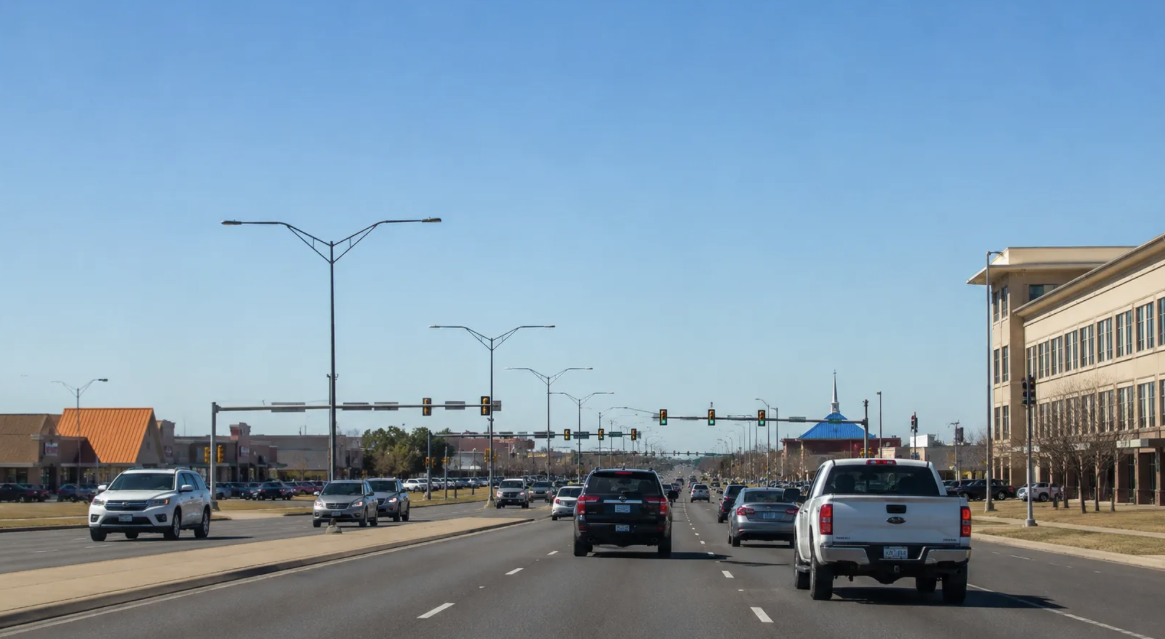
Road Conditions and Transportation Trends in Amarillo
Amarillo is not a city you drive through passively. The roads are fast, the weather turns without much notice, and the freight traffic on I-40 means you are sharing lanes with 18-wheelers on a regular basis whether you want to or not. Driving here has its own texture, and understanding what shapes that texture is useful - both for getting around safely and for understanding why certain realities about vehicle ownership here look the way they do.
The Road Network: What's Being Built and Why
The Texas Panhandle's road infrastructure is in an active period of investment right now. TxDOT's Amarillo District is running a significant number of concurrent projects, most of them tied to the reality that traffic volumes on the city's main corridors have outgrown what the original road designs anticipated.
The biggest project in the district is the I-27 widening from four to six lanes between Amarillo and Canyon. The price tag is $312 million and the expected completion date is December 2028. This stretch carries tens of thousands of vehicles per day and connects Amarillo to the West Texas A&M University campus and the growing communities along the I-27 corridor south of the city. The current four-lane configuration has been a bottleneck for years.
Alongside that, the BI-40 safety improvement project from Hope Road to SW Ninth Avenue is adding shared-use paths, median barriers, illumination, and pavement overlay. That $30 million project is expected to finish by end of 2026. The Hope Road Bridge itself got a $10.2 million upgrade including increased vertical clearance for the I-40 freight corridor, which was a genuine operational issue given the volume of commercial trucking that runs this route.
State Loop 335 is also undergoing phased upgrades. The long-term plan is to convert the entire loop into a controlled-access roadway with mainlanes, frontage roads, and multi-level interchanges at I-40 east, I-40 west, I-27 south, and US 87 north. The work is happening in segments over multiple years, and drivers navigating the loop should expect construction-related lane shifts and speed reductions in various sections for years to come.
For the most current project status and live road conditions in the district, TxDOT updates its information through DriveTexas.org and the Texas Department of Motor Vehicles maintains registration and licensing information that new and relocating drivers often need alongside road condition resources.
I-40: The Freight Spine
Amarillo sits where old Route 66 became I-40, and that history is not just nostalgic. The interstate remains one of the primary east-west freight corridors across the southern United States. The volume of commercial truck traffic through Amarillo is substantial and consistent, moving goods between the West Coast and the interior of the country.
That matters for everyday drivers in a few ways. Truck traffic changes how accidents happen when they do occur. Impact at highway speeds with a loaded semi is a different situation than a typical urban fender-bender. Stopping distances are longer, lane changes require more anticipation, and construction zones that narrow lanes become more complicated when trucks and passenger vehicles are sharing reduced space at speed.
It also matters for insurance purposes. The I-40 corridor ZIPs in Amarillo - 79101, 79102, 79103 - carry higher comprehensive premiums partly because of claim frequency in those areas. Drivers who park or commute along the I-40 frontage road network are more likely to see that reflected in their quote than someone in a residential area further from the corridor.
The Dust Storm Problem Is Not a Minor Footnote
On March 14, 2025, a dust storm hit Amarillo and the surrounding Panhandle. Within hours, approximately 38 car accidents had been reported across the city. Three people died.
That is not an isolated event. Haboobs - the Panhandle term for sudden dust storms driven by strong cold front winds - are a known and recurring hazard on the open roads outside the city, and their effects reach into the city itself. Visibility can drop to near zero in minutes, and the open terrain gives drivers almost no warning before conditions change drastically. The stretches of I-40 and US-60 heading west toward New Mexico are especially exposed.
The standard advice from TxDOT during dust events is to pull completely off the road, turn off your lights, and keep your foot off the brake so approaching drivers do not follow your taillights into your vehicle. That advice exists because people have been killed doing the opposite.
Dust events are also a reminder that Amarillo's driving risks are not limited to the obvious ones. Weather here includes hail, ice, wind, dust, and the occasional winter storm significant enough to close major roads entirely. The Panhandle recorded extreme cold events in recent winters severe enough that Amarillo came close to breaking a 132-year-old record low. Roads ice over fast in those conditions, and the city does not have the salt infrastructure of northern cities that deal with ice regularly.
Crash Statistics: What TxDOT's Own Data Shows
The Amarillo District recorded 8,419 traffic crashes in 2024, with 99 deaths and 365 serious injuries, according to data released by TxDOT in November 2025. That number covers the broader Amarillo District, not just the city limits, but it gives a concrete picture of what the driving environment looks like across the region.
At-fault accidents in Amarillo carry real financial consequences. A driver with no violations on their record pays an average of around $238 per month for full coverage in Amarillo. An at-fault accident pushes that meaningfully higher. A DUI moves it to approximately $383 per month. These surcharges typically stay active for three to five years, which means a single incident compounds across a long window of elevated payments.
Winter Conditions and Seasonal Driving Reality
Amarillo winters are not the mild kind. The city sits at roughly 3,600 feet in elevation on the High Plains, and cold fronts come through hard and fast. Ice on overpasses forms before it appears on road surfaces, and roads that look clear at sunset can be dangerous by midnight.
Accidents during winter weather conditions in Texas are classified as at-fault events in most cases, even when weather contributed. Sliding on ice and hitting another vehicle is still an at-fault collision from an insurance standpoint. The rate increase that follows - typically 20% to 40% depending on the insurer and prior history - reflects that regardless of the conditions that caused the slide.
For new residents relocating from warmer parts of Texas or from other states entirely, this seasonal reality takes some adjustment. Winter driving habits that work elsewhere do not always transfer well to Panhandle conditions.
Registration, Licensing, and What New Drivers in Amarillo Need to Know
Texas requires new residents to obtain a Texas driver's license within 90 days of establishing residency. Vehicle registration follows a similar timeline. Both processes run through the Texas Department of Motor Vehicles, where drivers can confirm requirements, find renewal deadlines, and handle registration for vehicles being transferred into the state.
One thing that catches new residents off guard: Texas allows insurers to use credit-based insurance scores as a pricing factor. If you have recently relocated for work and your credit took any hits during the transition, that can show up in your Amarillo insurance quotes in ways that feel disconnected from your driving record. Understanding how your credit history affects your premium before you start getting quotes is a practical step, especially if you are comparing options across multiple carriers and seeing more variation than you expected.
Transportation Trends Worth Watching
Amarillo's growth is relatively steady rather than the explosive kind seen in Austin or Dallas-Fort Worth. That said, the I-27 widening project and the SL 335 upgrades reflect a real projection from TxDOT that traffic volumes will increase over the coming decade. The city's role as a regional hub for healthcare, agriculture, and energy means the road network serves a population well beyond Amarillo's own city limits.
Freight volumes on I-40 are not going to decrease. E-commerce demand keeps long-haul trucking numbers elevated nationally, and Amarillo sits directly in the middle of a major coast-to-coast trucking route. That sustained freight presence is a structural feature of driving in the city, not something that cycles out.
For drivers in this environment - dealing with freight traffic, weather extremes, active construction zones, and seasonal conditions that change fast - the choice of coverage matters. Car insurance for Amarillo drivers needs to account for comprehensive exposure from hail and dust events, not just the standard liability minimums the state requires.
For drivers who need short-term coverage between longer policies, or who are new to the area and still sorting out their situation, short-term car insurance can fill the gap without committing to a full six-month policy before you know exactly where you will be living and driving.