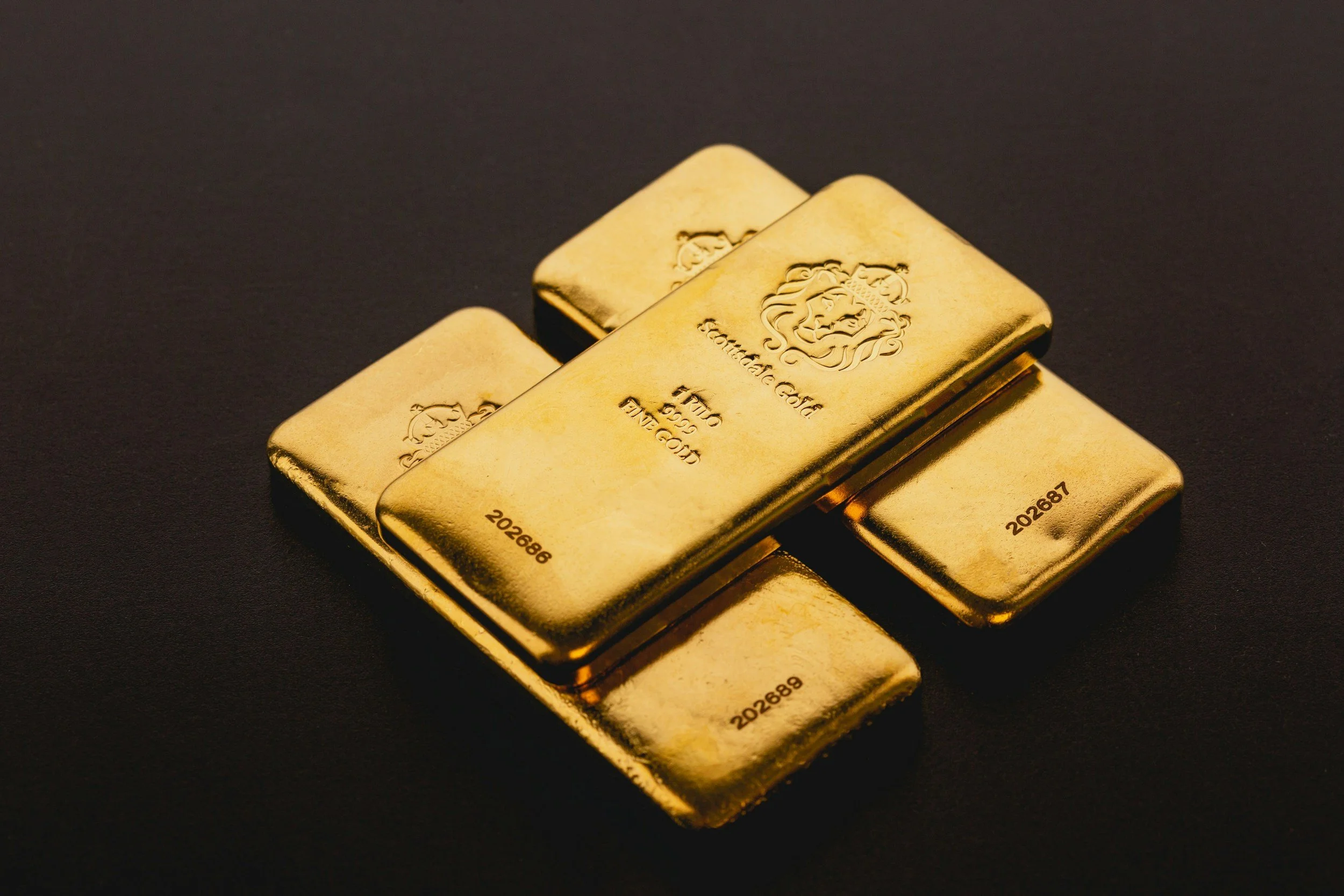
How Bullion Prices Work
If you’ve ever checked the price of gold or silver online, you’ve probably noticed something doesn’t quite add up. The number you see isn’t always the number you pay.
So what’s really going on behind the scenes?
It all starts with the spot price
At the core of bullion pricing sits the spot price. This is the live market price of gold or silver, traded globally and updated almost every second. It reflects what buyers and sellers agree on in real time.
When news breaks about inflation, interest rates, or global uncertainty, the spot price reacts quickly. It moves up and down throughout the day.
But here’s the part that catches most beginners off guard: the spot price is not the final price.
The premium is where things shift
When you go to a dealer, the price you see includes a premium. This sits on top of the spot price and covers everything involved in turning raw metal into a physical product.
That includes refining, minting, storage, transport, and the dealer’s margin.
Bars usually have lower premiums because they’re simpler to produce. Coins carry higher premiums because of design, branding, and demand.
So when you buy bullion Brisbane, you’re not just paying for gold or silver. You’re also paying for the process that delivers it to you.
Size changes the equation
One of the biggest pricing factors people overlook is size.
Larger bars often come with lower premiums per gram. This makes them more cost-effective if your goal is to build wealth steadily.
Smaller items, like 1 oz coins or mini bars, cost more per gram. But they offer flexibility. You can sell smaller portions without touching your entire investment.
So it’s not just about price. It’s about how you plan to use your bullion later.
Demand affects more than just price charts
Most people expect supply and demand to influence the spot price. That’s true. But it also affects premiums.
When demand spikes, dealers run low on stock. That pushes premiums higher, even if the spot price hasn’t moved much.
During quieter periods, premiums can ease.
So timing isn’t just about watching gold prices. It’s also about watching the market for physical products.
Currency plays a silent role
If you’re buying from Australia or tracking international markets, currency matters more than you think.
Gold trades globally in US dollars. So if the Australian dollar weakens, bullion becomes more expensive locally, even if the global price stays flat.
That’s why local pricing can feel unpredictable.
When you buy bullion Brisbane, you’re dealing with both global metal prices and currency shifts at the same time.
Dealers don’t all price the same
You might notice that different dealers quote slightly different prices for the same product.
That’s normal.
Each dealer has different sourcing costs, overheads, and pricing strategies. Some operate on thin margins and high volume. Others focus on niche or collectible items with higher markups.
This is why comparing options matters. A small difference in premium can add up over time.
Don’t ignore the sell side
Buying is only half the story. Selling matters just as much.
Dealers offer a buyback price, and the gap between their selling price and buyback price is called the spread.
A tighter spread means you lose less when you sell. That’s something experienced investors always keep an eye on.
So how should you think about bullion prices?
Bullion pricing is not a single number. It’s a combination of the spot price, premiums, product size, demand, currency movement, and dealer margins.
Once you understand these layers, everything starts to click.
You stop focusing on just the headline price and start seeing the full picture.
And that’s when you move from guessing to making informed decisions that actually protect and grow your investment.