Medevac air ambulance explained: how medical air transport is arranged in urgent situations
When a medical emergency happens away from home, the logistics can feel overwhelming very quickly. You may be dealing with a serious illness, an accident, a hospital transfer, or the need to move someone to a specialist unit with very little time to think clearly. In those moments, medevac air ambulance services are not just about booking an aircraft. They are about building a safe, medically managed journey around the patient’s condition. In the UK, that wider need for urgent airborne care is easy to see. London’s Air Ambulance alone treated 2,031 patients in 2025, while one regional air ambulance charity reported a single mission cost of about £2,300, which shows how resource-intensive emergency aviation can be.
If you are trying to understand how the process works, the simplest way to think about it is this: a medevac air ambulance is a planned medical transfer carried out by air, with the aircraft, equipment, and clinical team chosen around the patient’s needs. On the private charter side, providers such as Aircraft Charter describe these flights as being arranged with specialist staff including paramedics, nurses, and doctors, depending on the case.
What a medevac air ambulance actually is
A medevac flight is used when a patient cannot safely travel in a normal way, or when time, distance, or medical complexity makes air transport the better option. That could mean moving a patient from one hospital to another, bringing someone back to the UK after treatment abroad, or flying a patient to a centre that offers care not available locally.
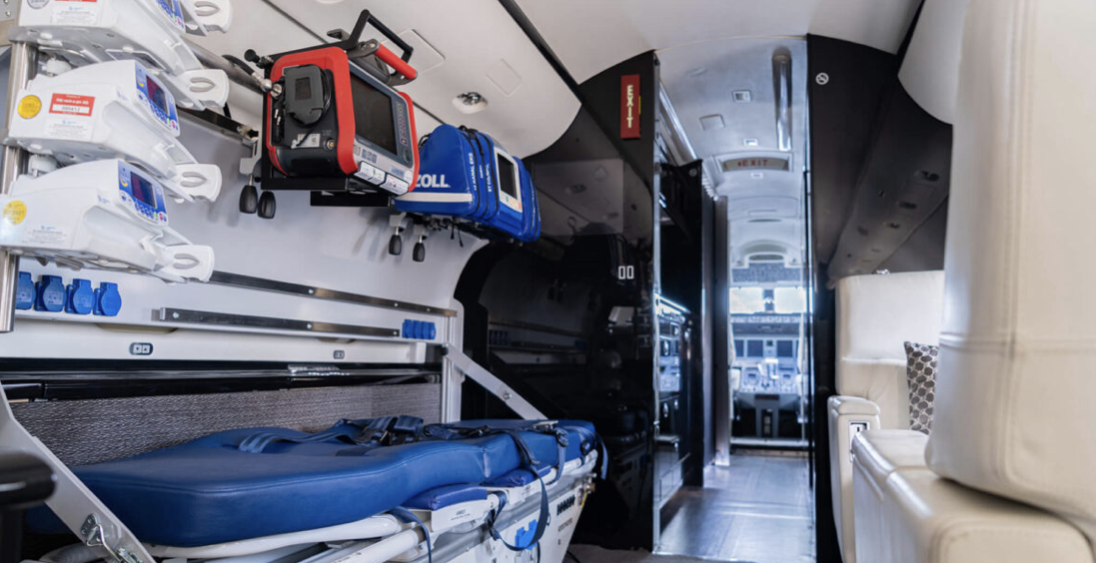
This is different from ordinary private flying. The aircraft is configured for care, not comfort first. Depending on the patient, that may include a stretcher system, oxygen, monitoring equipment, medication, and space for clinicians to work during the journey. GOV.UK’s guidance on UK medical repatriation companies also makes clear that these services can involve arranging NHS beds and ground ambulances as part of the transfer chain, which highlights how much coordination sits behind the flight itself.
When medical air transport is usually arranged
You are most likely to see a medevac or medical repatriation arranged in situations like these:
A serious illness or injury abroad
If someone becomes unwell overseas and needs ongoing treatment closer to home, an air ambulance may be used to bring them back to the UK.
A hospital-to-hospital transfer
A patient may need to move quickly to a specialist cardiac, neurological, trauma, burns, or intensive care unit.
A remote or time-sensitive location
Road or scheduled airline travel may be too slow, too difficult, or medically unsuitable.
A patient who is fit to fly only with support
Some people are stable enough for transport, but still need oxygen, monitoring, medication, or a clinical escort throughout the journey.
How the arrangement process usually works
Although every case is different, the process usually follows a similar pattern.
1. The medical situation is assessed
The first step is not picking an aircraft. It is understanding the patient’s condition. The provider or broker will usually need details from the treating doctor or hospital, including diagnosis, stability, mobility, infection risk, oxygen needs, medication, and whether intensive care support may be required in transit.
That medical information helps answer the most important question: what is the safest way to move the patient?
2. The right transport method is chosen
Not every urgent medical journey needs a dedicated air ambulance jet. In some cases, a patient may travel on a commercial flight with a medical escort if they are stable enough. In more serious cases, a fully equipped fixed-wing air ambulance is more appropriate. Some UK providers describe this difference clearly, with ICU-equipped aircraft used for higher-dependency patients and medical escorts used for more stable repatriations.
This matters because the cost can vary significantly. A more complex mission with specialist staff, ground ambulances, and longer flight time will naturally cost far more than a lower-acuity transfer. If you are paying privately, the final figure can quickly move into the several thousands or tens of thousands of pounds depending on route, urgency, and clinical setup.
3. The clinical team is assigned
Once the transport type is clear, the operator arranges the medical team. That may involve:
A paramedic
For monitoring and emergency response.
A flight nurse
For ongoing clinical care and medication management.
A doctor
For higher-risk cases, intensive care transfers, or patients needing advanced intervention.
The team is selected around the patient rather than added as a standard package. That is why the same route can look very different in price and setup from one case to another.
4. The flight and ground transport are coordinated
A safe medevac is rarely just “airport to airport”. It is usually bed to bed. That means arranging:
Collection from the current hospital
Often by road ambulance.
Airport handling
Including stretcher access and fast transfer procedures where available.
The flight itself
With the correct onboard equipment and crew.
Arrival arrangements
Including onward road ambulance and admission to the receiving hospital.
This is one of the biggest reasons families use specialist providers. You are not simply trying to source a plane. You are trying to connect hospitals, clinicians, airports, ambulances, paperwork, and timing without gaps.
5. Documentation and permissions are handled
Urgent does not mean informal. The provider still needs to manage medical reports, fitness-to-fly confirmation, identity documents, airport approvals, and international clearances where needed. If the patient is abroad, there may also be conversations with insurers, embassies, hospitals, and family members in more than one country.
What affects timing
Many people assume these flights take days to organize. Sometimes they do, especially when medical paperwork, receiving hospitals, or international permissions are complex. But in genuinely urgent cases, charter providers may be able to source aircraft with very short notice. Aircraft Charter states that, depending on location, a private aircraft can sometimes be arranged in as little as 2 hours, which is especially relevant in medevac situations.
In reality, the timing depends on:
How stable the patient is
A patient may need to be stabilised before travel.
Whether the destination hospital is ready
A bed usually needs to be confirmed before departure.
The location
Remote regions can add complexity.
Border and airport procedures
International cases may involve extra approvals.
What families should ask early
If you are helping arrange a medevac, the most useful questions are usually practical ones:
Is the patient fit to fly right now?
What level of medical support is required in transit?
Is a dedicated air ambulance necessary, or would a medical escort be enough?
Has the receiving hospital accepted the patient?
What is included in the quote?
Are ground ambulances and bedside transfers included?
Is there insurance support, or is this a self-funded journey?
These questions help you understand not just the price in £, but the actual service being delivered.
Final thoughts
In urgent situations, medevac air ambulance arrangements are built around safety, continuity of care, and time-critical coordination. If you ever need one, the process is likely to involve far more than simply booking an aircraft. Medical assessment, clinical staffing, ground transport, receiving hospital arrangements, and documentation all have to come together smoothly.
That is why clarity matters. The more you understand about how medical air transport is arranged, the easier it becomes to make calm, informed decisions during what is often a very stressful time.