The $2,000 Scratch: How a Minor Fender Bender in Italy Became a Rental Car Nightmare
Introduction
Imagine cruising through the charming streets of Italy, savoring every curve and vista the countryside has to offer. Renting a car is such a liberating way to experience this beautiful country. However, for some, a minor mishap can spiral into a costly ordeal. This blog post explores how a small scratch turned into a $2,000 headache for one traveler and provides valuable tips on navigating rental car complexities in Italy.
The $2000 Nightmare Unveiled
The Unexpected Scratches
It started as a dream drive through Tuscany's rolling hills until an unexpected incident occurred. After parking in a quaint village square, a traveler returned to find their rental car had been scratched. The damage seemed minor, merely a few marks on the rear bumper. Unfortunately, these "unexpected scratches" can lead to significant costs when dealing with international rental companies.
Despite their minimal appearance, these scratches were classified as damage by the rental company. A quick inspection was enough for the charges to be assessed at an eye-watering $2,000, stunning the unprepared traveler. Such situations are not uncommon and highlight the pitfalls that can arise with even the most careful drivers abroad.
Confronting the Costs
Facing the hefty bill, the traveler quickly realized how a seemingly minor inconvenience could become an overwhelming financial burden. The rental company cited repair costs, administrative fees, and loss of use, each detailed in the agreement's fine print. However, understanding these charges required navigating complex terms, a daunting task compounded by language barriers.
As they grappled with the unexpected expense, the traveler felt the sting of realizing certain protective measures, like purchasing comprehensive insurance, were omitted during the initial rental process. This situation highlights the importance of reviewing rental agreements thoroughly and considering additional insurance options.
Common Rental Car Pitfalls in Italy
Hidden Fees and Insurance Surprises
When it comes to renting cars in Italy, hidden fees and unexpected insurance surprises can add up quickly. Many travelers discover that their base rental price does not include various charges such as insurance premiums, road taxes, and environmental fees. These extras can be buried deep within rental agreements, often glossed over during the hurried transaction process.
Insurance coverage is another area where surprises lurk. What appears comprehensive can still leave gaps, such as coverage limits or exclusions for certain types of damage. Additionally, rental companies may push optional extra insurance at inflated rates, which can feel almost obligatory to avoid hefty damage costs in case you are involved in an accident.
Understanding these potential pitfalls is crucial. Familiarizing yourself with common fees and asking detailed questions about insurance can save you from costly surprises later. It pays to be proactive and inquire about any ambiguous terms before signing.
Language Barriers and Communication Issues
Navigating car rentals in a foreign country often presents communication challenges, especially when dealing with complex contract terms in another language. In Italy, language barriers can complicate the rental process, leading to misunderstandings about agreements, insurance policies, and fees.
Many travelers find themselves nodding through explanations they barely comprehend, assuming they align closely with practices in their home country. However, this can be a costly mistake when unfamiliar clauses or requirements go unnoticed. Miscommunications can result in charges you didn't anticipate or consent to, further exacerbating travel stress.
To mitigate these issues, consider using translation apps, carrying a language guide, or pre-arranging services with companies known for English-speaking staff. Being able to ask specific questions and understand responses with confidence can significantly reduce the likelihood of unwelcome surprises.
Navigating Italian Traffic Rules
Driving in Italy means adapting to traffic rules that might differ significantly from those you're accustomed to. Italian roads have their own set of regulations, with some designed to cater to the unique layout of historic cities and rural areas. Speed limits can vary considerably, and low-emission zones, prevalent in major cities, can lead to fines for unprepared drivers.
Understanding local signage is critical as it can affect everything from parking to turning restrictions. For instance, "Zona Traffico Limitato" signs indicate restricted areas where unauthorized vehicles may incur penalties. Roundabouts and priority rules are common, and they might require a slight adjustment in driving behavior compared to, say, North American standards.
Before setting off, familiarize yourself with these rules. Online resources, guidebooks, and discussions with locals or hotel staff can quickly bring you up to speed. Proactivity in learning these regulations saves not only fines but enhances your overall driving experience.
The CarInsuRent Solution: Your Safety Net Abroad
Introduce CarInsuRent
CarInsuRent specialize in providing comprehensive coverage that extends beyond typical rental agreements, offering peace of mind when driving in foreign lands like Italy. CarInsuRent addresses common concerns by covering potential damage costs and offering protection against hidden fees that rental companies often apply.
Their service transforms the daunting task of understanding foreign insurance policies into an effortless experience, ensuring you're fully protected from unexpected charges like the ones mentioned in the $2,000 scratch scenario. With CarInsuRent, you can enjoy your travel adventure knowing you have a safety net.
Core Benefits of CarInsuRent
CarInsuRent offers travelers key advantages, transforming how you perceive rental car insurance abroad. One of the primary benefits is their all-inclusive coverage, which spans various damage types including scratches, dents, and theft, filling in the gaps that typical rental policies may leave exposed. This comprehensive protection ensures you aren't caught off guard by unexpected costs.
Another major advantage is their competitive pricing structure, designed to be more economical than purchasing coverage directly from rental agencies. Their user-friendly policy formulation is clear and devoid of hidden terms, making it easy to understand what you're covered for. Moreover, they provide 24/7 customer support, ensuring assistance is just a call away whenever you need it.
CarInsuRent's claim process is straightforward, requiring minimal paperwork and offering swift reimbursements, which is particularly beneficial when dealing with large fees from rental companies. By choosing CarInsuRent, you secure hassle-free protection that lets you focus on enjoying your travel experience rather than worrying about insurance issues.
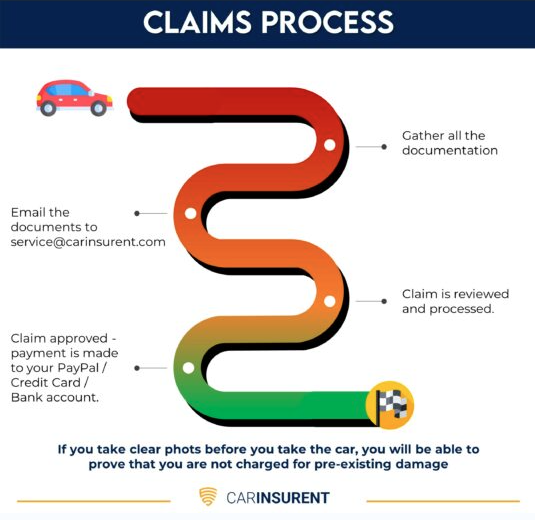
A diagram of the claims process
Protect Yourself: Tips for Renting Cars Abroad
Essential Checklist Before You Drive Away
Before hitting the road in your rental car, it's crucial to tick off a few essential items from your checklist to ensure a smooth journey.
Inspect the Vehicle: Conduct a thorough inspection of the car for any pre-existing damages. Take photos or video as proof, focusing on both obvious and hard-to-spot areas.
Understand the Contract: Review all aspects of your rental agreement, focusing on included insurance, fees, and any mileage limits or restrictions.
Check the Essentials: Verify that the car comes equipped with necessary items such as a spare tire, first-aid kit, and proper identification (license plate and registration documents).
Test the Features: Ensure that all vehicle functions, including headlights, brakes, indicators, and the infotainment system, are in working condition.
Familiarize with Local Traffic Rules: Refresh your understanding of local driving laws, including speed limits and parking regulations.
By following this checklist, you prevent potential complaints or disputes with the rental company and secure a safer travel experience.
When and How to Document Vehicle Condition
Documenting the condition of your rental vehicle is essential, both at pick-up and drop-off, to avoid disputes over damage. It's a simple yet effective way to protect yourself from unwarranted charges.
At Pick-up: As soon as you receive the car, perform a walk-around inspection. Look for any existing scratches, dents, or issues inside and out. Capture high-resolution photos or video to record the vehicle's condition, focusing on both visible and less apparent areas like the undercarriage.
At Drop-off: Repeat the documentation process when returning the car. Compare the condition with your initial photos to ensure no new damage occurred. Be sure to document evidence of a clean return to counter any claims of damages that might be unjustly attributed to you.
Time-stamped Evidence: Whenever possible, ensure your photos or videos are time-stamped. This data serves as irrefutable evidence should any discrepancies arise regarding when the photos were taken.
Report Immediately: Any new damages incurred during your rental period should be reported immediately to the rental company, alongside documentation to support your claim.
By following these steps, you safeguard yourself from being held financially responsible for pre-existing damages or dubious claims.
Using these practical measures can substantially reduce stress and unexpected costs, securing a reliable rental experience.
Knowing Your Rights as a Renter
Understanding your rights as a car renter empowers you to navigate disputes and avoid unfair charges. Firstly, know that as a consumer, you are entitled to transparency. The rental company must provide clear information regarding terms, fees, and your responsibilities. If anything is unclear, don’t hesitate to ask for explanations or written clarifications.
In many cases, renters have the right to refuse additional insurance if other coverage is in place, such as through credit cards or personal insurance policies. However, confirming these details before your trip is advisable to avoid on-the-spot decisions.
You also have the right to document communications and agreements. Keep copies of email exchanges, payment receipts, and inspection reports. If disputes arise, these documents can serve as defense evidence.
In situations where you feel wronged, you are entitled to seek resolution through consumer protection agencies or relevant industry bodies. Being informed about grievance processes within the rental company can hasten amicable resolutions.
Arm yourself with knowledge to ensure a fair and stress-free car rental experience.
Personal Stories from Travelers
Where It All Went Wrong
In one memorable travel story, a leisurely trip through Italy took an unexpected turn when a minor oversight led to a costly lesson. The renter overlooked a tiny scratch on the car’s bumper during the initial inspection. Unnoticed and undocumented, this small scratch became the focal point of a significant financial dispute upon returning the vehicle.
The car rental company considered the scratch new damage and levied a charge. This could have been avoided if more attention had been paid to documenting the car’s condition both at pickup and during the rental period. The lack of thorough initial documentation meant there was no evidence to counter the company's claim.
This story underlines the importance of diligently inspecting and recording the condition of a rental vehicle. It reminds travelers that even minor details, when left unchecked, can escalate into major headaches. The experience was both a learning moment and a cautionary tale that highlights the significance of being meticulous with car rentals.
Lessons Learned the Hard Way
From the aforementioned misadventures, a few crucial lessons emerge for any traveler planning to rent a car abroad. First and foremost, never skip the vehicle inspection. It's vital to meticulously document any pre-existing damage with time-stamped photos or videos. This small step can save hundreds—or even thousands—of dollars in disputed fees later.
Additionally, always prioritize understanding the rental contract. Hidden fees and insurance clauses can lead to unexpected costs, so ask questions and clarify any ambiguous terms before you sign. It's better to be overprepared than to be caught unaware.
Language barriers posed another challenge. Investing time in understanding key phrases or utilizing translation apps can be a game-changer, ensuring clear communication with rental staff. Moreover, knowing your rights with rental agencies can empower you to challenge unfair practices effectively.
Ultimately, investing time in preparations like reviewing local traffic laws and considering comprehensive insurance options can prevent minor inconveniences from becoming costly nightmares, ensuring that your journey is smooth and enjoyable.
Conclusion: Don't Let a Scratch Ruin Your Vacation
While exploring new destinations by car can be an exhilarating experience, it's crucial to be prepared for the unexpected. A minor scratch or oversight shouldn’t overshadow the joys of your vacation. Taking proactive measures—such as conducting thorough vehicle inspections, understanding rental agreements, and securing comprehensive insurance—can transform potential pitfalls into manageable situations.
Remember, adherence to these practical steps not only protects your wallet but also ensures peace of mind, allowing you to fully immerse yourself in the adventure. The tales of those who learned the hard way are reminders of the importance of diligence and preparation. Let your time on the road enhance your travel narrative, creating memories unmarred by financial worries.
Travel smart, stay informed, and let nothing, not even a $2,000 scratch, dampen your eagerness to discover the world's hidden gems.