
Monetizing Your Website and Becoming Your Own Boss
By Cody Hammer
Introduction
Monetizing your website can be a costly, daunting, and time-consuming process. Ask me how I know? But, through my suffering and essentially being the ‘guinea pig’ of blogging, I have acquired some real ‘time-saving’ knowledge. This guide will help you expedite the process of monetizing your website so you can make some extra cash and possibly even become your own boss one day. I will teach you the step-by-step process that I have honed through trial and error and now use to make $10k - $15k per month.
Monetizing your website will open the door to several unique streams of income from display advertising, backlinking, sponsored guest posting, affiliate linking, and more. Having a website can also help to complement social media accounts, such as YouTube, Facebook, and Instagram, by linking inbound as well as outbound. Another perk that content creators rarely talk about is all the free swag involved in running a website. All these topics and more will be covered in detail further in the book.
Are you going to be successful in monetizing your site? Only time will tell. But this guide will give you the tools necessary to accomplish that goal. So read on, my friends, and let's get you started.
How I Got Started
I suppose the journey to monetizing my website and becoming my own boss began back to when I started posting my travel photos on Instagram. This was before Reels and short videos were even a thing, and photos were still poppin. I managed to build up a small following and thought, “This is kind of cool, but can I make money off of this?” My ability to gain followers on Instagram eventually landed me a few marketing gigs here and there. They didn’t pay life-changing money, but gave me a much-needed financial boost and a little bit of hope that one day I could make enough money to become my own boss.
Long before the website, my wife Venus and I had already been severely bitten by the ‘travel bug’. We would travel around to various places and not share any of it other than a few pics here and there. We were big fans of travel vlogs on YouTube, but that seemed a bit scary, and having the confidence to put yourself out there like that just wasn’t in our wheelhouse. This is what eventually led me to travel blogging. You might ask, “What’s the difference between blogging and vlogging?” Blogging is the act of writing about your experiences, and vlogging is the act of recording them in video format.
P.S. I did eventually muster up the courage to start my YouTube channel. More on that later.
I, of course, started in the workforce like most of us do, ‘busting my ass’ and had been doing a labor job full time as well as my marketing side hustle for a few years. It wasn’t until 2018 that I decided to start 'Exploratory Glory’ as a fun way to document my travels. I would visit travel destinations and write about the local ins and outs, such as information on beaches, hikes, Airbnb rentals, and hotels. Now, I’m not sitting here saying my stuff was any good, especially at first, but the information people were looking for was all there, and that made some of my content rise to the top. I continued plugging away in hopes of one day being able to make something out of it. My ability to put out articles remained governed by the fact that I was still working for someone else.
My fortune somewhat changed when I was finally able to monetize my website with Google AdSense. Again, this wasn’t life-changing money and was quite laughable. I’m talking $0.05 to $0.10 per day, but the fact that I saw any kind of money from my efforts was reward enough for me. I now knew that if 20 articles could generate a certain amount of revenue, then what about 200 or 2000? I knew I needed to crank out even more articles if I wanted to multiply my earnings. Keep in mind that this was no small task, given that I didn’t have any help from AI or any kind of writing apps, as they were not yet invented. I continued to try and put out as many articles as I could, but it wasn’t until I had a fairly bad accident at work that I was able to turn a negative into a positive and put out maximum effort towards building my brand.
Through AdSense, I managed to build a nice little stream of income. Still not enough to kick back and say, “I made it, ma!” At this point, I was getting Worker’s Compensation for my injury and ended up having 5 surgeries on my hand and a lot of physio. Due to some complications, the healing ended up taking around 2 years. Kudos to compensation, as they agreed to pay for me to take some courses so that I could seamlessly move into a new career of my choice. So I decided this was my opportunity to take courses that would help me better understand the world of digital marketing, website creation, and search engine optimization. Maybe I could finally fill in the knowledge gaps that I had been missing all along.
I chose to do online training because it was easier for me to attend class, given that I wasn’t able to drive at this point and had to attend physiotherapy appointments regularly. My first semester was with BCIT, and that went well. In the second semester, we decided to go with McMaster University simply for the fact that they had openings. That was a tough course and involved a lot of think-tanking with a group on Zoom, which I hated. But I got through it and learned a lot about the business that I could take with me moving forward.
Anyway, enough about myself! Let’s fast forward to when I started making life-changing money and how I was able to finally become my own boss.
As a website owner, I would typically get all kinds of emails, most would be spam, and I would ignore them. Eventually, I started to get the odd email from someone saying that they would pay me to publish their content on my site. At first, I wasn’t up for it and thought, “I don’t want other people’s work on my site,” as it was supposed to be my blog with solely my writings published on it. On top of that, they would want to publish something that wasn’t even related to travel, such as home renovation or health-related articles. Over time, the offers just kept on coming, and I kept on turning them down. Until one day I got an offer for USD 100 just to publish a single article, keep in mind this job would take me 10 minutes max. I couldn’t possibly keep turning all this money down, so I decided to publish the article and was paid accordingly. Not long after, I decided to expand my site's blog categories and add more niches into the mix. I added sections for Lifestyle, Home Improvement, Technology, Sports, Music, Financial, Fashion, Automotive, Business, Food, and Health. Needless to say, I started accepting guest posts and dove headfirst into the wonderful and lucrative world of link-building.
At this point, you must be asking, “What is link building?” At its core, it is essentially the act of adding links to a landing page of a website that point to other landing pages of other websites. Think of a web with ‘said site’ in the centre, and leading to it are links from various other websites. The more strands of web (links) leading back to the centre, the stronger the web (site) becomes, and as a result, your site lands higher in the search rankings. Hopefully, this analogy makes sense, but don’t worry if it doesn’t, because later on in the book, we will dive deeper into the world of backlinks and sponsored guest posts.

Building a Website
These days, building a website is not typically a complex endeavor that requires coding knowledge like it did in the past. Of course, there is still a place for coding, and if you have that skill, then all the power to ya, and you can go ahead and build your site that way. But let’s assume you’re a beginner and you either already have a basic site or you are looking to build a new one. Coding aside, the website-building platforms available these days allow users an easy-to-use drag-and-drop interface that pretty much anybody can use and succeed at building a very nice website.
Keep in mind that the process of building a fully functioning website and monetizing it will require some initial investment of time and money. Try to understand that if this process is done correctly, you will, in time, make all of your money back and more. Most entrepreneurs would agree that ‘scared money doesn’t make money.” Success is less likely if you never invest in yourself and take the risk, however big or small, with this risk being small in the ‘grand scheme of things!’ I bring this up because it is important to know that several steps in the process will indeed require you to spend money, and whether you choose to use my links or not, you will need to complete those steps to be successful.
Choosing a Name
Before you get started on your site, you will need a plan of action, and some brainstorming will be in order. Start thinking about catchy names for your site/business, if you don’t already have one. When you come up with the name you like, head over to Google and look it up in the search bar to make sure the name is not already taken. If you’re the type who has a hard time being creative, then you may need some help from AI. There are free AI sites such as DeepAI where you can prompt things like “Give me five unique and catchy names for a website about _______.” I choose ‘Arizona Travel.’
This is what AI came up with when I prompted it.
DesertDiscoveries.com
CactusTrails.com
GrandCanyonAdventures.com
ArizonaWanderlust.com
SonoranSunsets.com
Once you have decided on a name and a niche that you want to cover, you will be ready to sign up for a website builder platform. You may not have decided on a particular niche and want to write or create about various subjects. That may even be more beneficial as it will open up more doors and possibilities for collaborations. But if you want to stick to a certain niche you are passionate about, that is fine too, and you could always expand your categories and niches later on.
Choosing a Website Building Platform
There are several big players in the business of website-building platforms. Names like WordPress, Squarespace, or Wix might ring a bell. I have used all three to build sites for various reasons, and coming from someone who is experienced in the area, I would highly recommend using WordPress over others. One of the main reasons I suggest using the platform above is that it is super easy to learn, and when you go to get accepted by Google AdSense, you will need to add what is called an ads.txt file, and some of the platforms, including Squarespace, will not allow for it. The inability to add the file hinders ad performance and minimizes profits. But no worries if you have already chosen a different platform, you can use whatever works for you, and you will still have the chance to make good money through other avenues.

While building your website, make sure to take the time to make it user-friendly. Think of what you would do if your site were someone else’s and you landed there while searching. Would you continue to scroll, or would you simply exit due to a poor experience? You want people to stay and have a look around. Whether you are selling a product or giving out information, the longer the user stays on your site, the better. It is easy to get carried away with all the 'bells and whistles, ’ but for now, try to stick with the basics so that you can create a smooth-operating website and a positive user experience. The platforms I mentioned above will have excellent, easy-to-use website templates for you to choose from.
When signing up for a website builder, also consider getting a subscription for a business email address. This is something that you will have to get in the future if you want to monetize. Usually, the website host will offer an email account at a discount upon signing up to build your site. I recommend Google Workspace, as this has been great for me, and I’ve been using cody@exploratoryglory.com since 2018 with no complaints.
Creating a Logo
When it comes to creating a logo, you can use various platforms like Looka. This site is fantastic and allows you to customize your logo to suit your exact needs. There are other ways to create your logo for free, like with Adobe Express, and that will do, but a company like Looka specializes in Logos, so for this exact task, the product is just more efficient.
Below is an example of a logo I made for Exploratory Glory using Adobe Spark. It is simple and pretty basic, but it was completely free. Again, if you have the $20 it costs for a logo on Looka, then do that, and you’ll most likely end up with something a bit better.

SEO (Search Engine Optimization)
SEO is one of the most important parts of this whole industry and one of the main factors at play in helping people find your landing pages. To understand this, you need to get into the mind of a search engine user. What keywords would they type in the search bar when looking for certain products or information? You will need to harness that knowledge and write it into the landing pages that you want them to visit. Some of the research for these keywords can be done by fooling around with the Google search bar. Type in your subject, and you will notice a drop-down of the most popular search terms for your topic that people have been using.
Here is an example where I typed in the search ‘Arizona travel,’ and as you can see, the most popular search terms showed up in the drop-down. These terms would be crucial for someone who is writing an Arizona Travel Guide.
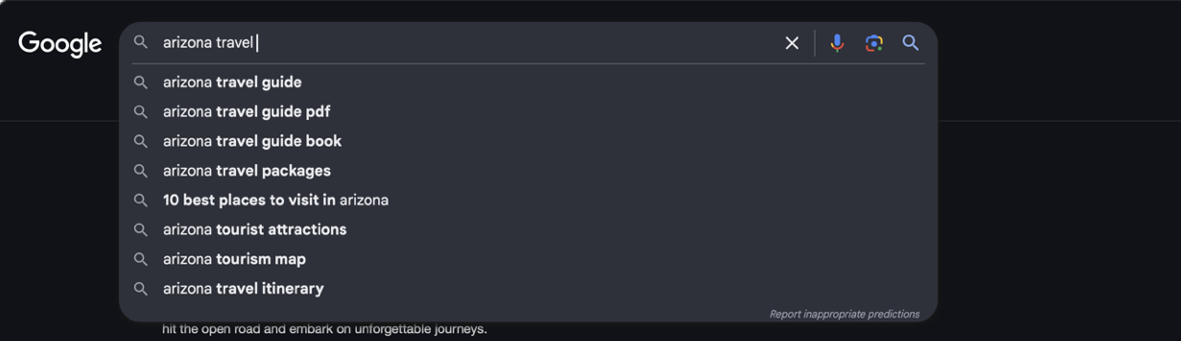
Using the above information, you will want to consider honing in on keywords and search terms on every page you add to your site, even on sections like your Homepage or About page. This will help ensure that your messaging is clear and concise for search engines so that they can show your content to searchers.
There are many more ways to capture keywords for your search engine optimization; what I showed you so far was just one of them. Many choose to skip the SEO dirty work and sign up for some of the available SEO tools. They can be effectively used to find the best keywords and give you everything you need to tackle SEO and much more. This is, by far, the best way to find key search terms and dive deeper into the structure of your site.
One of the best sites for SEO tools is SEMrush. You can sign up for free and start using them, and later, you can add more options if you like.
Website Structure
Before deciding what you want to write about, you’ll need to have your necessary pages in place, such as your Homepage, About Page, Contact Page, and Blog Page, to start. There will be several more necessary pages to add, which we will cover later if you choose to apply for Google AdSense, and in that case, you will need the DMCA, Privacy Policy, and Sitemap Pages.
Sitemap
Every website needs a sitemap to function properly and be easily found by search engines like Google. A sitemap essentially creates a list of pages on your site so that search engines and users can see the website's internal structure. By having a sitemap for your site, you can improve the site's overall rankings and lead to a better user experience and content visibility.
Here is a Free Sitemap Generator where you can follow the directions and create your sitemap.
Robots.txt
A ‘robots.txt' file is plain text added to the root directory of your site to tell website crawlers which pages they should or shouldn’t access. Having a ‘robots.txt’ file is very important because it can indirectly affect SEO and search rankings.
Here is a Free Robots.txt Generator where you can use your sitemap from the previous step to create your file. Next, follow the directions to complete this crucial step.
Now that you have your plan in place and the basic structure of your site taken care of, it’s time to move on to the writing aspect of your website.
Writing Articles
This step in the process could seem a bit daunting for some of you, but I will do my best to explain how it’s done and take away some of the anxiety of the writing process. I will stick with the travel niche for my examples because that is the niche I originally started in. Once you decide on a topic you would like to write about, refer back to the SEO (Search Engine Optimization) section and use those techniques and the SEO Tools I recommended to decide on your title and headings.
Using AI or not?
AI is making huge waves in the industry and many industries, for that matter. It’s controversial, and it’s questionable, but by golly, it sure is handy. I will start by saying that it is always better to write your own unique content. When I started writing, AI didn’t even exist yet, and I was writing all of my articles without any help. Writing your article without AI’s help ensures that all of your content is unique and you don’t end up publishing duplicate content. Nowadays, I have figured out ways to use AI to help me write articles, and some have even managed to rank well and make me some decent money over time.
It is still up for debate whether search engines penalize AI content, and in my personal opinion, I think it is all in the way you prompt the AI to write the article. You see, search engines will punish duplicate content on the web by ranking it low. So, if you have just simply prompted the same thing that every other ‘Joe Blow’ has in the past, then technically, you will end up with a very similar article, and it may even be an identical article. Before I teach you my techniques for using AI, I would like to reiterate that if you have the time, writing your own content will ensure that it is unique to the search engines.
So, when it comes to AI, there are a ton of different options. ChatGPT is a paid subscription service and is probably the most popular AI in the game. ChatGPT is excellent and has come a long way in a short period. That being said, there are plenty of free AI sites, and I typically use the site I mentioned before, DeepAI, which has worked great for me in the past.
Below is an example of how I would word my prompt to the AI for my Arizona Travel Guide article. Let's see what kind of results the AI gives me. I don’t expect you to fully read the article, but it will give you an idea of how powerful AI can be.

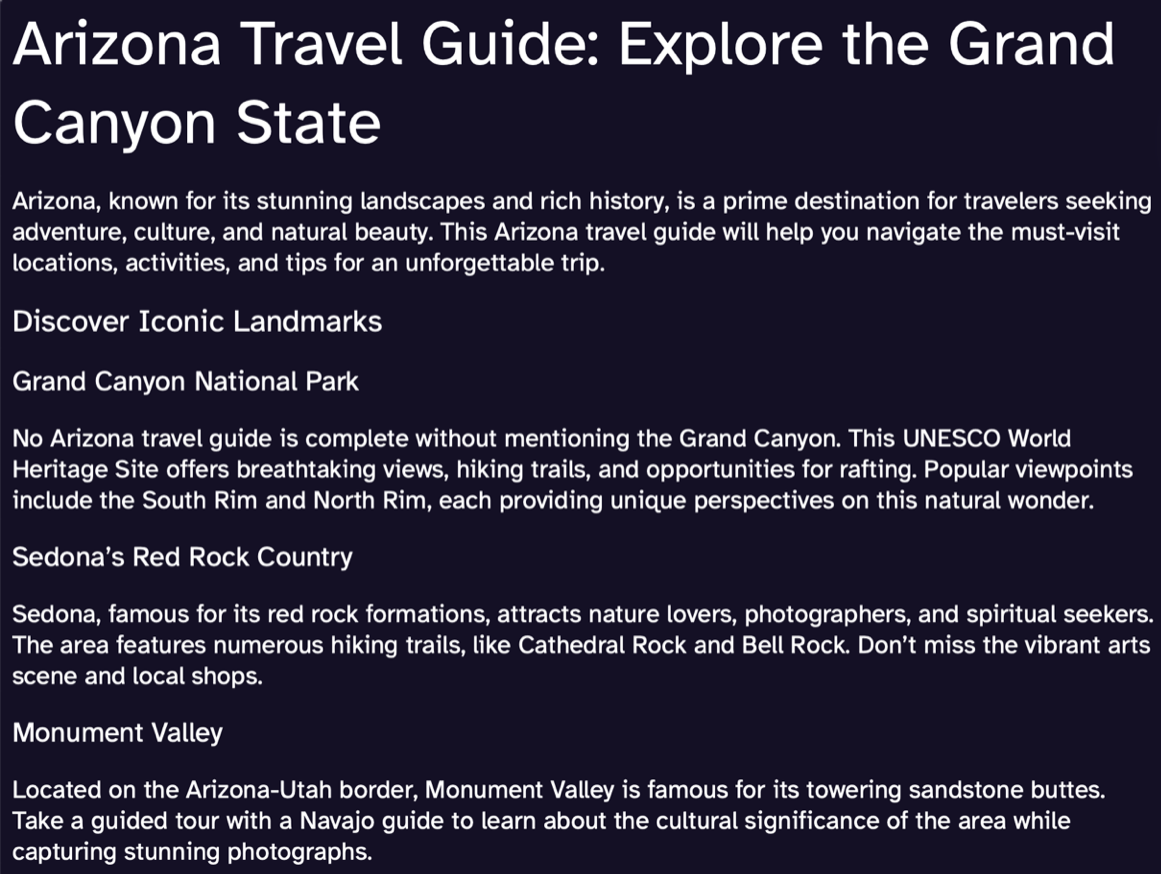
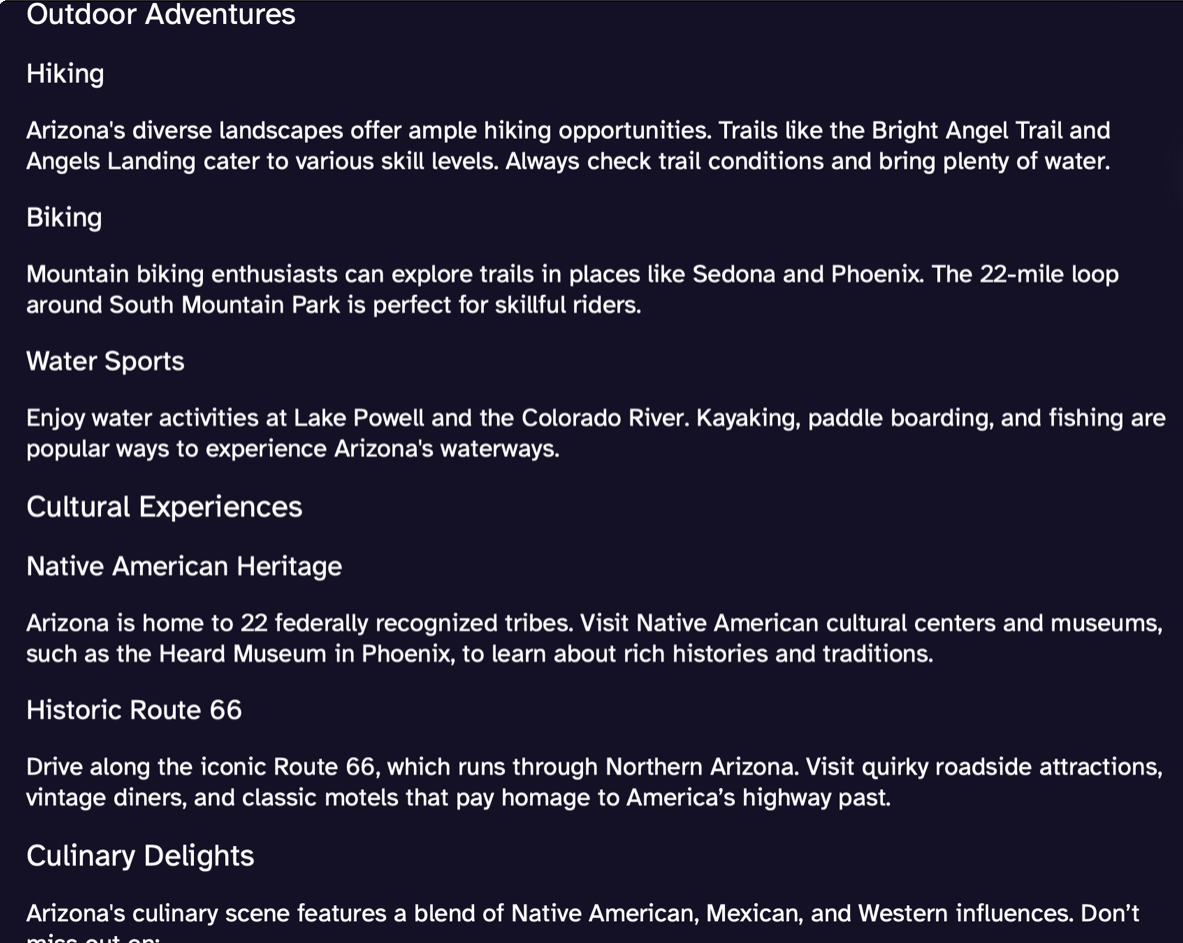
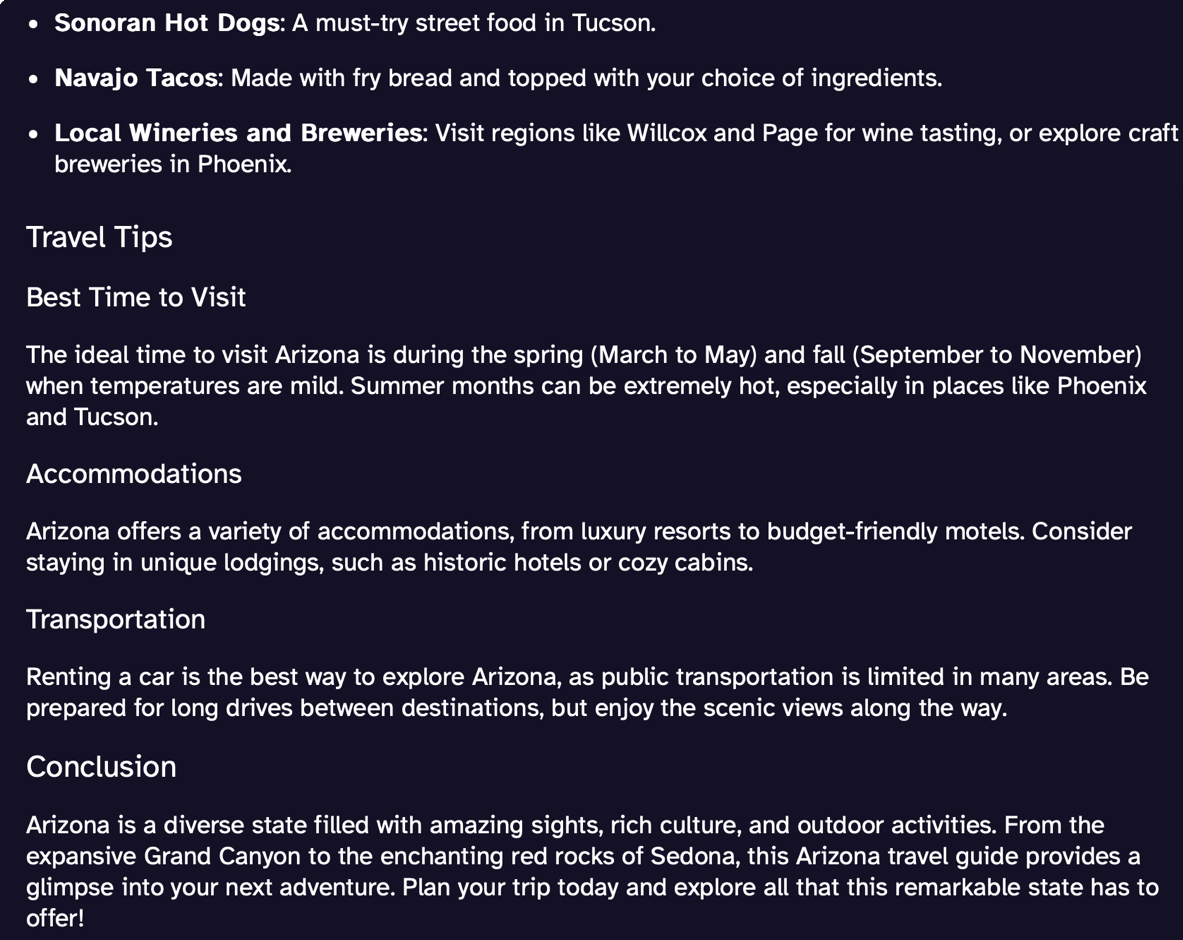
Now, let’s break down why I prompted the AI the way I did. I added, “write a completely unique keyword rich SEO friendly article about Arizona travel guide with fewer descriptive words than usual.”
write a completely unique - I am ensuring that the AI writes something that differs from the rest of the content on the internet
keyword rich - This will tell the AI to scour the web for the most popular keywords and add them to the article. This will also keep the AI from getting confused and adding false information to the article, which can happen on occasion.
SEO friendly - The AI will take into account SEO and write the most optimized wording so that the article ranks higher on search engines.
Arizona travel guide - The Topic
With fewer descriptive words than usual - AI is sometimes overly descriptive and tends to use way too many adjectives. For some, it’s a dead giveaway for AI content. By prompting it this way, we will avoid the adjective stuffing.
Headings
Headings are essentially broken down into the main title of your article, the H1, the titles for the different sections of your article, the H2, and the titles for the subsections of your content, the H3.
Again, using the above information from the SEO (Search Engine Optimization) section, we will use ‘Arizona Travel’ as the example. The search pulled up a few popular searches that I would use as my headings. Keep in mind that because I am using this particular technique, these headings may have higher competition in the rankings, and by using software like SEMrush, you will be able to flush out more helpful keywords.
Here is what I may want the outline of my article to look like.
H1 - Arizona Travel Guide: Explore the Grand Canyon State
H2 - Discover Iconic Landmarks
H3 - Grand Canyon National Park
H3 - Sedona’s Red Rock Country
H3 - Monument Valley
H2 - Outdoor Adventures
H3 - Hiking
H3 - Biking
H3 - Watersports
H2 - Cultural Experiences
H3 - Native American Heritage
H3 - Historic Route 66
H2 - Culinary Delights
H2 - Travel Tips
H3 - Best Time to Visit
H3 - Accommodations
H3 - Transportation
H3 - Conclusion
The best technique for search engine ranking is to have some of your top keywords included in your H2 headings.
Backlinks and Link-Building
So what are backlinks, and why are they so important? Link building is a technique that helps boost your site in the search rankings and delivers what is called ‘Link Juice.’ Whatever you want to call it, the fact is that having links pointing to your site from another site is highly beneficial for domain authority, which I will cover below.
Backlinks can be internal and external or inbound and outbound. All are very beneficial and quite necessary to excel in this business.
Though I have several streams of income, it is the link-building techniques that I will show you that have made me far more profit than anything else. I will discuss the monetizing aspect of backlinks further on in the book. Because you are just getting started, you should focus on getting your site to run smoothly and creating a positive user experience before you worry about making money. This process takes time and effort, and if you stick to the game plan, you will be rewarded.
Internal Backlinks and External Backlinks (Inbound)
Internal backlinks connect your pages and help to improve overall SEO and user experience. It can also keep users engaged, and by clicking through your links, they may stay on your site for longer periods.
Internal linking can easily be done by adding a link to an older article that leads to a newly published piece of content. All you will do is find an article with a similar topic, copy the URL, and connect your link by attaching it to related anchor words within the article.
Here is an example of internal backlinks from a new site I am building called Exploratory Enlightenment. Here you will see I have written a travel guide. Click the link below to see what I mean.

While going through my article, you should have noticed several different links. In the first paragraph, there are two anchors, ‘Palawan’ and ‘Philippines.’ If you click through, you will notice that they are outbound links to Wikipedia and Google. Linking to these high-authority sites can increase your site's credibility as well as visibility. That being said, I try to include at least one outbound link in every article.
You will also see a button that says ‘Best Hotels in Palawan.’ This is what is called an affiliate link, and it is yet another stream of income you can use to make some extra cash. Logically, a reader who is interested in Palawan might also be interested in checking out hotels in the area. They may click through the button and book a hotel, which will earn you a percentage of the booking. Again, I will cover this in more detail further on in the book.
Towards the end of the article, in section 8. San Vicente, you will see the anchor ‘Long Beach.’ When clicking this link, you will be taken to another article of mine titled ‘Long Beach, Palawan,’ and this is an example of an internal link. As a rule, try to include at least one internal link in each article.
Now, let’s talk about external (inbound) linking. I have linked one of my articles from Exploratory Glory to the ‘Top Attractions of Palawan’ article as an example. Click on the pic below to see what I mean. The link’s anchor is ‘Palawan, Philippines.’ By linking from one site to the other, I am sharing some of that valuable ‘link juice,’ as it’s called.

Dofollow Links vs Nofollow Links
Two specific types of hyperlinks are used on websites, and those are dofollow links and nofollow links. A dofollow link passes ‘link juice’ along, and a nofollow does not. So, without getting into the technical weeds, just know that for what you are trying to accomplish, you should only be thinking about dofollow links.
Domain Authority
Domain authority is a very important metric, and much like SEO, it can help dictate where your site’s pages land in the rankings. I like to describe domain authority as something like a credit score for your website, and the higher the number, the more credit you will have with search engines like Google.
The domain authority ranking ranges from 1 - 100, with 100 being the highest possible number a site can reach. Very few people have reached 100 for their site, and even massive sites like Wikipedia, with all the money in the world, can only score 96. This number is directly determined by the number of inbound backlinks that lead to your site and the quality of those links. The higher the domain authority of the inbound linking site, the more valuable it is to your site.
One of my very best links comes from Wikipedia, and I had no idea it was even there until I started looking into it. Yes, somebody had already added my link to Wikipedia without my knowledge. It is currently my number 1 link and has remained my number 1 link for several years now. To find out how many backlinks your site has and what your domain authority ranking is, you can use this free app called Ahrefs. This is an extremely important part of what you are looking to accomplish, but I suggest first writing at least 20 articles before worrying too much about inbound links. This way, when you start to think about link building, you will have a body of work providing you with ample content to link to.
Below, you will see my top three inbound links that were provided by Ahrefs.
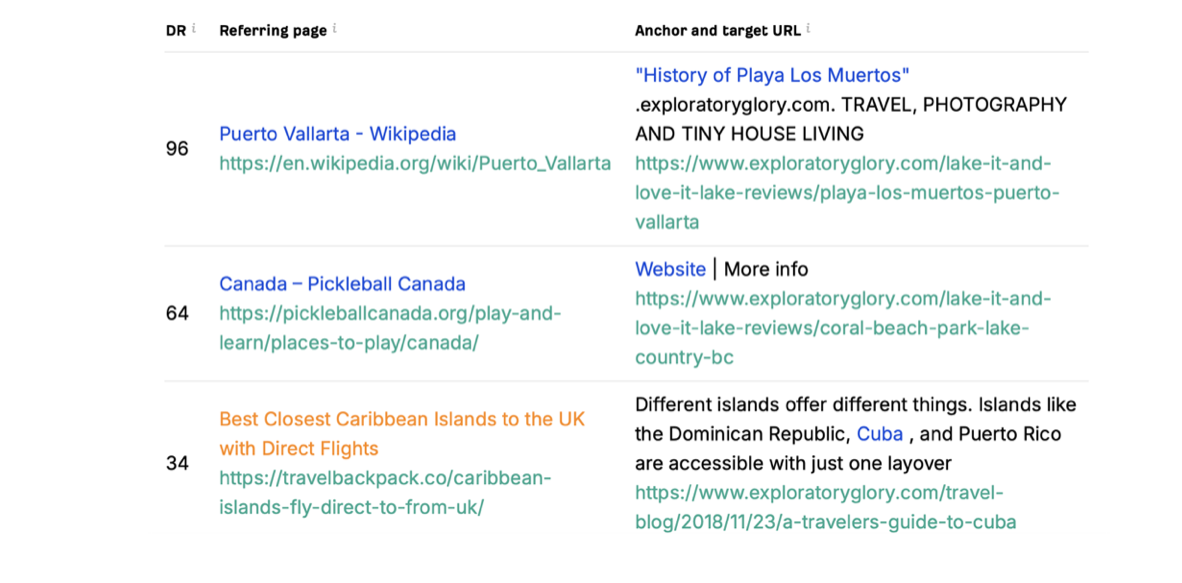
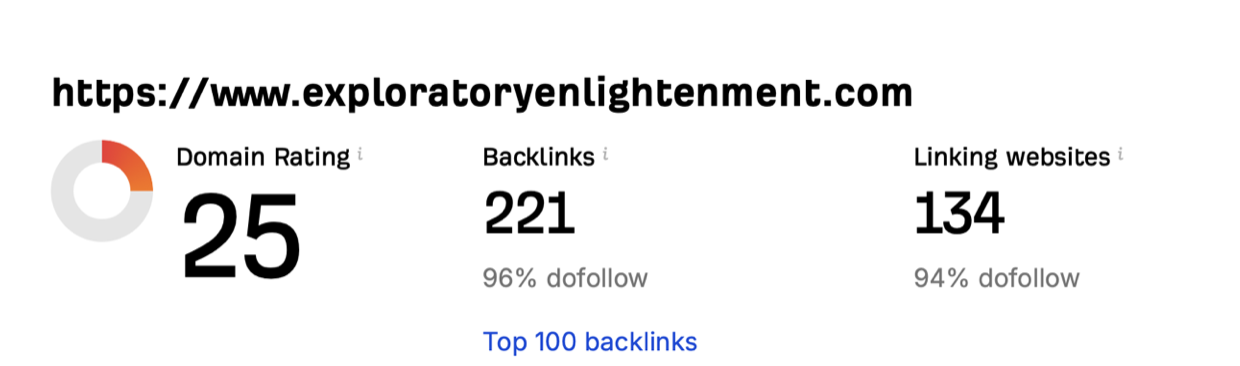
Below, you’ll see the domain scores for both of my sites using the free domain authority checker from Ahrefs.
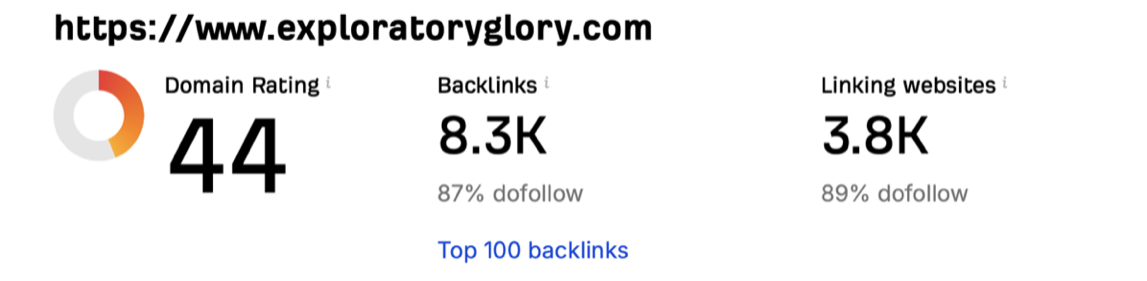
You will notice that Exploratory Glory has a domain authority of 44, which is considered quite average in comparison to some of the big brand sites. That being said, getting to 44 took a ton of work and dedication, and as you can see from the 8.3k backlinks and 3.8k linking websites, I have been quite busy over the last few years. Again, 44 might seem low, but I have been able to make quite a good living off of that site alone. Profits for the site have consistently increased year over year and ended up earning me around $90k in 2024, and I am already set to make even more in 2025. I am not at all trying to brag, but you need to understand the power of domain authority and how even smaller sites can make you some real-life-changing money.
Now, let’s take a look at my second site’s domain authority. I started Exploratory Enlightenment a few months back, and it is already at a ranking of 25. You will notice that it has only 221 backlinks and 134 linking websites. So why is the ranking number so high with so few backlinks compared to Exploratory Glory? It is simply because when I started my first site, there was a plethora of trial and error involved, and frankly, I was oblivious to the intricacies of link building and domain authority. So, needless to say, I made plenty of rookie mistakes, but I kept on plugging away and learning as I went. The knowledge I gathered along the way gave me a massive head start and helped me get my new site to a decent ranking with much less effort. Today, I am proud to say I have managed to monetize the second site as well, and I am contemplating a third in the future. With all that being said, as long as you heed my words and follow this book step by step, you will save yourself all the heartaches that I had to endure along the way.
So, is there a quicker way to boost DA? The answer is, of course, yes! You can indeed boost DA the same way businesses are doing it, by publishing content with your links on other sites. Sometimes, the very same platforms that wish to publish on your site also offer services to connect you with other sites so that you, too, can publish your content. This technique requires an initial investment, but it can and will get you to your goal faster. One site that I have successfully used in the past to buy and sell articles is icopify.
Streams of Income (Monetization)
Let’s get into discussing all of the different streams of income you will be able to earn from your site. This will vary slightly from site to site depending on your niche and overall goals.
Ad Revenue
So, what are display ads? They are essentially small blocks of advertisement that are placed within your article, and every time a user either scrolls over or clicks on the ad, you will make money. How much you make depends on various things, like the type of ad served, the niche of your site, and whether the user clicked on the ad or just scrolled over. A user clicking on an ad pays significantly more than a user simply scrolling past an ad.
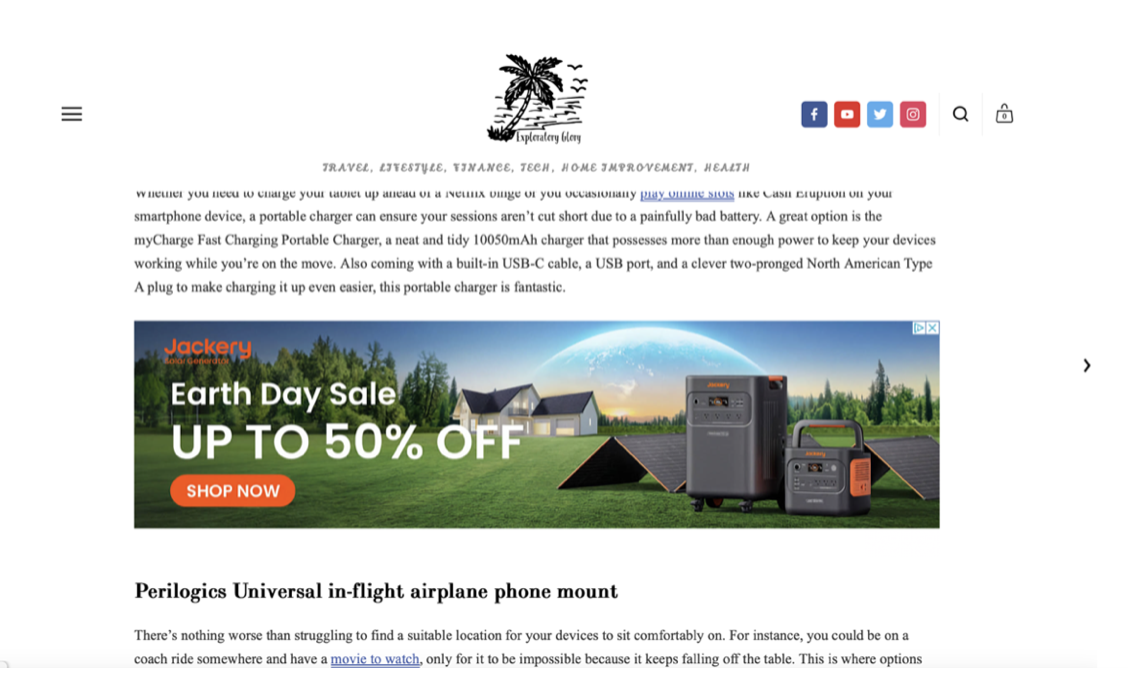
Below is an example of a display ad that Google AdSense added to my site. As you can see, Google did its best to match the ad to the content. This ad is for a Jackery solar setup, which is related to the content in the article. Website owners will be able to choose how many ads they want in their articles. Naturally, the more ads you run in an article, the more revenue you will make, but it could come at a cost. If you feed users too many ads, you may well be sacrificing positive user experience and damaging your site for the long term.
There are many companies out there that will pay you to run display ads on your website. Google AdSense is currently dominating the display ad industry. There are also some other great names in the business, like Media.net, Snigel, and Ezoic, to name a few. Many have found success on the lesser-known platforms, and there is no harm in trying them out and deciding what is best for you.
Getting approved by AdSense or similar companies will take time and patience, as they typically require you to have certain criteria before they accept your site.
Make sure to have the following criteria on your site before you apply.
A user-friendly site with a good amount of content, think 20+ articles. I would focus on original high-quality content written by you (not AI), at least to start. This will help ensure that you get accepted.
Put out content regularly to show that your site is active.
Make sure to have the required pages: DMCA, Privacy Policy, Contact, and Sitemap. Refer to my website, Exploratory Glory, to see the pages I am talking about. Feel free to copy and paste the content from my site to yours, but make sure to replace the names and email address with yours before you publish.
Read the program policies for whichever company you choose to ensure that you have done what is required to be accepted.
Add your site to Google Search Console and start to index all of your articles. Google Search Console is a necessary part of blogging if you want your content to show up in the rankings.
After checking all the boxes, you are now ready to apply. Good luck, and remember, if you get rejected, it isn’t the end of the world. Carefully review the reasons for rejection, do your best to fix them, get back on the horse, and try again.
Affiliate Marketing
Affiliate marketing is another crafty way to monetize your website. What is affiliate marketing? Affiliate marketing is essentially the idea of being a middleman between visitors to your website or social channels and companies looking to market their products or services. This is done by either adding a link within your site’s existing articles or sharing links to your followers via social media. When an action is taken on a link and someone buys the service or product, you receive a percentage of the earnings. It is quite easy to do, and if done correctly, can also be a great way to make a living.
I use affiliate marketing to make money on the side, and personally think it’s great, especially if you can learn to master it. That being said, it is not my bread and butter, and I am still a work in progress. Other publishers out there swear by affiliate marketing and make a killing every month, so it should be taken seriously, and it honestly doesn’t hurt to give it a shot.
If you have a good following on social media, you can leverage those followers to promote your links in the hopes that some of them will follow through on whatever you are offering. Some companies will also give you a personal discount code to share with your followers, giving them even more incentive to purchase said product or service.
Here are a couple of great options for companies that I have used to make money with affiliate links. Click the links to sign up for your free account.
Typically, affiliate marketers will only add links that are related to the article they are writing or the video they are creating.
As an example, let’s say I am writing my aforementioned article, ‘Arizona Travel Guide: Explore the Grand Canyon State,’ then I would try to add affiliate links that relate to Arizona travel. For this, you will need to put yourself in the reader's shoes. The reader will typically be someone who is thinking about taking that trip to Arizona, and they may just need a little push in the right direction. Think, “What service will they need while on vacation in Arizona?” Well, they may need services like flights, hotels, car rental, or tours. So, thinking of those important factors, we would want to add links in the form of buttons to help seal the deal. See the link to my Arizona Travel article, where you will find 2 examples of affiliate link buttons.
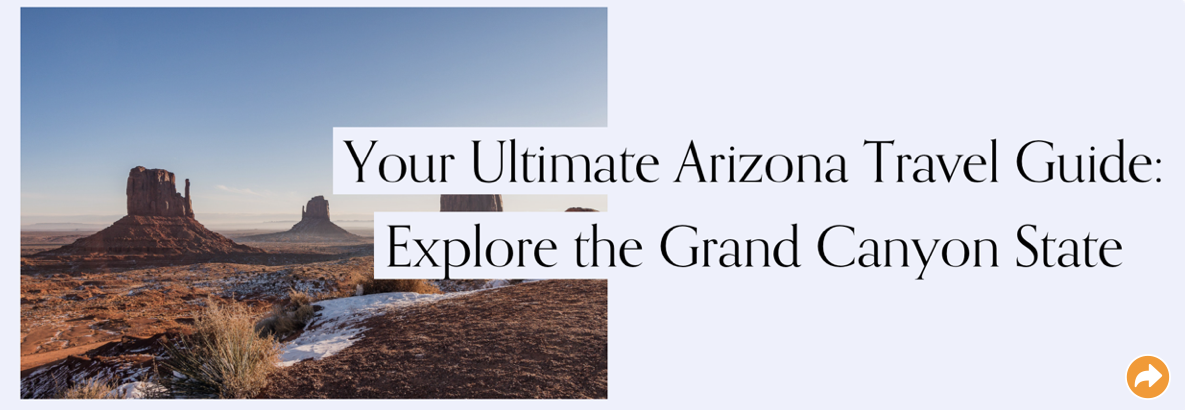
Now that you have taken a look at the above article, you would have probably noticed the two affiliate link buttons within the content. Click the two affiliate link buttons below to see how they work.
You will notice that you are taken to the well-known booking platform TripAdvisor. I would like to thank you now because by clicking on my link, you just made me a small profit, 50% to me and 50% to Tripadvisor. This pay-per-click kind of deal is rare, and I have yet to find another company that pays just for clicks. Most platforms only pay when the purchase is made, and with that, if you were to complete a booking using my TripAdvisor link, I would receive a commission of 8% of the entire purchase amount.
If you are using social media to promote your links, then you may choose to publish them in something like an Instagram Story, where you will try to convince your followers to make a purchase. With Facebook, you will be able to publish links within a post and a story.
Another way to promote your affiliate links is to use your YouTube channel, if you have one. You see, each YouTube video you upload has a description where you can add your links. Depending on your viewership and engagement, you may be able to make some income from this technique as well. During the video, you may even want to mention your affiliate link to your viewers and state its purpose. For instance, in some of my videos, I do reviews of hotels I stay at during my travels, and I will make sure to mention something like “if you guys would like to rent this place too, the link will be in the description.” The idea is that the viewer may already be interested in a certain topic, in this case, a destination, and they just need a little push in the right direction to complete the purchase. If they do decide to make the booking and rent the place, Viola, you just made 8% of the purchase. This can be replicated using virtually any product or service. If you’re reviewing things like supplements or cars, then you will include links related to those niches within your video descriptions.
Here is an example of one of my travel videos titled ‘Best Way to Get Around Cozumel ’. Click through to see the video description, scroll to the bottom, and there you will see the links I am referring to.
Hopefully, now you have a fairly good understanding of how affiliate links work and how you can profit from using them.
YouTube
Unless you’ve been living under a rock, you probably know by now that it is indeed possible to make a good living off making YouTube video content. Now, what does this have to do with your website? Well, YouTube is a great way to promote your site and increase brand awareness. Remember the Cozumel video from above, when you looked at the description, you should have seen this link: Learn More About Cozumel https://www.exploratoryglory.com/travel-blog/guide-to-travel-cozumel-mexico. This is a link back to our site where we have written our ‘Guide to Travel Cozumel.’ Now, go ahead and check out the travel guide and see what you notice.
So now that you have had a look at our travel guide, you probably noticed the same Cozumel video from before has been embedded within the article. It’s kind of like a symbiotic relationship, meaning they benefit greatly from each other.
So why is this in the monetization section of the book? YouTube will give you an extra stream of income if you are willing to put yourself out there, and as we just learned, there is the added benefit of sending people from YouTube to your website and vice versa. This can, in turn, provide more opportunities for making money through various avenues like ad revenue, affiliate marketing, and sponsorships.
Sponsorships (Free Stuff)
Yes, you read it right, ‘Free Stuff’! When your website or YouTube channel starts to grow and receive a little attention, you may start to get offers from companies wishing for you to promote their products. They could be looking for a review video or article where you add a backlink to a landing page of their choice. Sometimes, they will want you to become an affiliate and promote their products through your website or social media. Other companies will send you free products to try, and they simply want a backlink from your site without any promotion involved.
I have had some amazing opportunities over the years, many of them seemingly too good to be true, at first. But they indeed ended up becoming a reality.
Probably the coolest freebie I’ve had since I started was the time I got a free CAD $3,600 Himiway E-Bike in exchange for a YouTube review video, which you can see below.

In the description of the video, there are two links, one leads back to an article we wrote titled ‘E-Bike Review | Big Dog Electric Cargo Bike’, for which they also paid us $80 to write. The second URL is an affiliate link that gives users $50 off if they wish to purchase a bike, and if they do, I receive 4% commission. You’ll also notice once again that within the article is the embedded YouTube video, think symbiosis. Keep in mind, this video only took me around 4 hours to make, so it ended up being a great deal for me.
Another fun example was when a tourism company called Mexican Caribbean on TikTok contacted me to make a travel video about Cozumel, and they would pay me CAD 1,800. In some instances, this wouldn’t work unless you’re on location, but we had already been to Cozumel twice and had plenty of footage. I only put in a couple of hours of work, which you can see here, and sure enough, they sent over my money in a timely fashion.
The two instances I mentioned were my favorite examples, but we have had many other notable freebies, like stays in luxury hotels, resorts, or cabins. Free camping accessories, travel swag, shirts, hats, jackets, meals, and much more. It’s hard to remember all the free stuff over the years.
Another notable opportunity was the time Explore Magazine, a Canadian publication I read as a child, contacted me to write some articles for their site. They needed someone from the Okanagan Valley to cover some travel topics on the region, and they offered to pay me CAD 200 per article, which isn’t a lot. I was mostly just thrilled at the thought of having my writing featured on their site (See my writing here). One of the added benefits was the high-level backlinks I could add to my writing that would lead back to my site. Those links turned out to be some of my most prestigious backlinks.
So, as you just learned from my examples, if you are successful at becoming a ‘digital creator’, you will reap the many benefits that go along with it.
Sponsored Guest Posts and Link Insertions
Now let’s talk about the ‘bread and butter’ of my whole operation, sponsored guest posts and link insertions. By now, given what we covered in Chapter 3, you should be quite familiar with link building, domain authority, and their important benefits. Well, it’s not just important for ‘your site’, it’s important for every site, and there are many companies, some of them you’d recognize, that will pay for you to publish their articles and/or links on your site. This is the highest-paying of the income streams and probably one of the least time-consuming as well. In the past, I have published articles for big names like Ford or People’s Magazine, just to name a couple.
The act of publishing articles or links for businesses on your site can be very lucrative, but it takes time and patience to get to the level where you will make life-changing money. You’ll want to aim at getting your domain authority to at least 20 and try to have 1000 organic visitors per month. This is a good target to hit, and in all honesty, most companies won't even consider publishing on your site until you come close to reaching those stats. That being said, a DA of 20 is a good first goal to hit, but always keep in mind that the higher your site’s DA rises, the more money you can make. Not only that, but over time, you will compile a list of contacts who are looking to pay for space on your site. Having a network of resellers will greatly benefit you in the future if you decide to build another site and want to monetize it also.
So, what is a reseller? They are essentially the middleman in the guest post space. They may be a freelance worker or work for a larger corporation that specializes in growing rankings. Some of them are writers who spend their days writing articles and bartering with publishers (like me) for a place to publish them. Resellers are your connection with the businesses and corporations that need the ‘link juice’. Some of them can be a bit pushy as they are trying to get the best deal possible, so they can maximize their profits. So hold your ground within reason and don’t let them pay you less than your worth.
So what kind of pay are we talking about? The pay is very good, especially for the amount of time it takes to publish an article, usually 5-10 minutes. Some pay as little as $5, and some pay up to $200, depending on the topic covered. Yes, you read that right: $200 for 5-10 minutes of work. It seems to good to be true, but it isn’t, it’s very real and I need to pinch myself every day just to verify that I am not dreaming. Also, keep in mind that we are talking about USD, so depending on what country you’re from, you could be looking at quite a nice chunk of money. Being from Canada, I would make around $277 at the current 2025 exchange rate. These high-paying articles typically come from companies that are looking to publish grey topics.
What are grey topics? Grey topics are generally niches that are considered taboo, such as adult, THC, CBD, gambling, or crypto. These types of articles can and will be regarded as damaging to domain authority, meaning they will negatively affect your rankings over time. So you will have a critical choice to make: do you publish grey topics and make money in the short term and risk damaging DA, or keep it family-friendly and think about the long-term benefits? The choice is all yours. I chose to publish grey topics on Exploratory Glory because, at the time, it was hard for me to turn down big-money articles. Whether that was a mistake or not, it’s hard to tell, but I have seen it affect my DA in the past. So with that, before you make the decision, stop to consider what your overall goals are and how you want your site’s reputation to appear.
So, who will buy articles from you? Well, many companies and freelancers will be willing to pay you as long as your domain authority and traffic meet their requirements. I use companies like icopify and fatjoe.
I will be selling a list of companies and freelancers who are willing to purchase guest posts and links. This email list took me years to compile, and I am offering it to all my readers for a small fee. Contact me at cody@exploratoryglory.com for access to the list.
Selling Products (E-Commerce)
I added this one last because E-commerce is an industry that I am not an expert in. I know it works and can generate insane profits if you know what you're doing. I have yet to master this, but I have barely tried, if I am being honest.
At some point, you have to make a choice and decide where you will allocate your time, and for me, I chose other means of monetization. If you’re the type that can manage it all without problems, then all the power to ya! I personally always have the drive to do more, but I can only spend so much time online. I love to be outdoors, so finding a happy medium between the digital world and the natural world is my overall goal right now. So the only reason I don’t sell stuff is because of the time it will take me to manage it.
I will say that it has never been easier to sell a product, although there has also never been so much competition. Nowadays, almost every website-building platform allows you to add a store and easily display your products. There are companies like Printful that allow you to create custom dropshipping products like t-shirts, hats, sweaters, coffee mugs, and more that you can design yourself and sell on your site. It sounds easy, but there is a lot more to it, and sometimes getting folks to buy your product involves studying and tweaking metrics like cost acquisition, customer retention, conversion rates, and more. SEO and search rankings are also a huge driver of traffic and conversion when it comes to E-Commerce.
If you’re someone who has created a name for yourself on social media, then you may want to sell customized merch. For instance, you’re a big-time vlogger on YouTube or TikTok, and you have amassed a large following. Eventually, you will need to meet the demand of your audience, and it will become important to have a website where you can sell your merchandise, tickets, or display important dates for your upcoming events.
More Ways to Monetize
Now that we have talked about the ways I have monetized my website, I feel I need to at least mention some of the other ways creators can monetize their sites. I don’t personally use these techniques, but they have been tried and tested and can produce great results.
Subscription Model: This is where you would create exclusive content that only your subscribers will have access to. It could also be a service that requires users to pay a subscription fee. These services could be things like premium articles, videos, courses, or a members-only forum.
Consulting or Coaching Services: Fancy yourself an expert in a particular field, then why not offer consulting or coaching services related to your niche? This can sometimes include webinars or one-on-one video calls.
Email Marketing: Website owners can network and compile an email list to be used for marketing products or services directly to their subscribers. These emails can include newsletters with curated content, promotions, and affiliate offerings, thus increasing the likelihood of generating profits.
Content Licensing: If you have unique, valuable content, consider licensing it out to companies or media outlets. This can sometimes include blog posts, images, or videos.
Crowdfunding/Donations: If you seek to provide exclusive value through your content, consider creating a Patreon account where loyal users can support you financially.
Conclusion
I hope I have helped shed light on the subject of display ads, backlinks, sponsored articles, YouTube, and affiliate links. As you learned by reading this E-Book, a website is a bit of a technical endeavor, though not quite as complicated as it once was. It can be your journal of digital expression, give you a sense of accomplishment, and help create an online community.
Having a solid foundation for your business starts with figuring out your niche and your audience. This is critical for your brand because it has to do with your content creation, design choices, and how you monetize your website. The selection of your website’s name and niches is extremely important for your brand identity.
Keep in mind, content should make up the bulk of your website. By implementing the above-mentioned SEO practices, you will enhance your visibility on search engines like Google, which will in turn boost organic traffic.
As your website begins to accumulate content and attract visitors, monetization should become your goal. Display ads, backlinks, sponsored articles, YouTube, and affiliate links will all be possible avenues for making an income.
Building backlinks and creating a network of collaborators will help to amplify your online presence. These connections will be key to your success and will be your avenue for selling guest posts and link insertions. They will also be your contacts for websites you might want to build in the future.
Driving traffic to your website must include the usage of social media platforms, SEO, and content creation to generate substantial traffic. Overall consistency is probably the #1 factor for you to do well. Pay attention to analytics, so you can understand the inner workings and see what works and what doesn’t.
Always remember that success is about perseverance. Building a website and creating a reliable source of income takes a lot of time and determination. I wanted to give up so many times, but something in me forced me to carry on, and I am sure glad I did. Don’t forget to celebrate milestones along the way and stop to smell the roses, because succeeding at becoming your own boss is a feeling that very few will ever feel.
The world of website creation and monetization can be very financially rewarding. Stay the course, be honest, provide value, and engage with your audience, and you will make a name for yourself in the digital realm. Investing effort now will pay off in the future. Good luck on your journey, and feel free to contact me with any questions about the E-Book.
By Cody Lee Hammer
Email: cody@exploratoryglory.com