How Remote Patient Monitoring Solutions are Transforming Patient Care?
Healthcare has always been a relationship game, about timing, trust and good information, yet over decades we have been compelled to provide services based on snapshots of how a particular patient lives on a daily basis, and that is where Remote Patient Monitoring (RPM) solutions are silently but decisively transforming the whole game to both providers, care teams and even the patients.
Rather than making guesses about what transpired between appointments or having a problem become an emergency, RPM enables healthcare professionals to keep patients constantly connected and to receive meaningful health data stored in their own homes and to turn that data into proactive care decisions that really do make a difference, burn out less, and provide better patient experiences overall.
We are going to deconstruct what RPM is, how it functions in practice, and why it is becoming such an urgent component of patient care delivery in the modern world.
What Are Remote Patient Monitoring Solutions?
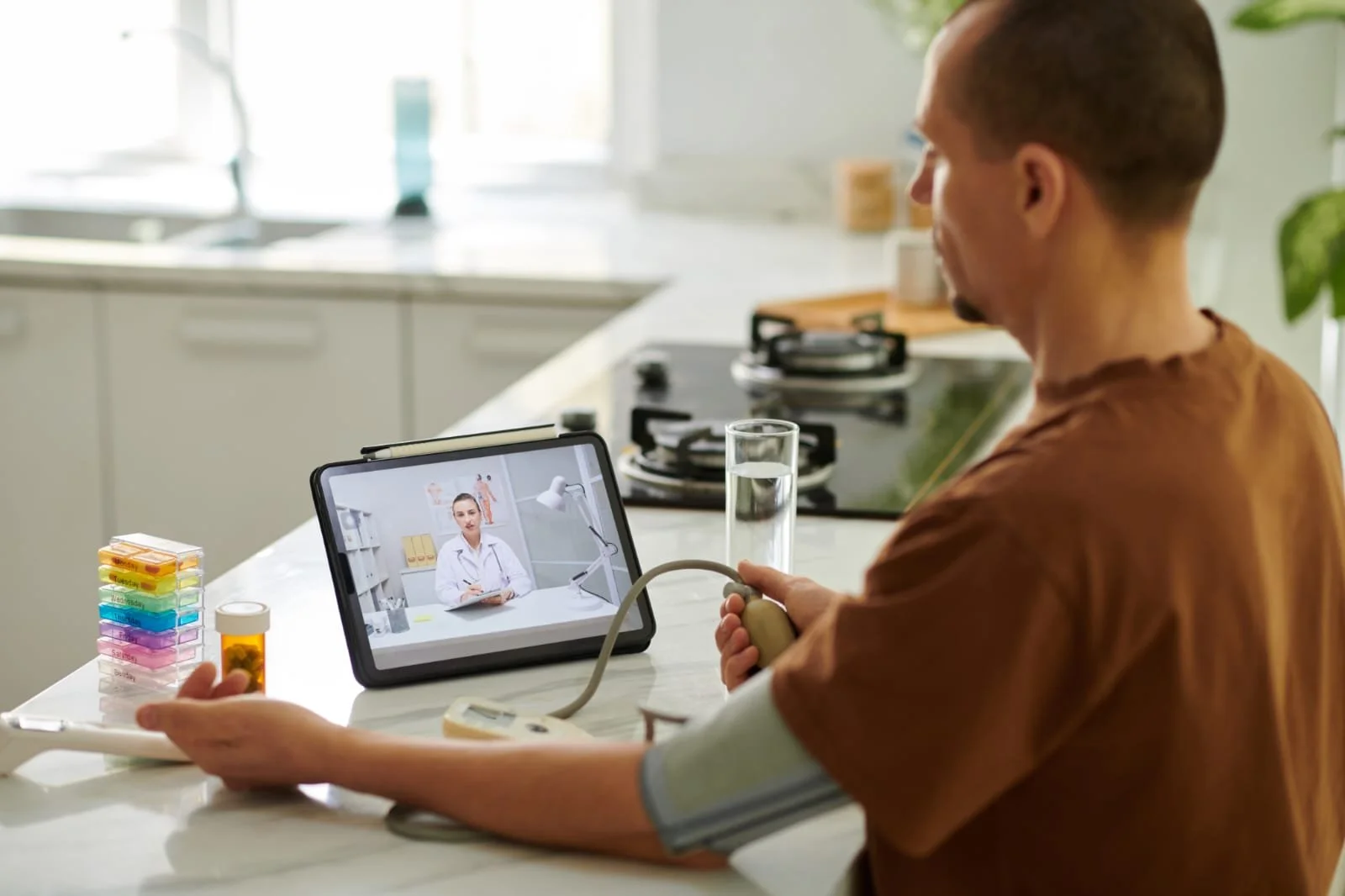
Remote patient monitoring solutions (RPMs) are systems that involve the use of a connected set of medical devices, mobile applications, and closed-end software platforms to gather health data on patients beyond a standard clinical environment and deliver it directly to health care professionals to review and act upon.
The strength of immediate RPM solutions is so great, not only due to the content of devices, but also due to the ability of the latter to be integrated with care processes, electronic health records, analytics, and communication platforms so that clinicians can be at the same time organized, responsive, and able to serve more patients without loss of quality or safety.
Why Remote Patient Monitoring Is Gaining Momentum in Healthcare
Every healthcare system is facing the pressure of achieving more with minimal resources, and the increasing numbers of chronic diseases, staff shortages, and increasing patient demands of convenience and accessibility all add pressure to RPM being more a necessity than a luxury.
Patients would like care to work with their lives, not to disrupt them, and providers would like to work smarter, not harder - and RPM is the only thing that meets both of these requirements simultaneously.
How Remote Patient Monitoring Solutions Actually Work
Here is how RPM works:
Device Setup and Patient Onboarding
The RPM process typically begins with a device choice that depends on the condition or the risk and the care objectives of the particular patient, connected with the onboarding that provides the patient with the skills of how to use the equipment in the correct and consistent way; this is a crucial step since even the most effective technology will not lead to any outcome in case a patient is scared or confused by how it works.
Data Collection and Secure Transmission
When the patient starts using the device, the automatic monitoring of the readings is done and safely transferred to a cloud-based server where they are saved, structured and presented in readable format as graphs and figures showing trends, expectations and notifications instead of bombarding the clinician with figures.
Clinical Review and Intervention
According to the acuity of patients and the design of the program, the clinicians may monitor incoming data in real time or at the predetermined intervals and make timely contact when the values fall outside of the specific predetermined limits or the direction towards which the trends develop, depending on the urgency of the patient and the need to modify medications, strengthen education, or increase care.
Key Benefits of Remote Patient Monitoring for Patient Care
Let us now look at the advantages of RPM solutions.
Better Chronic Disease Management
Seemingly unrelated areas such as hypertension, diabetes, heart failure, COPD, and obesity are the ones that are served greatly by RPM due to the constant monitoring, which helps to detect the patterns in otherwise unnoticed areas, including slow blood pressure creeping, irregular glucose regulation, or unsuspected fluid retention.
Improved Patient Engagement
With the ability of patients to gain access to their personal information and understand the impact of the choices they make on a daily basis regarding their health, they are expected to feel more motivated and engaged in their treatment.
Reduced Hospitalizations
Coupled with early detection of issues, and closer supervision of high-risk patients, RPM programs repeatedly provide a decrease in preventable hospitalizations, readmission rates, and emergency care visits, which financially and functionally benefit patients and healthcare systems.
Expanded Access to Care
RPM also brings care services into both rural and underserved communities and into home environments where individuals might not be able or may not be practical to provide care on a common basis, allowing to bridge care access disparities without compromising care or safety.
How RPM Is Changing Clinical Workflows for Healthcare Professionals
Now we will see how RPM is changing clinical workflows.
Smarter Use of Clinical Time
The additional time available to clinicians can be spent on meaningful dialogue, care planning, and intricate decision-making with much of the data collection and organization handled behind the scenes by automated systems because they do not have to spend time engaged in acquiring routine vital data when visiting the office.
Team-Based Care Optimization
Collaborative models RPM itself can be employed in supporting collaborative care models by ensuring that nurses, care coordinators, pharmacists, and physicians can access patient data in order to view and triage patients, as well as assign workload among the care team in a more efficient manner.
Privacy, Security, and Compliance Considerations
Due to the fact that the technology of RPM entails the transfer of sensitive health data electronically, it is crucial that the data security measures are highly effective, such as encryption, secure authentication, role-based access control as well as the adherence to relevant healthcare regulations.
Clear consent, data ownership, documentation and escalation policies should be also made by healthcare organizations to save the patient and comply with regulations.
Challenges and Limitations to Keep in Mind
Although RPM is incredibly valuable, it is not devoid of difficulties, such as the cost of the equipment used, connectivity problems, a variable patient engagement, the complexity of workflow integration, and navigation of reimbursement that have to be carefully thought over and continuously optimized.
The Future of Remote Patient Monitoring in Patient Care
With continuous development of artificial intelligence, predictive analytics and interoperability, RPM solutions are becoming even smarter, automated, more ingrained into normal clinical practice, making it possible to detect potential risk earlier, deliver more personalized interventions, and coordinate care environments from afar.
We are entering a healthcare paradigm in which care becomes continuous, proactive, customized, and not episodic, reactive, and generic, and RPM is one of the technologies that enable it to occur.
Final Thoughts
Remote patient monitoring solutions are not new or experimental anymore, they are becoming the pillars of the modern healthcare delivery system.
RPM is a viable, expandable and indeed effective way forward to a future-proofed practice that healthcare professionals may seek to take to enhance patient relationships and to adopt smarter care models but not replace them.