Hydrodermabrasion vs Hydrafacial: Professional Facial Treatments Tailored to Skin Care Needs
A growing number of people are seeking non-surgical cosmetic procedures, and this is leading many beauty professionals to harness powerful devices such as hydrafacial machines and hydrodermabrasion for skin rejuvenation treatments. Each of these procedures comes with unique advantages. Understanding your clients’ needs and concerns can help determine if your practice will benefit from one or both of these treatment options. For B2B companies in the beauty equipment sector, it is important to distinguish between the functions of a hydrafacial machine professional and a hydrodermabrasion machine in order better to serve beauty salons, spas, and clinics.
This article discusses the treatment's mechanisms, evaluating advantages and their application with respect to the skin challenges and concerns, and helping to select what is more beneficial for the business.
What is Hydrafacial
Hydrafacial is an advanced non-surgical skin treatment that performs cleansing, exfoliation, extraction, as well as hydration in a single session with the help of a dedicated machine. Skin rejuvenation through Hydrafacial is performed with the help of a hydrafacial machine professional that makes use of patented vortex technology alongside hydrating serums for deep cleansing and nutrition.
The procedure consists of several important stages:
Cleansing & Exfoliation. In the first stage of a Hydrafacial, dead skin cells and impurities are removed, and the skin is refreshed and smooth.
Acid Peel. A chemical peel is administered to the skin to enhance skin renewal by loosening some impurities. Unlike stronger peels, it does not irritate.
Extraction. Using gentle suction, the machine removes excess oils, blackheads, and other debris from the skin’s pores.
Hydration & Antioxidant Infusion. The skin is infused with a customized serum to nourish and provide hydration which improves the skin’s texture by making it plump and revitalizing the glow
The Hydrafacial is good for treating a variety of skin types and conditions like acne, fine lines, hyperpigmentation, and skin dehydration.
What is Hydrodermabrasion?
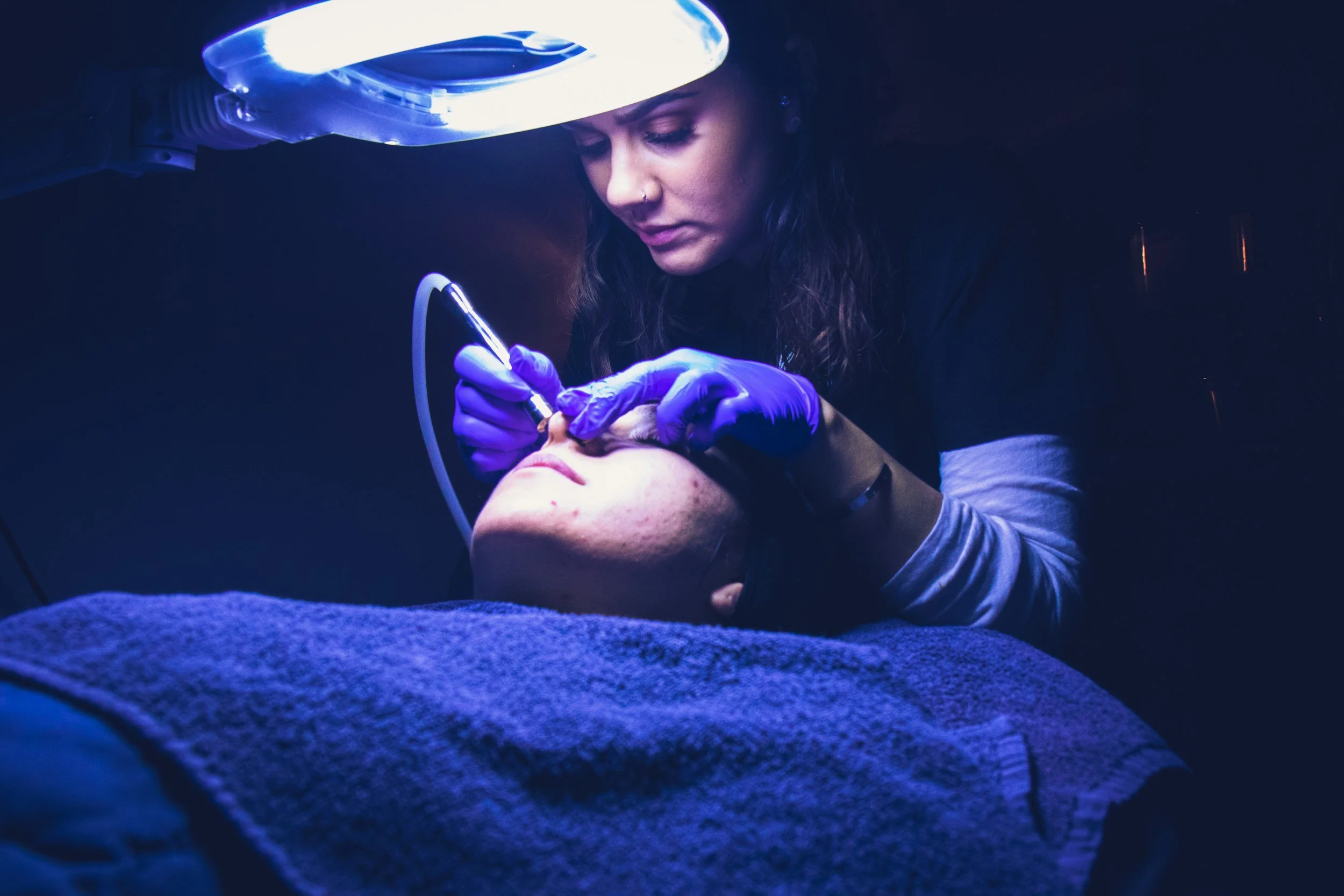
Hydrodermabrasion is a form of facial therapy that combines deep hydration with exfoliation where a water-based solution is frequently used. Utilizing a hydrodermabrasion machine, the treatment sprays a mix of water and serum to exfoliate the skin’s surface while also suctioning away impurities.
The main characteristics of hydrodermabrasion are:
Exfoliation. The surface of dead skin is exfoliated gently with a stream of water and serum mixture.* Extraction: The suction process thoroughly cleans by removing dirt, oil, and debris from the skin’s pores.
Hydration: Skin serums that contain hydrating ingredients are injected deep into the skin after the exfoliation process to restore balance and moisture, replenishing what has been lost.
Even though both treatments have the same goal of enhancing skin texture and increasing hydration, hydrodermabrasion is more gentle and more appropriate for sensitive skin. This is because sensitive skin does not respond well to chemical peels, often used in hydrodermabrasion.
Difference Hydrafacial Hydrodermabrasion
Both treatments have a focus on exfoliation, hydration, and skin health, and while Hydrodermabrasion and Hydrafacial share certain goals, there are fundamental differences between the two.
Procedure and Technology
The HydraFacial machine professional is equipped with a specific device that features mild suction and vortex technology geared towards more sophisticated, stepwise, and multi-layered treatments such as a mild acid peel or infusion of customized serums, which is tailored to the client's needs. This makes Hydrafacial more versatile and comprehensive.
Hydrodermabrasion is often more streamlined. It mounts fewer steps, relying mainly on the combination of the water. It focuses primarily on the water dermabrasion technique, but is still effective in addressing concerns such as dry skin, dull skin, and blocked pores.
Types and Conditions of Skin
While both treatments are appropriate and safe for a broad range of skin types, Hydrafacial is more effective as it addresses a greater variety of skin concerns. The chemical peel along with the infusion of antioxidants does address more targeted concerns such as fine lines, pigmentation, and acne.
Hydrodermabrasion, on the other hand, works best for clients with sensitive skin or those who want a gentler treatment. It is also effective for people with dry or oily skin, as it helps balance hydration and does not cause irritation.
Treatment Duration and Results
Hydrafacial treatments usually take longer than hydrodermabrasion because of the more elaborate steps involved. In most cases, the results are more pronounced immediately after treatment as clients report having plump, glowing skin.
Hydrodermabrasion, on the other hand, is usually more time-efficient and a greater number of people are able to notice an improvement in skin texture and tone after just one session. For more severe skin concerns, however, numerous sessions may be required to achieve desired long-term results.
Which Treatment is Right for Your Business?
As a B2B company, providing both Hydrafacial and hydrodermabrasion treatments to spas, clinics, and salons would widen the scope of your clients. Consider the following steps to determine which option is best for your business.
Hydrafacial for Increased Versatility and Customization
If your clients want a treatment to resolve multiple skin issues and offer a high level of customization, investing in a hydrafacial machine professional will work best. Its multi-step processes enable customization of serums, and for businesses that deal with clients requiring varied skincare from anti-aging to acne, it is a great option.
Hydrodermabrasion for Gentle, Non-Invasive Care
If your business specialty is older clients or those with sensitive skin, hydrodermabrasion would be a better option. Its gentle approach makes it among the safest and most effective treatments for sensitive skin. Hydrodermabrasion can also be advertised as a less aggressive, yet deceptively effective alternative for patients seeking more aggressive treatments.
Integrating Both Methods – The Ultimate in Client Satisfaction
Business entities that want to maximize both client satisfaction and revenue potential may find that offering both Hydrafacial and hydrodermabrasion treatments is particularly beneficial. These both options enable you to cater to a wide client base and treat different concerns as well as preferences.
Additionally, offering both treatments allows customers to select from a myriad of options that fit their distinct skincare objectives. For instance, some clients may require a more exhaustive Hydrafacial treatment to address aging or pigmentation concerns, while others may wish to have hydrodermabrasion treatment when they want a skin refresher.
Conclusion
In regard to professional facial treatment, both hydrafacial machines and hydrodermabrasion machines have major advantages to clients looking to improve the smoothness and radiance of their skin. With proper understanding of the differences and advantages of these treatments, B2B businesses will be better positioned to purchase equipment that will best serve their clients and design their offerings around client expectations.
There is a compelling reason to buy hydrafacial machine professional units for their versatility or hydrodermabrasion machines for their gentler approach. Either way, these treatments are crucial for any beauty clinic, spa, or salon that want to remain relevant in the competitive skincare market.