Are Cranes Available for Industrial or Commercial Construction?
Highlights
Cranes are widely available for both industrial and commercial construction projects across all sectors.
Mobile, crawler, and tower cranes each serve specific project needs depending on height, space, and load requirements.
Commercial buildings rely on cranes for HVAC lifts, steel erection, façade work, and rooftop materials.
Industrial facilities use high-capacity cranes for machinery installation, plant maintenance, and heavy-equipment lifts.
Certified operators, site evaluations, and lift planning ensure efficient and safe crane use in every environment.
Cranes remain essential tools across modern industrial and commercial construction, supporting the lifting, placement, and movement of heavy materials that cannot be handled manually or with smaller equipment. Both sectors depend heavily on cranes because they allow contractors to complete projects quickly, safely, and accurately. Whether a developer is building a multi-story commercial facility or an industrial plant installing massive production equipment, cranes offer the lifting capacity and reach necessary to complete complex tasks efficiently. Their versatility has made them a cornerstone for construction projects in virtually every environment.
Commercial Construction Applications
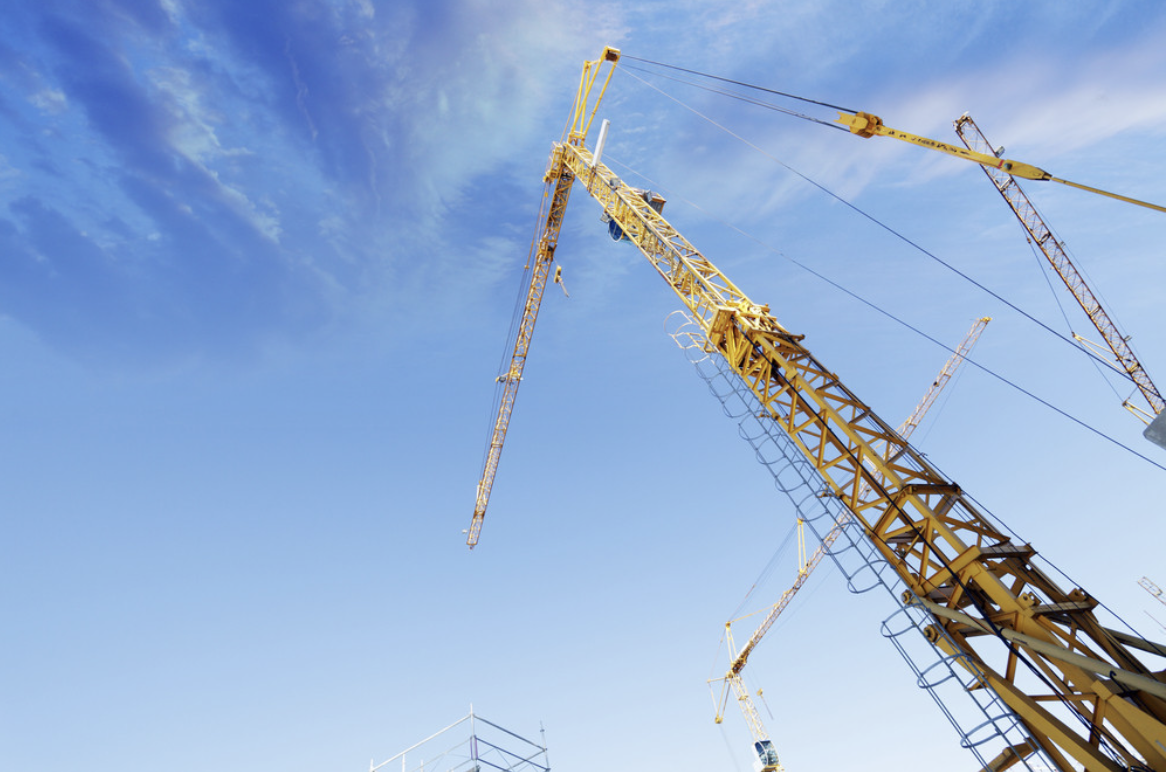
Commercial construction projects—from retail developments to medical centers and high-rise office buildings—require cranes for a wide range of lifting tasks. Mobile cranes are widely used because they offer fast setup times and can navigate tight urban environments. These cranes assist with rooftop HVAC unit placement, steel beam positioning, concrete panel installation, and transport of heavy building materials to elevated floors. Tower cranes are especially common on multi-story commercial projects because they provide unmatched height and a wide working radius, allowing materials to be moved efficiently across sprawling work zones. According to the Occupational Safety and Health Administration (OSHA), tower cranes significantly support safe and efficient vertical material movement on commercial jobsites due to their stability, reach, and lifting capacity.
Industrial Construction Applications
Industrial construction demands cranes with higher load capacities and superior stability. Facilities such as refineries, power plants, factories, and processing centers require cranes to install turbines, storage vessels, boilers, compressors, and other large industrial components. Crawler cranes are especially suited for these environments because their track-based undercarriages provide solid ground support and exceptional lifting strength. Industrial projects also rely on all-terrain cranes that combine mobility with power, making them useful for navigating wide industrial campuses. Many industrial lifts require detailed rigging plans and multi-crane coordination, making professional lift management a critical component of safe industrial crane operation.
Certified Operators in Both Sectors
Both commercial and industrial sites require qualified, certified operators to ensure safe and reliable lifting operations. Certified crane operators bring extensive training in crane control, load dynamics, communication procedures, and jobsite safety. Commercial sites may involve tight spaces near public areas, requiring operators to handle cranes with precision. Industrial sites present their own challenges, such as hazardous zones, confined areas, and heavy loads that must be handled with extreme care. Relying on trained and certified operators reduces the risk of accidents and helps maintain compliance with important safety regulations.
Specialty Cranes for Unique Environments
In addition to traditional lifting equipment, specialty cranes are available for unique situations in both industrial and commercial environments. Compact crawler cranes, mini cranes, and carry-deck cranes are often used inside buildings or tight spaces where larger cranes cannot fit. Commercial contractors frequently use these compact cranes for interior HVAC lifts, atrium glass installation, or small-component placement. Industrial environments may require gantry cranes or overhead cranes that offer precise control for equipment installation. The availability of such a wide range of crane types ensures that nearly any lifting challenge can be addressed with the right equipment.
Importance of Site Evaluations
Before a crane is selected, rental providers typically conduct a site evaluation to review access points, load requirements, height restrictions, and environmental factors. Commercial evaluations may involve street closures, sidewalk access, existing building constraints, and nearby utilities. Industrial evaluations may include safety zones, hazardous materials, underground utilities, and structural load-bearing requirements. The Crane Industry Council of America (CICA) recommends site evaluations as a standard practice to identify risks early and optimize crane selection for maximum safety and efficiency.
Crane Rentals for Short- and Long-Term Projects
Commercial construction often requires short-term crane rentals for one-day or one-week lifts, such as rooftop equipment installation or facade work. Industrial construction, however, may need cranes on site for several weeks or months during plant shutdowns or major equipment overhauls. Industrial contractors typically depend on long-term crane rentals for large gear replacement, machinery relocation, or expansions that require highly specialized lifting capabilities. This difference in usage patterns reflects the distinct needs of commercial and industrial environments.
Additional Factors That Influence Crane Selection
Another important consideration when determining crane availability for commercial or industrial construction is the specific technical requirements of each lift. Not all cranes are suited for every terrain, load geometry, or lifting angle, which means contractors must carefully match equipment capabilities to project conditions. In commercial settings, cranes often operate on paved surfaces or confined job sites, requiring models with compact footprints, short counterweight profiles, and smooth mobility. Industrial projects, however, may involve uneven ground conditions, outdoor staging areas, or locations with limited access that demand cranes with wide outriggers, robust track systems, and exceptional stability. Understanding these variables ensures that cranes selected for either environment maintain proper balance, lifting efficiency, and structural integrity during high-demand operations.
Role of Rigging and Lift Planning
Rigging plans are essential components of both industrial and commercial crane operations, especially as lifts become more complex or involve sensitive equipment. A thorough rigging plan outlines every detail of the lift, including load weight, center of gravity, sling configuration, lift path, and communication procedures. In commercial construction, rigging may involve lifting large glass panels, bulky mechanical units, or prefabricated wall systems that require precise motion and smooth coordination among crew members. In industrial environments, rigging teams often handle irregularly shaped machinery, high-value components, or items that cannot be tilted, rotated, or handled in standard ways. Proper rigging ensures load stability, reduces the likelihood of swing hazards, and supports safe execution of lifts that may occur in challenging or hazardous environments. Lift directors and crane supervisors play a major role in managing these operations, ensuring every lift adheres to OSHA and industry standards.
Weather and Environmental Considerations
Weather conditions influence crane operations significantly, regardless of whether the site is industrial or commercial. High winds can affect tower cranes on commercial buildings, especially during steel installation or rooftop work, where gusts may cause materials to sway or become unstable. Industrial sites often experience unique environmental challenges such as heat from refineries, steam from processing plants, or vibrations from nearby machinery that require additional planning and monitoring. Rain, snow, extreme temperatures, and lightning all play roles in determining whether a lift can proceed safely. Construction teams rely on anemometers, jobsite safety protocols, and manufacturer wind-load recommendations to maintain compliance and prevent accidents. Environmental awareness ensures that crane availability is carefully aligned with safe operating conditions.
Communication and Coordination on the Jobsite
Effective communication is another crucial element that enhances crane availability and operational success in both commercial and industrial projects. Spotters, signal persons, riggers, and operators must maintain constant coordination to ensure loads move safely along the designated lift path. In commercial settings, cranes often operate near pedestrian walkways, busy streets, or neighboring buildings, making communication essential for directing traffic, coordinating deliveries, and maintaining public safety. Industrial sites may require even more structured communication protocols due to the presence of hazardous materials, heavy machinery, or ongoing plant operations. Two-way radios, standardized hand signals, and pre-lift meetings help ensure every team member understands the lift plan and their role in maintaining a safe working environment.