Protein vs Moisture vs Bond Repair: How to Pick the Right Hair Treatment Products
Your hair is telling you what it needs. You're interpreting the message wrong because every brand on the shelf is shouting a different diagnosis and none of them asked what the actual problem is before prescribing a solution.
Dry? Moisture. Breaking? Protein. Limp? Bond repair. These get thrown around like interchangeable first aid kits when they're three completely different interventions targeting three completely different structural failures. Grabbing the wrong hair treatment products makes things worse in ways that feel confusing until somebody explains what each category actually does.
These Three Are Not the Same Conversation
People lump protein, moisture, and bond repair under "hair treatments products", the way people lump a dentist, an optometrist, and a cardiologist under "doctors". Technically accurate. Practically useless deciding which office to walk into.
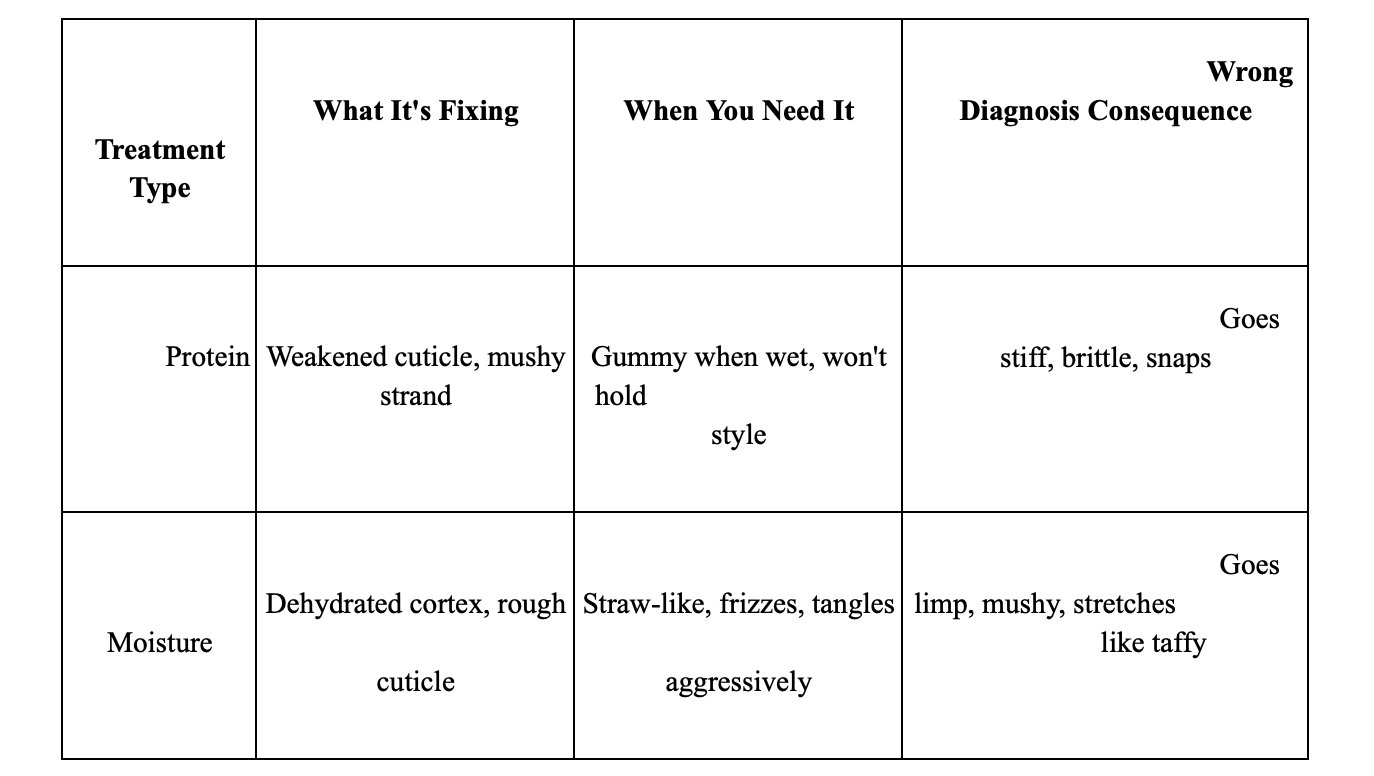

That table is the diagnostic tool most people never see before spending eighty dollars on a treatment mask addressing the wrong structural failure while the receipt sits smugly in the trash.
Protein: When the Scaffolding Needs Patching
Hair is built from keratin protein chains. Heat tools, chemical processing, even existing in the weather gradually chips away at that framework like foot traffic on a wooden floor.
Protein-based hair treatment products temporarily fill those worn spots. Hydrolysed keratin, wheat protein, and silk amino acids bind to damaged areas and reinforce where structure thinned out. Hair feels stronger, holds shape, and stops that disturbing gummy stretch when wet.
The trap is overdoing it. Protein on hair that doesn't need it creates the exact opposite problem. Stiff. Brittle. Snaps like a dry twig. If your hair already feels hard and breaks when brushed, it's screaming for moisture, and the protein aisle is the wrong address.
Moisture: When the Tank Is Running on Empty
Moisture-based hair treatment products address dehydration inside the cortex. The strand lost water through a cuticle too damaged or too environmentally assaulted to retain what it needs.
Glycerin, panthenol, and aloe vera pull water into the cortex or slow the evaporation, draining it. Hair softens. Frizz drops. Tangles ease because the surface smooths out.
Overcorrection produces "moisture overload". Hair goes limp, stretches wet without bouncing back, and loses all body because the cortex is waterlogged with nothing reinforcing it. Reaching for more moisture because things "still feel off" makes everything progressively worse. That strand needs protein, not another conditioning round.
Bond Repair: Newest Category, Most Misunderstood
Bond repair hair treatment products target something the other two can't reach. Disulfide bonds that snapped during bleaching, coloring, or repeated heat styling need specific chemical intervention to reconnect.
Ingredients like bis-aminopropyl diglycol dimaleate physically relink broken connections protein can't patch and moisture can't hydrate back into function. Hair that felt permanently damaged despite trying both other categories often responds because the problem was never about either. Structural connections broke during processing and needed a different tool entirely.
Bond repair doesn't replace protein or moisture. It's a third lane for a third type of damage. Hair treatment products in this category work best combined with appropriate support rather than used as a standalone miracle, which is how brands market them because "use alongside two other products" sells worse than "this fixes everything."
The Ten-Second Test That Eliminates the Guesswork
The wet stretch test costs nothing and tells you which hair treatment products your strand needs right now:
Pull a wet strand gently. Stretches dramatically without returning to shape? Protein deficit. Internal framework too weak to hold things together.
Snaps immediately without any stretch? Moisture deficit. Strand too rigid and dry to flex.
Stretches slightly, bounces back, but still feels weak overall? Bonds are likely the issue. Neither protein nor moisture can reach that problem.
Your hair was answering the question before you reached the shelf. The packaging was just louder.
Conclusion
Three types of damage. Three categories of hair treatment products. Each solving a problem the other two can't touch and each causing new problems when applied to the wrong diagnosis.
Match the treatment to what the strand is telling you. The wet stretch test takes seconds. The wrong treatment mask costs eighty dollars and three weeks of hair that feels worse than before you tried helping it.
Your hair was talking the whole time. The aisle was just too loud to hear it.