Why a Tent Is More Than a Place to Sleep on an Exploratory Outdoor Trip
A memorable outdoor trip does not only happen at the final destination. It may happen beside a lake you notice during a long drive, over a warm meal after returning to camp at dusk, or in the morning light that appears when you unzip the tent. For travelers who enjoy exploring, the campsite is not just a pause in the journey. It is the base that makes the next part of the trip possible.
Many people plan outdoor travel around routes, viewpoints, and activities, but they underestimate the value of a proper place to recover at night. The farther you go during the day, the more important it becomes to have a space where you can rest, sort out your gear, and step away from clutter. If the tent only works as a place to sleep, the next day can start with less energy. If it also supports changing, storage, short breaks, and basic organization, the whole trip feels easier to continue.
The More Flexible the Route, the More Stable the Campsite Needs to Be
Exploratory travel often comes with uncertainty. Weather can shift, drives can take longer than expected, and one scenic stop may turn into an entire afternoon. The more flexible the itinerary, the more useful it becomes to have a campsite that can quickly create order.
A stable campsite does not have to be complicated, and it does not require bringing every possible piece of gear. It should answer a few basic questions: Can everyone rest quickly at night? Do frequently used items have a fixed place? Can damp clothing stay separate from clean clothing? Can the next morning start without digging through every bag again?
That is one reason some travelers consider inflatable tents. By reducing the need to connect and thread traditional poles, they help make the campsite usable more quickly. For travelers following a flexible route or staying only briefly in each place, less time spent struggling with setup means more time to actually experience the destination.
A Tent Should Support Recovery After a Full Day Outside
A full day outdoors uses energy and creates small problems that need to be managed. Shoes bring in dirt or sand. Jackets may pick up moisture. Cameras and charging gear need a safe place. Clothes in a backpack have to be sorted again. If everything ends up piled near the tent entrance, the resting space can feel crowded very quickly.
A tent that works well for exploratory travel should guide what happens when people return to camp. Shoes come off first, bags have a place to go, outer layers and nighttime essentials can be organized, and then everyone can finally sit down and rest. The space does not need to feel like a full room, but it should keep people from being surrounded by loose gear.
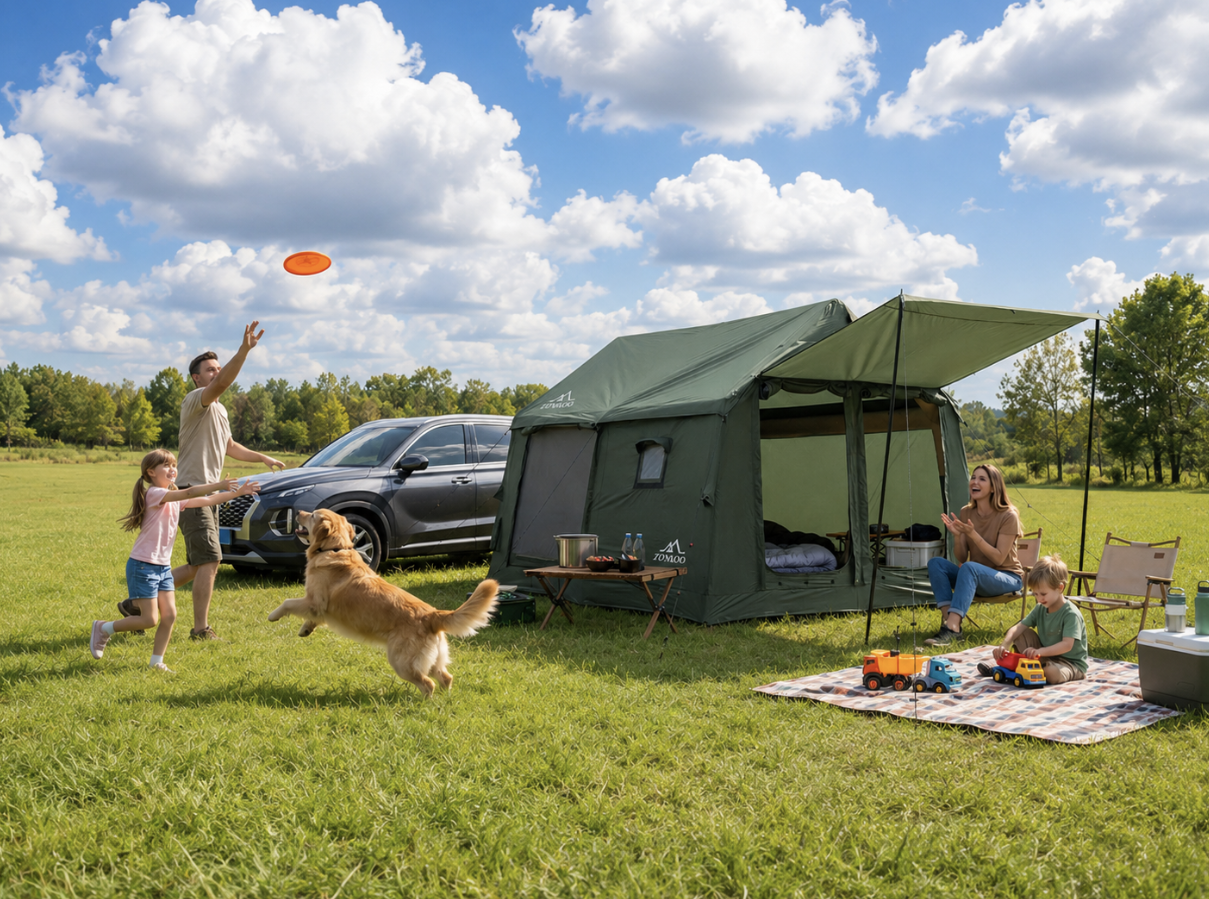
For small-group or family road trips, ZONKOO Orion fits naturally into this kind of use as an inflatable camping tent built for practical campsite living. Its setup time is 7 minutes, with 86 square feet of interior space and a 6-foot-11-inch maximum height. The point is not only how many people it can sleep, but how it gives campers room to stand, change clothes, organize bags, and prepare gear for the next day after a full day outside.
Ease Comes From Doing Fewer Repeated Tasks
A messy campsite is often not caused by a lack of gear. It usually happens because nothing has a reliable place. A flashlight is left in the car during the day and needed at night. A jacket gets pushed beside a sleeping bag, then disappears when the temperature drops. Dishes, towels, and charging cables end up together, only to be sorted again during pack-up.
Exploratory travel becomes tiring when the same small tasks have to be repeated over and over. Looking for the same item every day, stepping over the same pile of bags every time you enter the tent, or repacking the same corner each morning slowly takes away from the time that should feel relaxed.
When choosing an inflatable camping tent, it helps to think about whether the tent can support simple zones. Shoes and outer layers can stay near the entrance. Sleeping gear can stay deeper inside. Electronics, spare clothing, and extra layers can each have a fixed corner. This kind of setup is not complicated, but it helps travelers keep a steady rhythm as they move between different stops.
Different Destinations Need Different Tent Organization
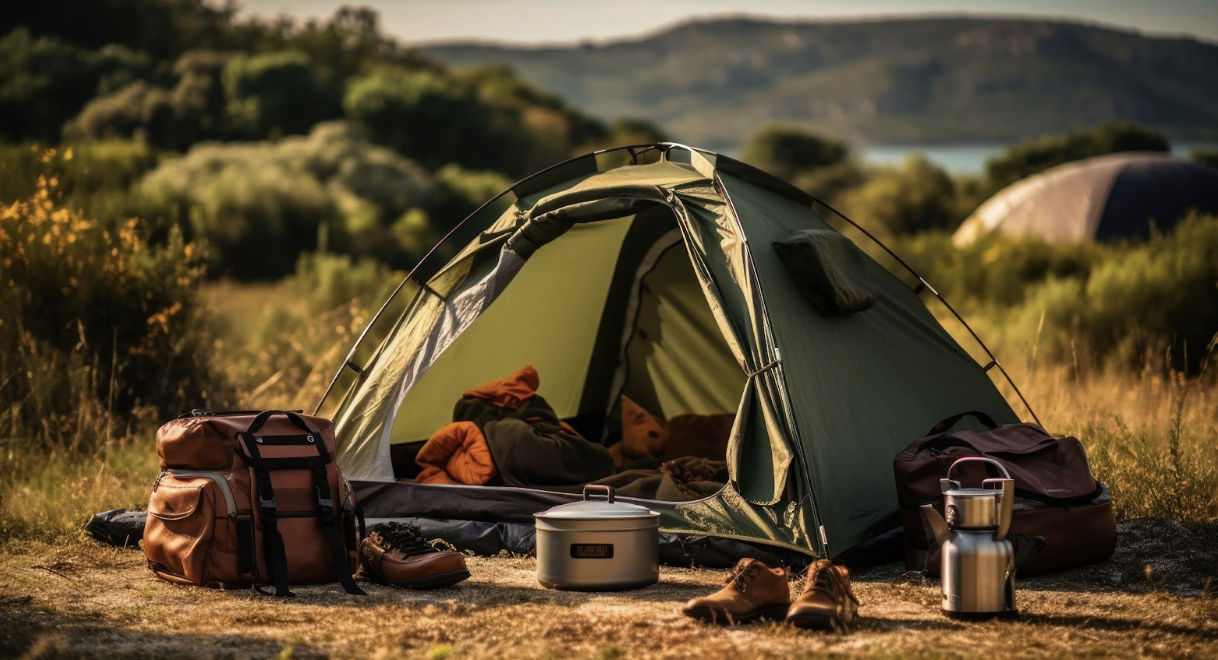
Forests, lakesides, coastlines, mountain campgrounds, and desert-edge sites all change the way a tent gets used. Lakes and coastal areas are more likely to involve damp items. Mountain nights may require warmer layers within reach. Sandy or rocky campsites make it more important to keep shoes and outside gear close to the entrance.
If travelers redesign the campsite from scratch at every stop, the trip can start to feel tiring. A better approach is to keep one simple system and adjust the details for each destination. Damp towels and outer layers can always go on the same side. Lights and charging gear can always stay in one corner. The next day’s clothing can be pulled out before bed, so the morning does not begin with another search through bags.
This kind of order does not take away from the freedom of travel. It actually makes that freedom easier to enjoy. When the campsite has a clear structure, travelers spend less attention on finding things and more attention on the route, the landscape, and the people they are traveling with.
A Good Tent Makes Travelers Want to Stay a Little Longer
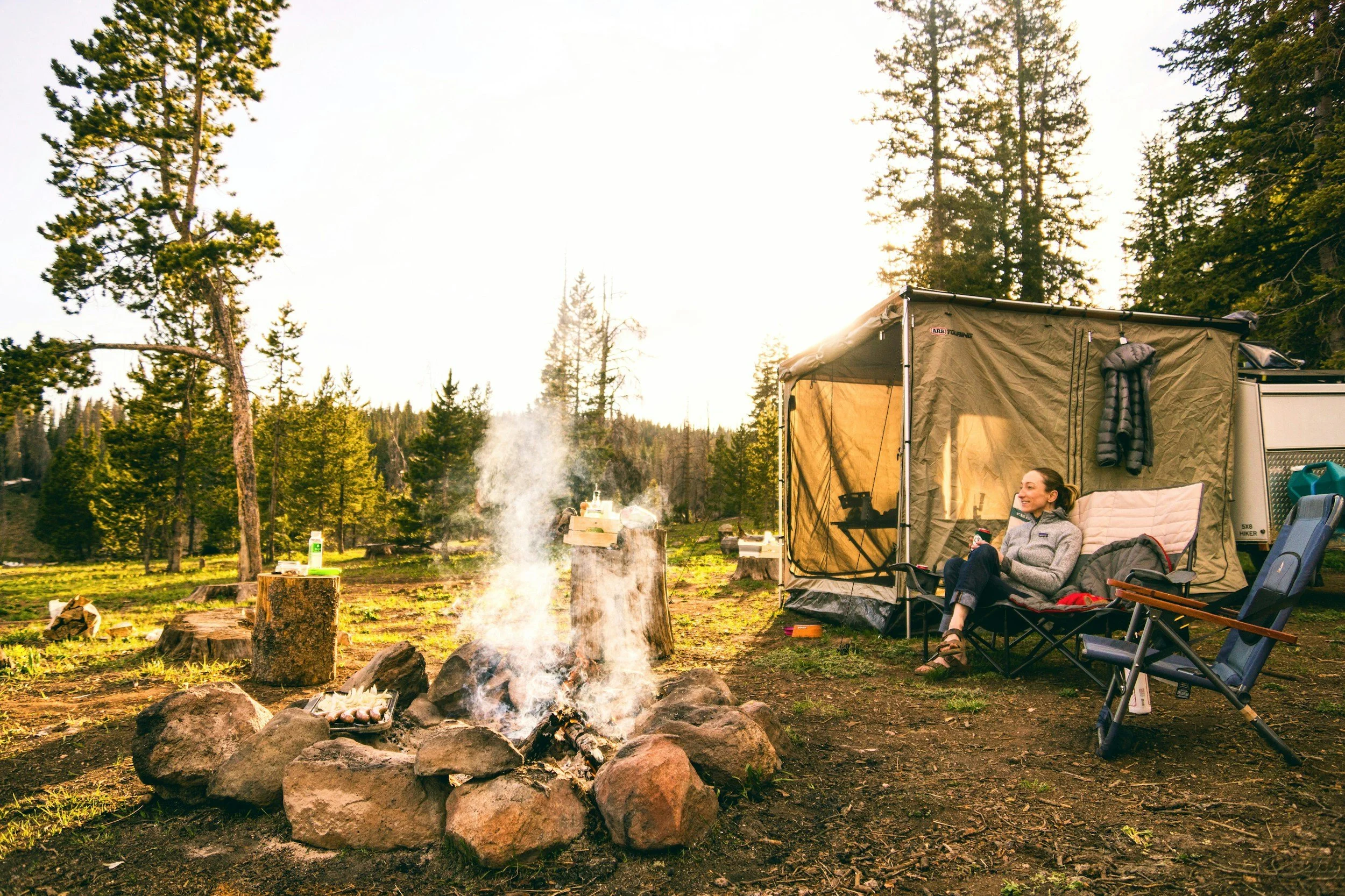
The appeal of exploratory travel is not only about moving forward. Sometimes the best part of the day comes after the main activity is finished: returning to camp, setting up chairs, cooking slowly, looking through photos, or simply watching the light fade.
If a tent only feels good enough for sleeping, travelers may naturally shorten their time at camp. If it also supports changing, resting, organizing, and stepping away from wind or light rain, the campsite becomes part of the journey itself. It does not compete with the destination, but it gives travelers the energy to keep seeing more of it.
A good outdoor trip does not always need a more complicated gear list. What matters more is whether the core gear truly serves the journey. The tent provides a place to recover. Storage reduces clutter. Lighting and protection extend the time people can comfortably stay outside. When the campsite is no longer just a temporary place to sleep, travelers can find a steadier rhythm for every new place they explore.