Trekking in Nepal: Annapurna Base Camp Trek, Langtang Valley Trek, Manaslu Circuit Trek & Everest Three Pass
Introduction: Choosing the Right Nepal Trek
Ask five different trekkers which route in Nepal they'd recommend, and you'll probably get five different answers — and all five might be right. That's the tricky part about trekking in Nepal: the country isn't short on legendary trails, but each one delivers something genuinely different. Some routes wind through warm rhododendron forest before opening onto glacier basins. Others sit higher, colder, and further from the road, testing your lungs as much as your legs. This guide walks through four routes that keep coming up in conversation among people planning a Himalayan trip — Annapurna Base Camp, Langtang Valley, Manaslu Circuit, and the Everest Three Passes — and looks at how they actually compare on scenery, altitude, difficulty, trail environment, culture, and timing. If you're trying to figure out which trekking routes fit your fitness level, your available days, and the kind of mountain villages and teahouse trekking experience you're after, this should help you narrow things down before you commit.
Annapurna Base Camp Trek: A Classic Himalayan Journey
Overview
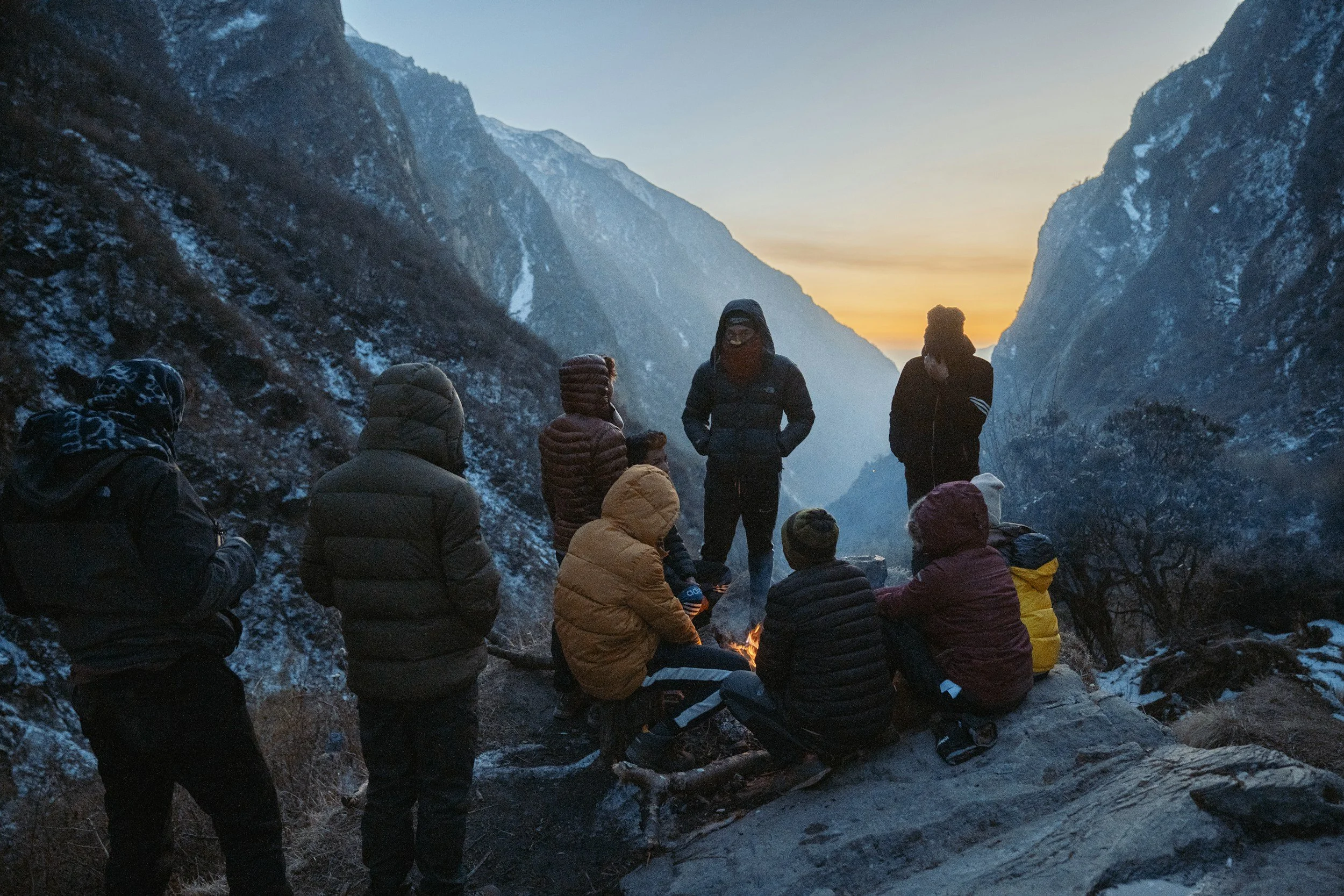
The Annapurna Base Camp Trek has earned its reputation for a reason — it manages to pack an enormous amount of variety into a relatively contained route. You start low, walking through terraced rice paddies and villages where mule trains still carry supplies up the trail, then gradually climb through oak and rhododendron forest before the landscape opens up into high alpine terrain. By the time you're standing in the Annapurna Sanctuary itself, surrounded by peaks on nearly every side, the transformation from where you began feels almost hard to believe. It's this progression — farmland to forest to high mountain amphitheater — that makes the trek work so well for both someone doing their first Himalayan trek and someone who's done a few already. In terms of what to expect physically, you're looking at several days of walking with a meaningful amount of altitude gain, staying in teahouses along the way, so reasonable fitness and a willingness to pace yourself matter more than any specific athletic background.
What Makes the Route Special
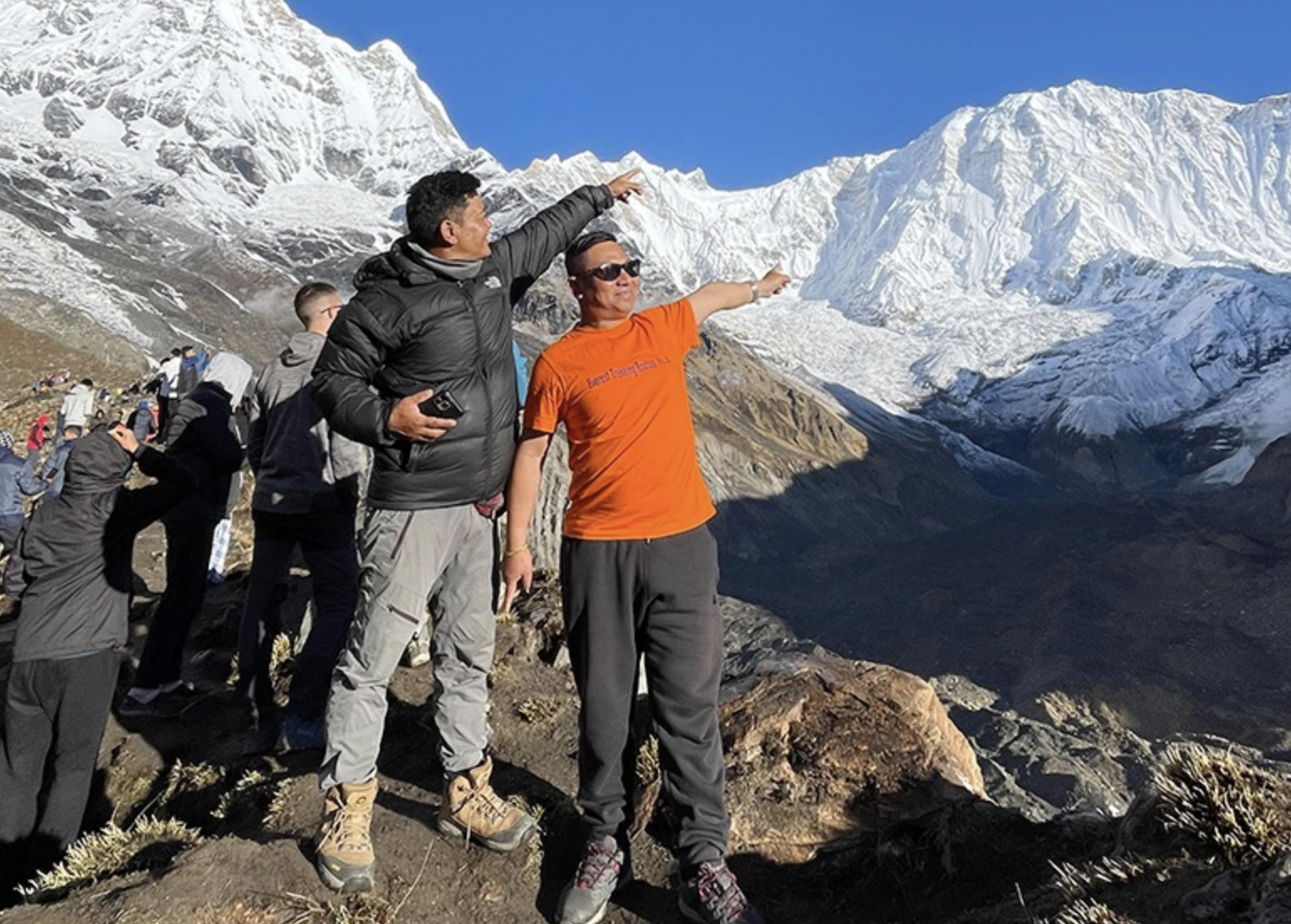
The defining feature is the Annapurna Sanctuary — a natural bowl ringed by peaks including Annapurna I and Machapuchare, where the mountains feel close rather than distant on the horizon. Along the way you pass through Gurung and Magar villages, and the cultural texture of the trek is honestly one of its underrated strengths. There are also hot springs at Jhinu Danda that most trekkers make a point of soaking in after a few long days, plus stretches of dense forest that give the whole route a different rhythm from the drier, more exposed trails further east.
Difficulty, Altitude & Preparation
This isn't a flat walk by any stretch — there's a fair amount of uphill and downhill, sometimes in the same day, and the altitude at Base Camp is enough that you'll notice the thinner air. Going slow and steady beats trying to rush it, and building in time to acclimatize properly tends to matter more for how the trek feels than raw fitness alone.
Langtang Valley Trek: Mountains, Villages and Tamang Culture
Overview
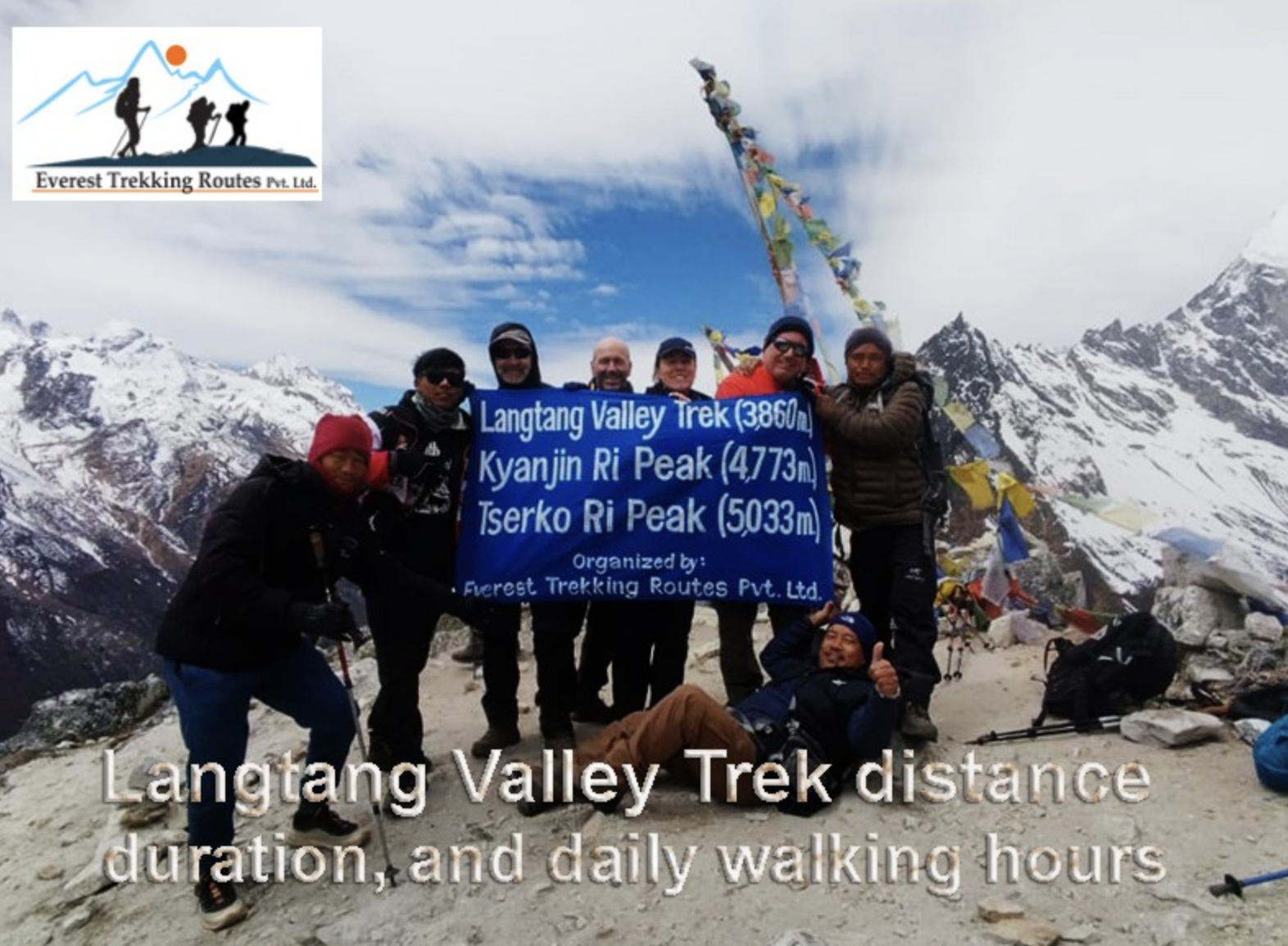
If you want serious Himalayan scenery without committing three or four weeks to it, the Langtang Valley Trek is worth a close look. The valley itself is one of the more underrated corners of Nepal — close enough to Kathmandu to reach without a flight, yet it doesn't feel crowded or over-touristed the way some Everest-region trails can during peak season. The trek moves through Langtang National Park, following the Langtang Khola through forest, past rivers, and into villages shaped heavily by Tamang heritage, which comes through in the architecture, the prayer flags, and the pace of daily life in these settlements.
Trail Character & Scenery
Lower down, you're walking through thick forest and crossing the odd suspension bridge over glacial rivers. As the trail climbs, the trees thin out and give way to alpine meadows, with Langtang Lirung and neighboring peaks becoming a near-constant backdrop. Kyanjin Gompa, a monastery near the valley's upper reaches, is usually where trekkers spend a day acclimatizing and exploring nearby viewpoints.
Difficulty & Who It Suits
Daily distances and the altitude gain are the two things to plan around here — nothing extreme, but enough that pacing yourself and allowing for acclimatization still matters. It suits people who want a shorter Himalayan trekking experience without sacrificing much in terms of mountain views or cultural depth, and basic fitness combined with sensible planning is usually enough to enjoy it comfortably.
Manaslu Circuit Trek: Remote Trails and High Mountain Passes
Overview
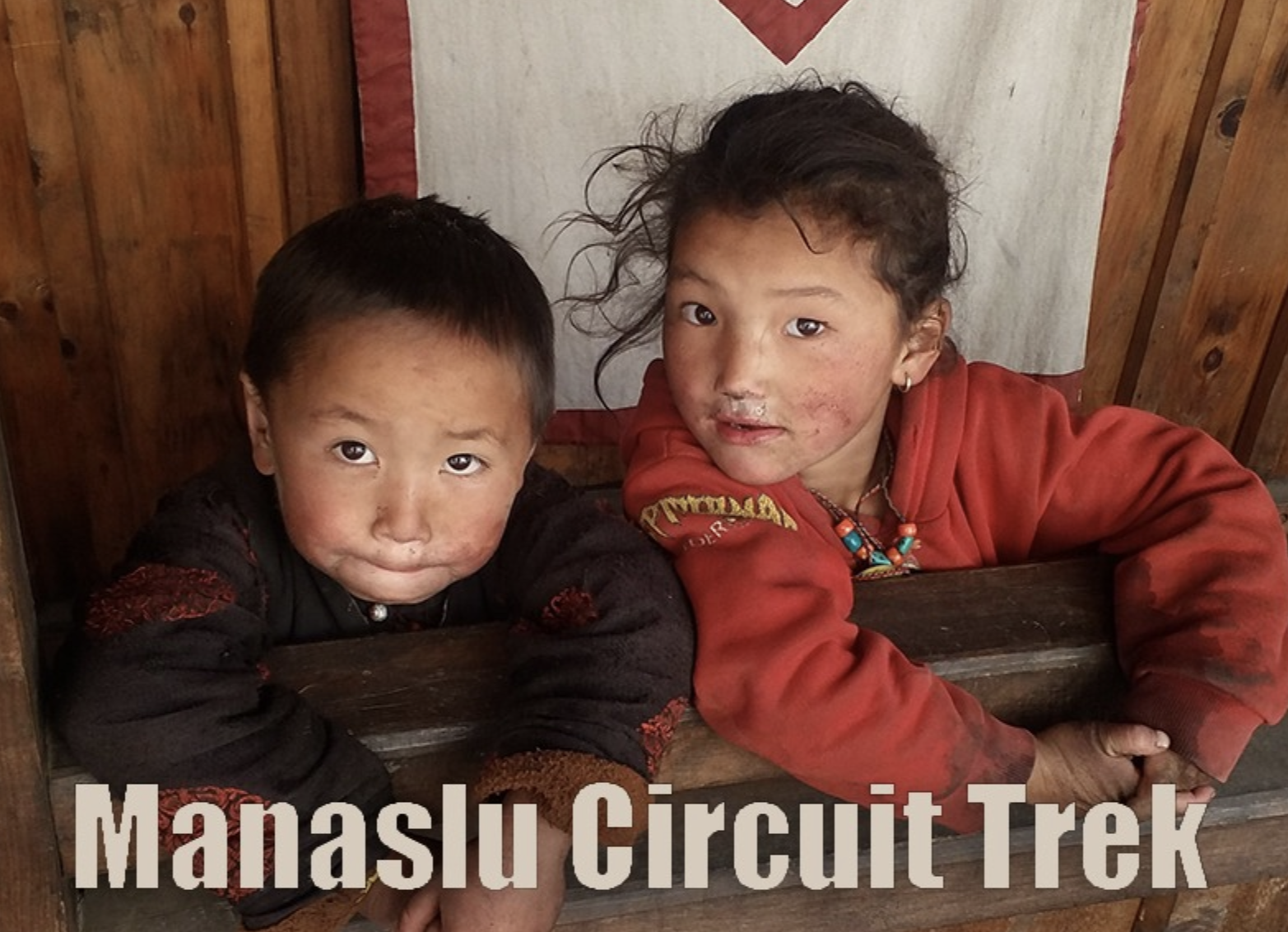
For trekkers who've already done Annapurna or Everest Base Camp and want something further off the beaten path, the Manaslu Circuit Trek tends to come up quickly. It's a genuine circuit rather than an out-and-back, tracing the Budhi Gandaki valley from lower subtropical terrain into high, rugged Himalayan landscape before crossing over to the other side of the range. The remoteness is really the appeal here — fewer trekkers, more solitude, and a stronger sense that you're passing through a working landscape rather than a well-worn tourist trail. Because it's a restricted area, this is a route where sorting out permits and travelling with proper guide support isn't optional, so it's worth building that into your planning early rather than as an afterthought.
Landscape, Culture & Trail Experience
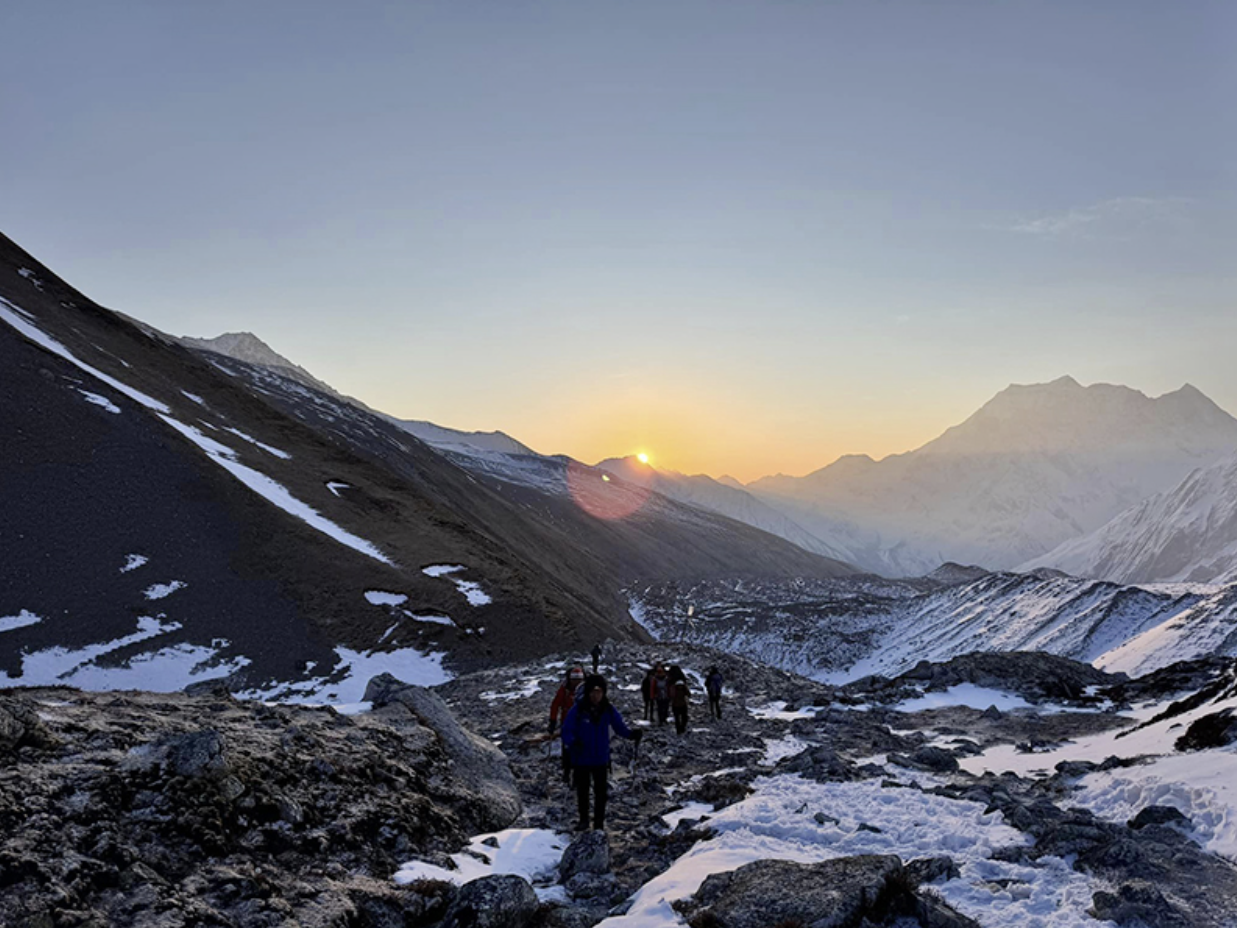
The trail follows the Budhi Gandaki River through steep gorges and cliffside paths before reaching higher settlements where Buddhist culture becomes much more visible — monasteries, mani walls, and prayer wheels start showing up regularly as you gain elevation. The terrain shifts constantly: forest one day, exposed rock and river crossings the next, then increasingly high and open ground as you approach the pass.
Difficulty, Altitude & Preparation
This is a demanding trek, full stop. Long walking days, steady elevation gain, and the crossing of Larkya La push it into genuinely challenging territory. Acclimatization isn't a box to tick — it needs to be central to how the itinerary is structured. Good equipment, flexibility around weather, and experienced local support all count for a lot here, more so than on the shorter, better-established routes.
Everest Three Passes Trek: The High-Altitude Challenge
Overview
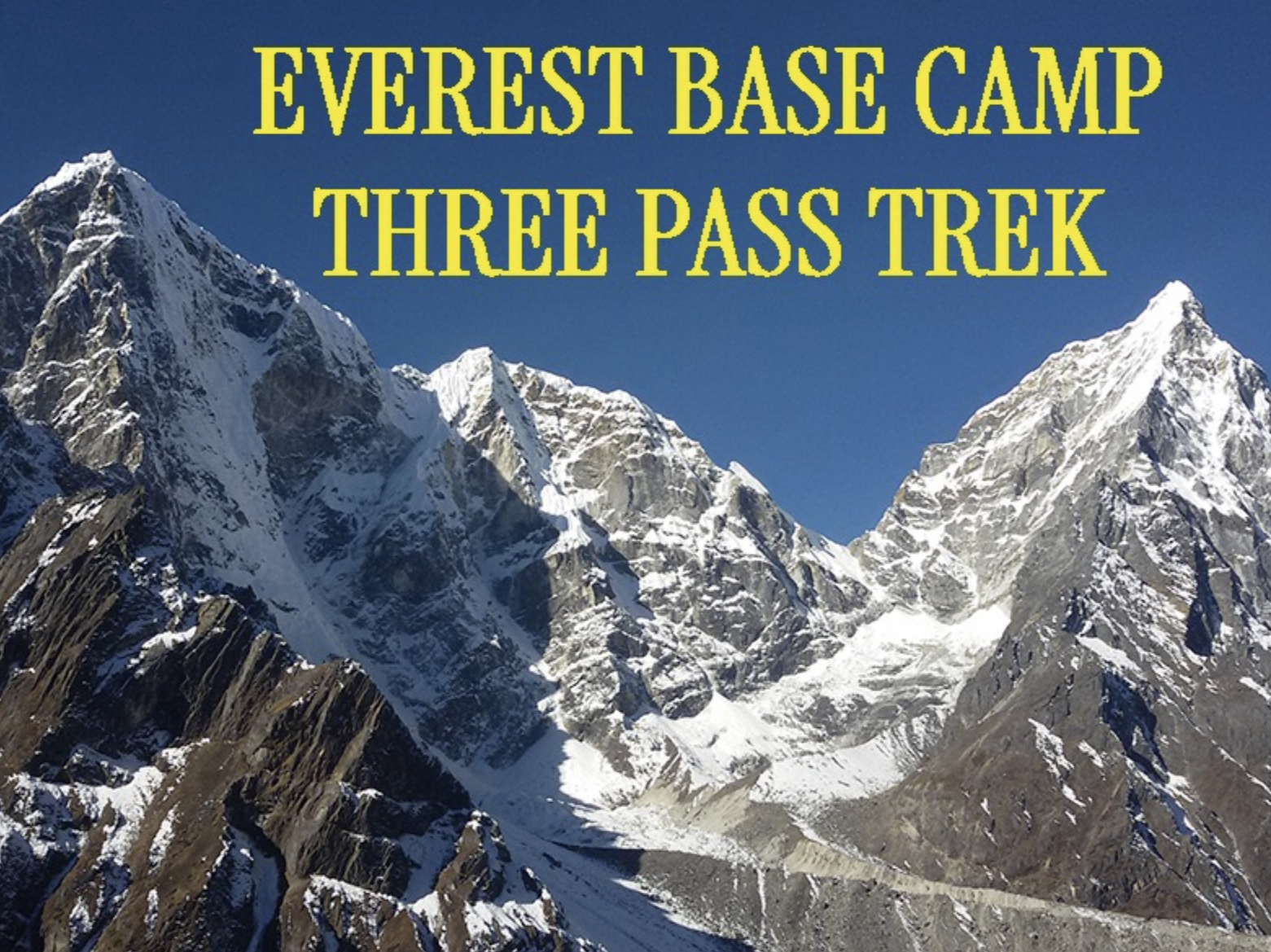
Of the four routes here, the Everest Three Passes Trek is the one built specifically for people chasing a serious high-altitude challenge rather than simply reaching a famous viewpoint. Instead of walking to Everest Base Camp and turning around, this route strings together three separate high passes, weaving through several valleys in the Khumbu region along the way. Acclimatization days aren't optional extras here — they're baked into how the trek has to be paced, and both weather and physical endurance play a bigger role in how the trip actually unfolds day to day.
What the Three-Pass Route Involves
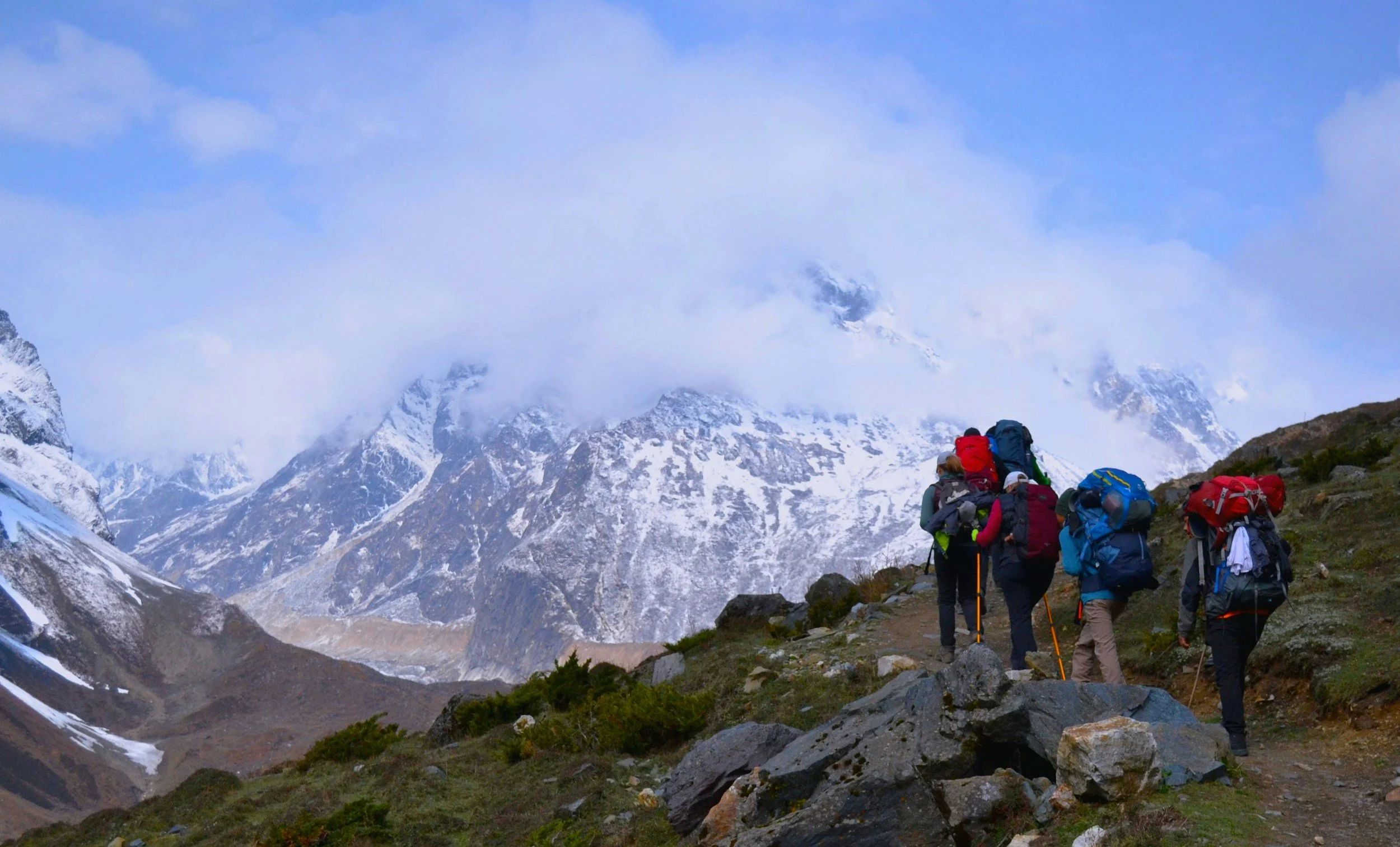
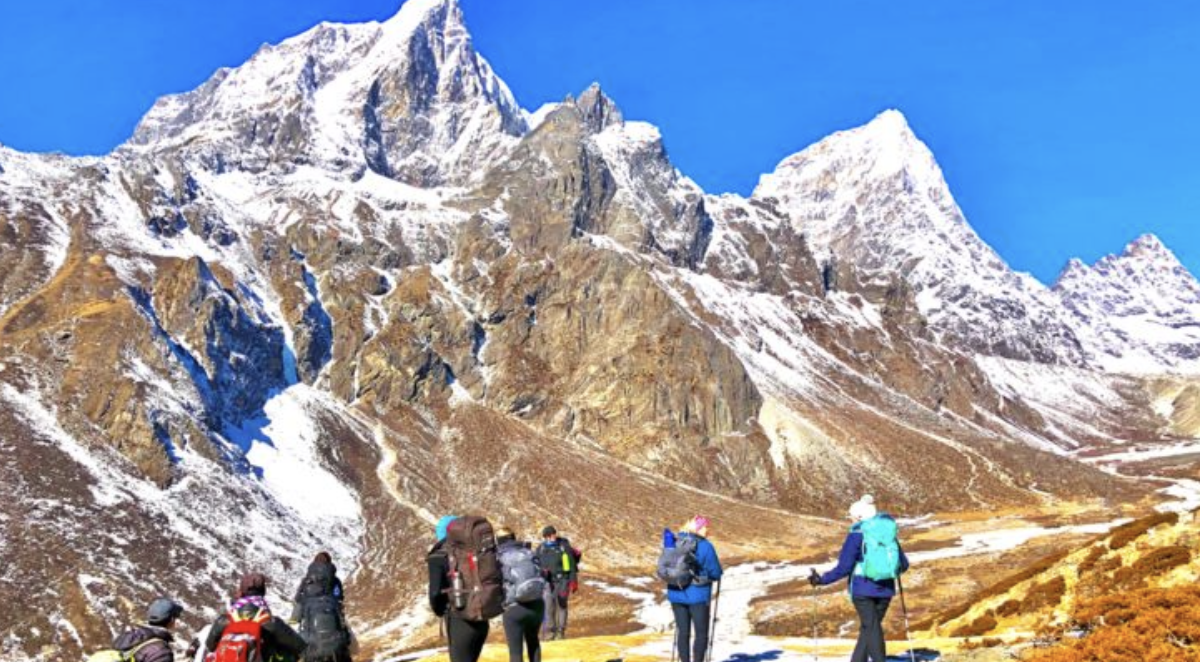
The three passes — Renjo La, Cho La, and Kongma La — each bring their own character. Renjo La offers some of the best wide-angle views of the Everest massif from a distance, Cho La involves a stretch of glacier travel that catches some trekkers off guard, and Kongma La tends to be the toughest of the three, both physically and in terms of exposure. Along the way, the route also takes in the Gokyo Lakes and can include a visit to Everest Base Camp itself, which is part of why this trek is often described as the more complete way to experience the Khumbu Valley rather than a narrower, single-destination itinerary.
Difficulty, Altitude & Preparation
There's no soft-pedaling this one — it's a serious undertaking with steep ascents and descents, cold temperatures, and the real possibility of snow at the higher passes depending on timing. Contingency days matter because weather can shut down a pass crossing without much warning, and arriving with a decent physical baseline makes a noticeable difference in how the trip feels rather than how it looks on paper.
How These Four Nepal Treks Compare
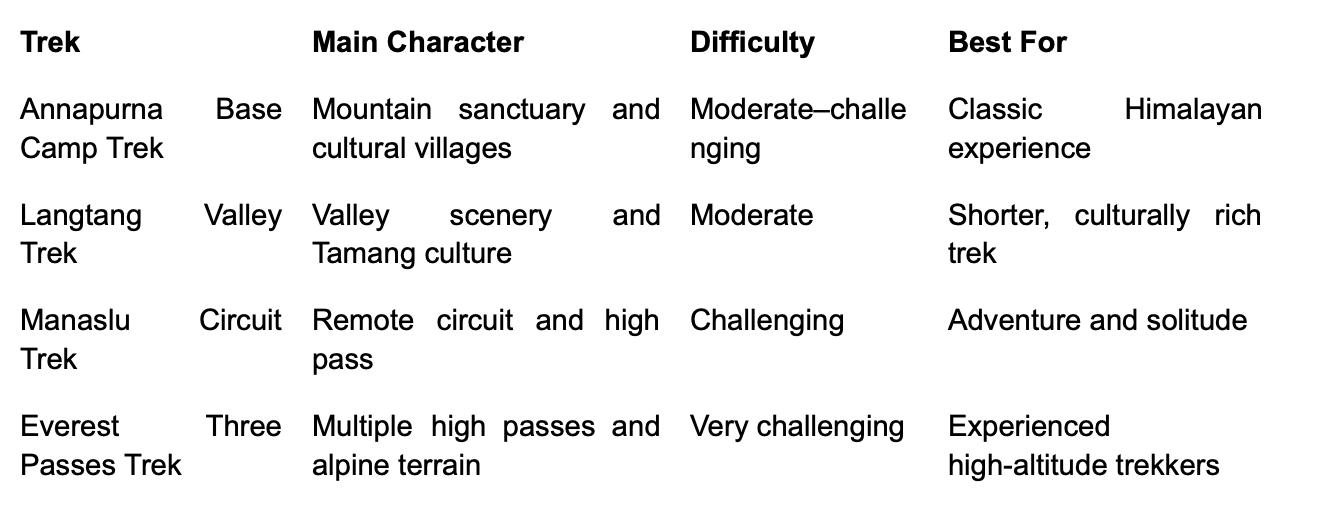
None of these treks is objectively "better" than the others — it really comes down to what you're optimizing for. Annapurna gives you scenery and culture in a fairly balanced package. Langtang trims the time commitment without cutting much scenery. Manaslu trades convenience for remoteness and solitude. And the Three Passes route asks for the most in exchange for arguably the most complete high-altitude experience in the Khumbu.
Best Time for Trekking in Nepal
Spring (March to May) and autumn (late September to November) are generally considered the strongest windows for Nepal trekking season, mainly because of more stable weather and clearer mountain views. Winter brings cold temperatures and snow at higher elevations, which can complicate pass crossings on routes like Manaslu or the Three Passes. Monsoon season, roughly June through August, brings rain and reduced visibility to most regions, though some rain-shadow areas fare better than others. Conditions in lower valleys don't always match what's happening higher up, so it's worth checking route-specific forecasts rather than assuming one season fits every trek equally.
Permits, Accommodation, Food & Practical Planning
Trekking permits vary by region, and what you need for Annapurna won't necessarily match the paperwork required for a restricted area like Manaslu, so it's worth confirming requirements for your specific route before booking flights. Accommodation along all four trails is largely teahouse-based — simple rooms, shared bathrooms in most places, and dining halls that double as the social hub each evening. Meals tend to be simple and carb-heavy (think dal bhat, noodles, soup), and staying properly hydrated matters more at altitude than people expect. A guide and porter can make a real difference, especially on the more remote or technical routes, and travel insurance that actually covers high-altitude trekking and emergency evacuation isn't something to skip. On the gear side, layered clothing, solid trekking boots, a warm sleeping bag, rain protection, a headlamp, and basic first-aid supplies cover most of what you'll need — though it's always worth checking current rules and trail conditions closer to your departure date, since these things do shift.
Everest Trekking Routes: Choosing Beyond the Famous Trails
Once you look past Everest Base Camp itself, the wider Everest region actually opens up into several Everest Trekking Routes, ranging from shorter valley walks to demanding multi-pass adventures like the one covered above. It's a reminder that Himalayan trekking in this part of Nepal isn't a single fixed itinerary — there's a real spread of options depending on how much altitude, distance, and challenge you're looking to take on.
Which Nepal Trek Should You Choose?
If you want a classic mountain-and-village experience without pushing into extreme altitude, Annapurna Base Camp is a solid pick. If your time is limited but you still want strong Himalayan scenery and genuine cultural exposure, Langtang Valley fits well. For travelers craving remoteness, a true circuit journey, and a high-pass crossing, Manaslu delivers that in a way few other routes do. And if the whole point of the trip is a high-altitude challenge involving multiple mountain passes, the Everest Three Passes Trek is built for exactly that. In the end, your fitness level, the time you have available, the season you're traveling in, and your comfort with altitude should carry more weight in the decision than which trek happens to be the most photographed.
Final Thoughts: Pick the Trail That Fits You
Annapurna Base Camp, Langtang Valley, Manaslu Circuit, and the Everest Three Passes each have a distinct personality — one leans classic and balanced, one is compact and culturally rich, one rewards remoteness, and one is built purely around high-altitude challenge. The right choice comes down to your fitness, your experience level, how much time you actually have, the kind of scenery and culture you want to be surrounded by, and how comfortable you are with altitude. Compare itineraries carefully, check current permits and trail conditions, sort out proper equipment and insurance, and lean on experienced local trekking support where it makes sense. Rather than chasing whichever trek gets the most attention online, it's worth choosing the Himalayan route that actually matches what you're capable of and what you're hoping to get out of the trip.
FAQs About Trekking in Nepal
Which trek is best for first-time trekkers in Nepal?
It depends on what "first" means for you. Annapurna Base Camp and Langtang Valley are both more accessible in terms of altitude and daily walking demands compared to Manaslu or the Three Passes, making them a more forgiving entry point into Himalayan trekking.
Is the Annapurna Base Camp Trek difficult?
It's moderate to challenging — expect several days of uphill and downhill walking with real altitude gain by the time you reach the Sanctuary. It's manageable for reasonably fit trekkers who pace themselves and take acclimatization seriously.
How difficult is the Langtang Valley Trek?
It sits at a moderate level. Daily walking distances and altitude gain are the main factors, and while it's less demanding than Manaslu or the Three Passes, it still requires sensible acclimatization and a baseline level of fitness.
Is the Manaslu Circuit Trek harder than Annapurna Base Camp?
Generally, yes. Manaslu involves more remoteness, a high pass crossing at Larkya La, greater altitude exposure, and more logistical complexity around permits and guide requirements.
Is the Everest Three Passes Trek suitable for beginners?
Not really — the combination of high altitude, three separate passes, unpredictable mountain weather, and demanding terrain makes prior trekking experience genuinely valuable, if not close to essential.
What is the best season for trekking in Nepal?
Spring and autumn are the most commonly recommended windows thanks to more stable weather and clearer views, though the right season can still shift depending on the specific route, its altitude, and current snow conditions.
Contact Details
Everest Trekking Routes Pvt. Ltd.
16 Khumbu, Nayabazaar, Kathmandu, Nepal
Mobile : +977-9843467921 (Rabin)