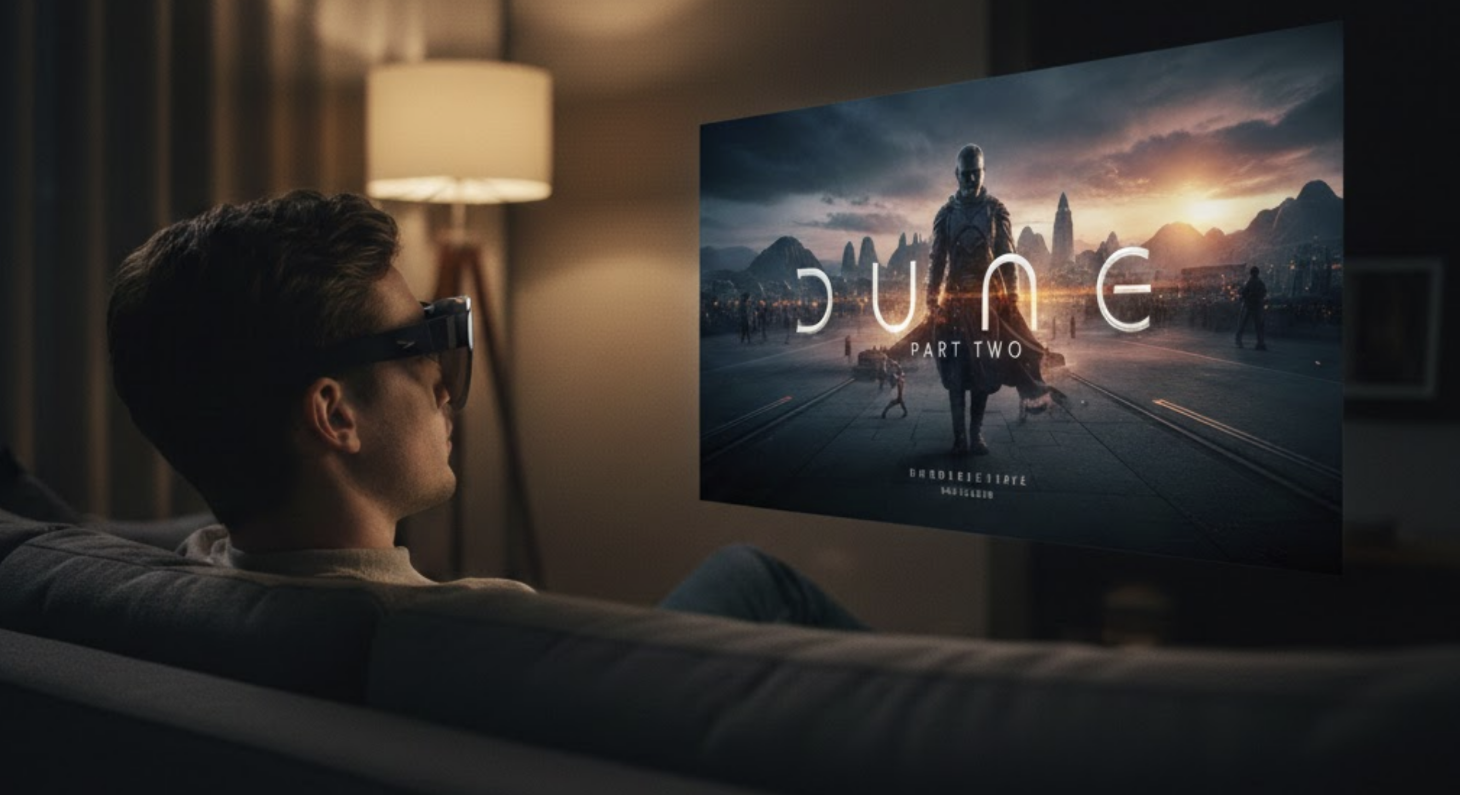
AR Glasses for Hotel Rooms: 6 Reasons RayNeo Air 4 Pro Beats the TV
Hotel room entertainment has barely changed in two decades. A mid-tier flat screen bolted to the wall, a remote with dead batteries, and a channel lineup that peaks at CNN. AR glasses are changing that equation entirely.
The RayNeo Air 4 Pro is a pair of wearable Micro-OLED display glasses that connects to compatible phones, laptops, and handhelds over USB-C DisplayPort Alt Mode. For basic screen mirroring, there is no Wi-Fi pairing, app download, or setup wizard. It creates a 201-inch perceived virtual screen in front of your eyes, rather than a physical panel.
Here are six reasons this 76-gram, $299 device belongs in your carry-on the next time you check into a hotel — and why the hotel room TV may not get powered on at all.
Why Hotel Room TVs Still Fall Short
In many budget and select-service hotel rooms, TVs are still small, fixed-position screens, often 32 to 43 inches. Newer hotels may offer 4K smart hospitality TVs with casting, but that experience is far from universal. Where streaming is supported directly on the TV, it often requires logging into personal accounts on a shared public device.
That login step creates a real security gap. Credentials left on a hotel screen can be exposed to the next guest. Modern AR Glasses sidestep this problem by keeping all content on your personal device — your phone, your tablet, or your laptop.
Then there is the sound. Hotel TV speakers push thin, compressed audio aimed at the opposite wall. Crank the volume and you risk a noise complaint. Keep it low and you lose half the dialogue. Neither option works for a two-hour movie.
The Display: Where AR Glasses Pull Ahead
The RayNeo Air 4 Pro uses dual 0.6-inch Micro-OLED panels to deliver a 1080p image per eye. At 76 grams, it is light for display-class AR glasses and compact enough for travel. Four specs set it apart from anything a hotel room currently offers.
Screen Size vs. Hotel TVs
The 201-inch figure refers to a perceived virtual screen size, not a physical panel. Set that against a typical 40-inch hotel TV and the gap is hard to miss. Three figures put the difference in context:
Hotel TV: 32–43 inches, fixed to the wall
Airline seatback: 9–13 inches, tilted at an awkward angle
RayNeo Air 4 Pro: 201-inch equivalent, any position
HDR10 at 1,200 Nits
The RayNeo Air 4 Pro is billed as the first pair of AR glasses to ship with HDR10 support. A Vision 4000 chip handles real-time SDR-to-HDR upscaling. Peak brightness reaches 1,200 nits with a 200,000:1 contrast ratio — numbers that many older or budget hotel TVs are unlikely to match.
Smooth Motion at 120Hz
A 120Hz refresh rate matters most for handheld gaming, compatible high-frame-rate video, and fast interface movement. Movies still depend on the source frame rate, but gaming and supported content can feel noticeably smoother than a typical 60Hz hotel TV.
Honest Trade-Offs
The build uses lightweight materials that may feel less premium than higher-priced competitors. There is no built-in diopter dial — travelers who wear prescription glasses will need separate magnetic lens inserts. At $299, these trade-offs land on the acceptable side of the ledger for most buyers.
Comfort, Sound, and Privacy
A sharp display means nothing if wearing the device grows uncomfortable after thirty minutes. Hotel rooms put three specific demands on a wearable display that no wall-mounted TV ever has to meet — and they matter just as much as picture quality:
Sustained comfort for sessions lasting one to three hours
Audio that stays private and does not bleed into the hallway
Discretion when the room lights go out
Bang & Olufsen Spatial Audio
The RayNeo Air 4 Pro carries four speakers tuned by Bang & Olufsen. Sound reaches your ears in a 360-degree spatial field without sealing them off from the room. At moderate volume, it is far less likely to disturb a travel partner or the next room than a hotel TV speaker. No separate headphones are required for casual viewing.
Any Position, Any Time
Hotel TVs mount at fixed heights designed for no one in particular. The viewing angle from the bed is rarely ideal. AR display glasses project the image directly into your line of sight regardless of posture — lying flat, propped against the headboard, or reclined at the desk chair.
Late-Night Privacy
Business travelers sharing a room understand the tension. One person wants to watch a show after dinner; the other needs sleep before an early meeting. A wearable display keeps the screen visible only to the person wearing it. No large TV glow fills the room. At moderate volume, it is far less likely to disturb the next room than a hotel TV speaker.
How the RayNeo Air 4 Pro Compares
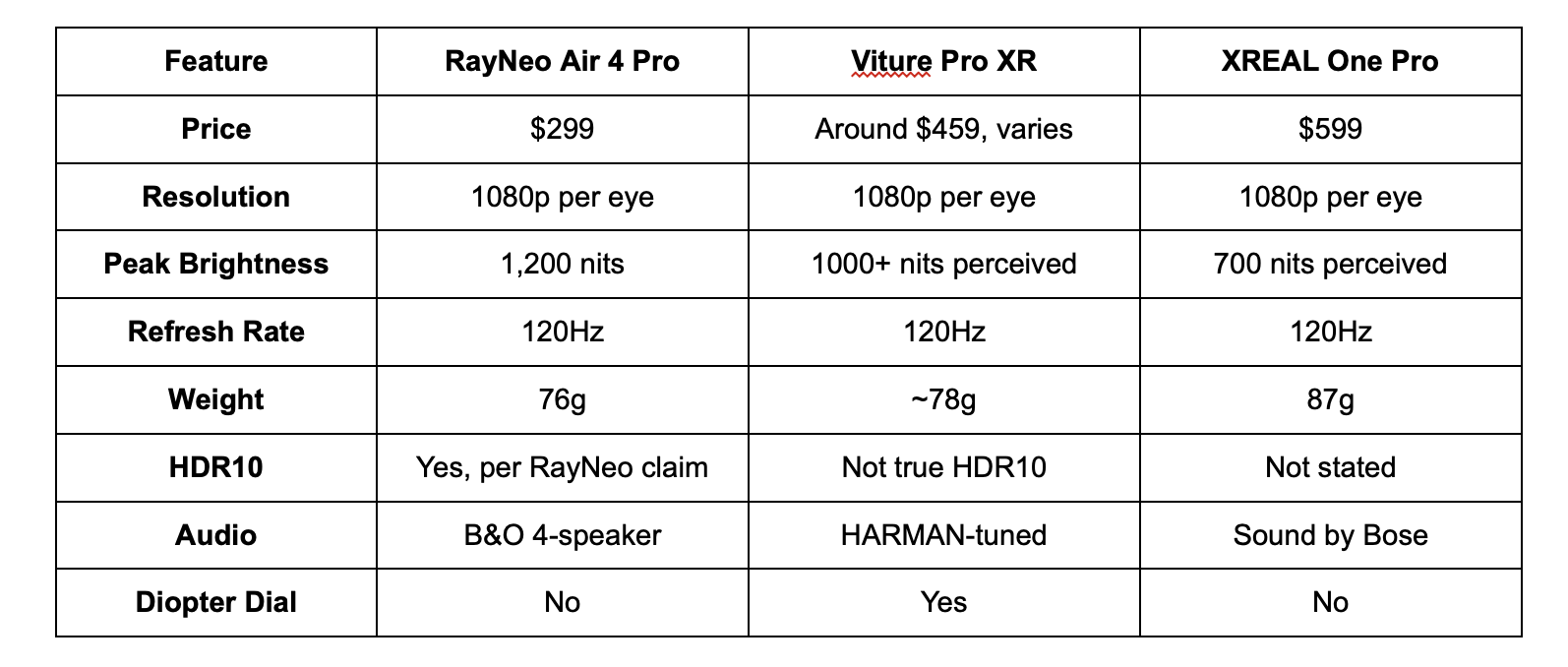
Not every pair of smart glasses tackles the same job. Some prioritize cameras and AI assistants. Others function as AR display glasses built for large-screen entertainment. The table below compares three options a business traveler might weigh for hotel use.
Display-First Glasses
The Viture Pro XR includes a built-in myopia dial and HARMAN-tuned audio. The XREAL One Pro offers a wider 57-degree field of view and features a native spatial display chip, which makes it stronger for pinned-screen use cases.
However, that spatial advantage matters less for simple hotel-room streaming. Both competitors cost meaningfully more. The RayNeo Air 4 Pro matches their resolution and refresh rate while sitting at roughly half the price point.
Camera-First Smart Glasses
Products like the Ray-Ban Meta and Oakley Meta Vanguard serve a different purpose entirely. They capture photos, run AI assistants, and handle phone calls. They do not project a large virtual display. For hotel room entertainment, they fill a separate role and should not be confused with display-class wearables.

The Hotel TV Itself
Measured against the in-room screen, the value gap widens further. A 201-inch perceived HDR display, spatial audio from Bang & Olufsen, and full access to your personal streaming library — all from a 76-gram device that fits inside a compact glasses case.
What to Know Before You Pack a Pair
The RayNeo Air 4 Pro draws power directly from the connected device — there is no internal battery. On a phone, expect meaningful battery drain during a two-hour movie. A small portable charger solves this for longer sessions without adding much weight to your bag.
Compatibility Check
Handhelds such as the Steam Deck can connect directly over USB-C DisplayPort Alt Mode. Consoles such as the PlayStation 5, Xbox, or Nintendo Switch generally need an HDMI adapter, dock, or powered accessory depending on the setup. A quick preflight list before your next trip:
Confirm USB-C DisplayPort Alt Mode support on your primary device
Order magnetic prescription lens inserts if you wear corrective lenses
Pack a portable battery for viewing sessions longer than two hours
Handle these steps before departure, and your AR glasses work the moment you plug in at the hotel. No troubleshooting calls to the front desk. No hunting for adapters after midnight. No technical friction on the first night of a business trip.
Worth the Space in Your Bag
At $299, the RayNeo Air 4 Pro costs less than a handful of overpriced hotel pay-per-view rentals spread across a year of business travel. It delivers a 201-inch HDR screen, Bang & Olufsen spatial audio, and 120Hz playback inside a 76-gram frame.
For frequent travelers still squinting at a dim, undersized hotel screen after a twelve-hour workday, this is one carry-on addition that earns its spot.