Understanding Laser Marking Machines: Types, Applications, and Benefits
Due to their precision and efficiency, laser marking machines are now essential devices across many sectors. These machines employ concentrated lasers to engrave or etch different materials, including metals and plastics. This article will discuss the basics of laser marking machines, their various types, their applications, advantages over traditional marking methods, and benefits offered.
If you are looking for more information about Laser Marking Machine - UDMachine, go here right away.
What Are Laser Marking Machines and How Do They Work?
What is a laser marking machine?
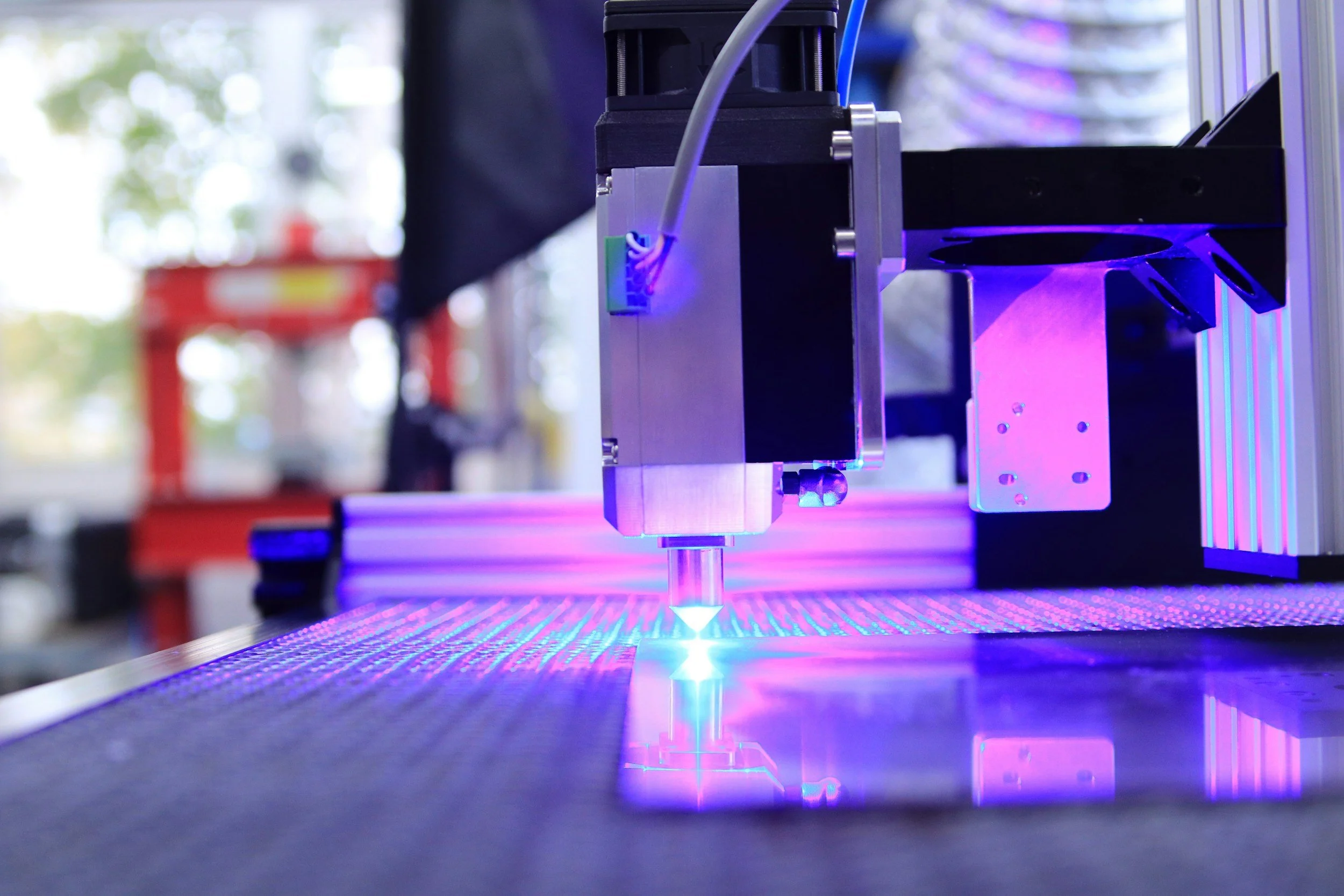
A laser marking machine is an industrial piece of equipment that focuses a beam of light to mark, engrave, or etch different surfaces with extreme precision. The principles of laser optics guide the technology behind laser marking as it uses a concentrated beam of light to interact with material surfaces, creating permanent marks. These identifying marks, which can span text, logos or intricate designs, serve multifunctional purposes such as product identification, branding, and traceability. The effectiveness of the laser marking system differs with the type of laser used (fiber, CO2, or UV lasers).
For more in-depth information, you should view the Laser Marking Machine - UDMachine.
What other marking methods exist, and how do they differ from laser marking?
Unlike traditional marking methods, which include mechanical engraving, stamping, or using ink-based printing, laser marking has a range of added benefits. For one, laser marking is a non-contact method which greatly differs from the traditional ways of marking that involve physical contact with the surface which results in wear and damage to the substrate. This non-contact quality means that the substrate’s lifespan will be prolonged while still retaining marking standard during high-speed operation. In addition, laser engraving customarily results in better resolution and precision in comparison to other methods.
View Laser Marking Machine for sale - UDMachine for More Details.
Which materials can be processed with a laser engraver?
The application of laser engraving technology is broad, and it can be used on metals like aluminum and stainless steel, plastics, ceramics, and organic substances such as wood and leather. Different types of lasers also have different marking applications; for example, fiber laser marking machines are best for marking metals, while CO2 lasers work best with non-metal materials such as wood and plastics. Heat-sensitive materials are best processed with UV lasers, as they do not suffer from burning during engraving and can thus be intricately engraved without thermal damage.
What Are the Different Types of Laser Marking Systems Available?
What are fiber laser marking systems?
Fiber laser marking systems employ a solid state laser source to vaporize some plastics and engrave metals, as it emits a beam with the appropriate wavelength. Due to the speed and precision of processing, these systems are favored by industries with high production and detailed marking requirements. Fiber laser markers carry out laser annealing or ablative marking which provides high resolution marks that are durable and resistant to wear and tear. Coupled with the long lifespan and low maintenance of these lasers, their adoption in manufacturing environments is common.
How does a CO2 marking machine work?
The marking apparatus CO2 laser marking machines utilize a gas mixture as a laser medium which primarily works with non-metal materials. The CO2 laser is effective for engraving on materials such as plastics, wood, and glass because they have a significantly higher absorption of the CO2 laser's longer wavelength. The operation of a CO2 laser marking machine entails directing a focused beam across the material's surface, marking and changing its properties. These machines excel in providing intricate patterns and intricate lettering on a large scale.
What materials can be marked with UV lasers?
UV laser marking systems are ideal for delicate, heat sensitive materials that may be damaged by higher temperature lasers. These types of lasers are best for engraving applications where there is need for minimal thermal input and precise engraving. Marking of medical devices and semiconductors where delicate components need to be protected and thermal stress is an issue are other areas where UV lasers excel. In addition, UV lasers provide high quality marks with deep engraving, sharp and detailed engravings surpassing even the most stringent marking requirements.
What Are the Benefits of Using a Laser Marker for Engraving?
Why choose laser engraving over traditional marking solutions?
Selecting laser engraving instead of traditional marking techniques offers advantages that improve efficiency and quality. One key benefit is the considerably lower chance of damaging material with laser marking’s non-contact feature. Furthermore, laser marking systems ensure the highest quality marked designs and details of a material beyond what is possible mechanically or with ink. Equally important is the ease with which different marking applications and settings can be changed as this increases the versatility of laser engravers and therefore custom orders and product variability.
What beneficial features for noteability do laser marking systems provide?
Noteability is an important feature in most fields especially in industries like automotive and medical devices which have greater regulatory scrutiny. With laser marking systems, unique identifiers like barcodes, QR codes and serial numbers can be directly marked onto products and components enabling complianceable traceability. This allows tracking of each item through its lifecycle, better complying to industry regulations while also simplifying inventory. Laser etching also helps with durability which helps noteability as compared to ink markings that fade or smudge over time, laser markings are permanent.
In what ways does non-contact engraving enhance accuracy?
The non-contact nature of laser engraving allows for non-mechanical interactions with the material and therefore, efficiency and accuracy. As a result, any inconsistencies due to contact with the workpiece such as jolts, wear, and tear are eliminated. This process achieves remarkable engraving precision and detail as well as uniformity regardless of the material. Engravings done by laser technology are superior to those done by normal techniques because a laser can be finely adjusted in speed and power to increment settings based on the material’s characteristics which improves marking quality and accuracy.
What Industries Utilize Laser Marking Machines?
How is laser marking used in the automotive industry?
The automotive sector has numerous applications such as part marking, identification, branding, as well as traceability which require the use of laser marking machines. For safety compliance, laser markers engrave serial numbers and barcodes on engine parts. In the automotive industry, marked parts are subjected to extreme conditions, which makes the durability of the marks advantageous. Moreover, lasers allow intricate branding work to be done on vehicles which improves recognition while enhancing their beauty and sophistication.
What importance does laser marking hold in the medical devices industry?
In the medical device industry, marking items with lasers is vital as it ensures safety and compliance with relevant legislation. Medical devices are marked with engraved lot numbers and expiration dates which requires precise identification and tracking. In addition, laser marking makes it possible to engrave intricate barcodes or QR codes which ensure accurate tracking and easy retrieval of information. Markings that are engraved onto medical devices with lasers are not affected by the sterilization processes, so the markings maintain the devices' traceability for all stages in their lifecycle.
What are the advantages of laser engraving technologies for aerospace firms?
Aerospace firms, in particular, have a notable degree of advantage from laser engraving technology because of the acute demands the sector has with respect to quality, efficiency, and safety. Marking lasers are used for engraving numbers, barcodes, and marks of certification on important constituents of an aircraft so that they can be easily tracked and controlled according to aeronautical standards. The accuracy provided by laser marking systems is especially important in this industry because small differences can pose huge safety and efficiency challenges. In addition, laser engraving systems can engrave items without compromising their structure and therefore, the engraving can be done in a non-invasive way which is crucial for parts that face extreme stress during flights.
What are common applications and marking methods for laser technology?
How is laser marking applied to electronic components?
Marking is commonly employed in the electronics industry where precision and clarity are of paramount importance. It is traditionally used to mark parts like and engrave identifying information such as logos, part numbers, serials on semiconductor parts and circuit boards. Due to high speed nature of laser marking systems, they ensure efficient processing in high volume manufacturing environments. In addition, contactless engraving ensures no damage will be sustained by the fragile electronics parts during marking. Laser etching engraves marks that do not easily get damaged due to smudges or other environmental factors thus providing everlasting identification.
What are some of the marking applications a laser engraving machine can achieve?
These machines are laser engraving, marking and etching that serve an indefinite assortment of consumers all over the globe. These applications include marking, engraving and etching logos, detailed designs and texts on promotional items, consumer goods, and even marking safety information on industrial machines. Using laser marking systems makes it possible to customize them enabling businesses to create timeless branding parts that will differentiate them from others in the market. Moreover, laser engraving serves practical purposes that include improving grip by creating texture to tools and devices.
What are the latest innovations in the marking with a laser technology?
The innovations in laser marking technology are furthering productivity and broadening uses across different industries. New systems have been developed such as high-speed laser marking systems which offer greater productivity through more precise cycle time reduction. In addition, the application of A.I. and machine learning in laser marking machines is creating new intelligent systems capable of material recognition and self-optimization of parameters for changeable materials. Such advanced systems strengthen the possibilities of laser marking systems to provide more precision, agility, accuracy, capability and flexibility in industrial marking processes.