If you've ever returned from an overseas trip to find a $400 phone bill, you already know why eSIM adoption has exploded. In 2026, more than 60% of new smartphones globally support eSIM, and the gap between roaming charges and local data alternatives keeps growing.
The difference isn't small — in some cases, it's the cost of your entire trip.
We analyzed pricing across major mobile carriers and compared it with leading travel eSIM providers to build a realistic, trip-based comparison — so you can decide before you land, not after the damage is done.
How We Collected This Data
Pricing in this guide is based on publicly listed roaming rates from major carriers (including Verizon, AT&T, Vodafone, and Telstra) and plan pricing from leading travel eSIM providers as of Q1–Q2 2026. Actual costs may vary slightly depending on plan changes and promotions, but the comparison reflects typical real-world pricing travelers encounter.
The Short Answer (TL;DR)
For most international travel in 2026, a prepaid travel eSIM saves between 70% and 95% compared to standard roaming fees.
Savings tend to be highest in:
Europe
Asia
Latin America
And lowest in:
The US
Canada
The UK (on premium plans with roaming included)
How Much Are You Really Paying to Roam?
Most carriers follow three pricing models:
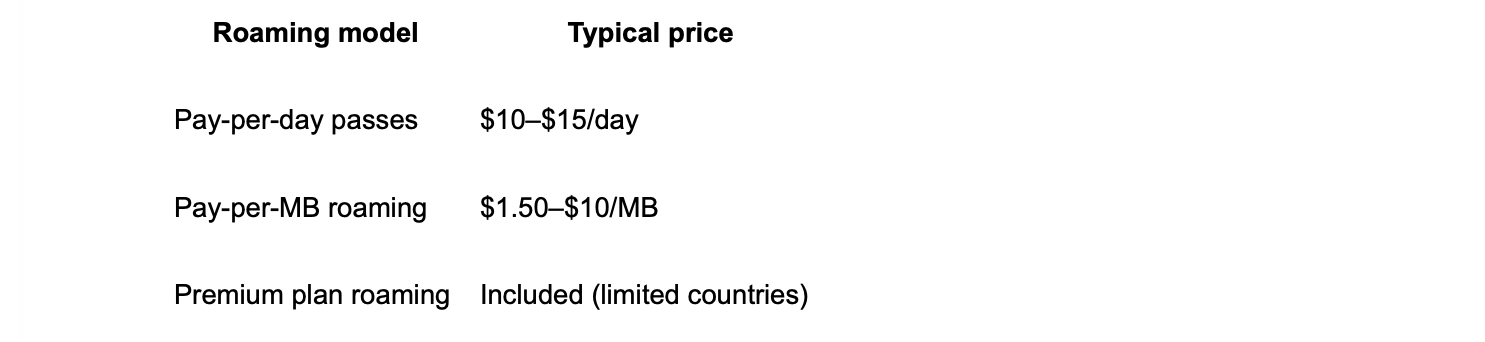
A typical 7-day trip can cost $70–$105, while longer trips easily exceed $150.
According to industry data from organizations such as the GSMA, international roaming remains one of the highest-margin services for mobile carriers — which helps explain why prices stay significantly higher than local or eSIM-based data access.
How Much Does a Travel eSIM Cost?
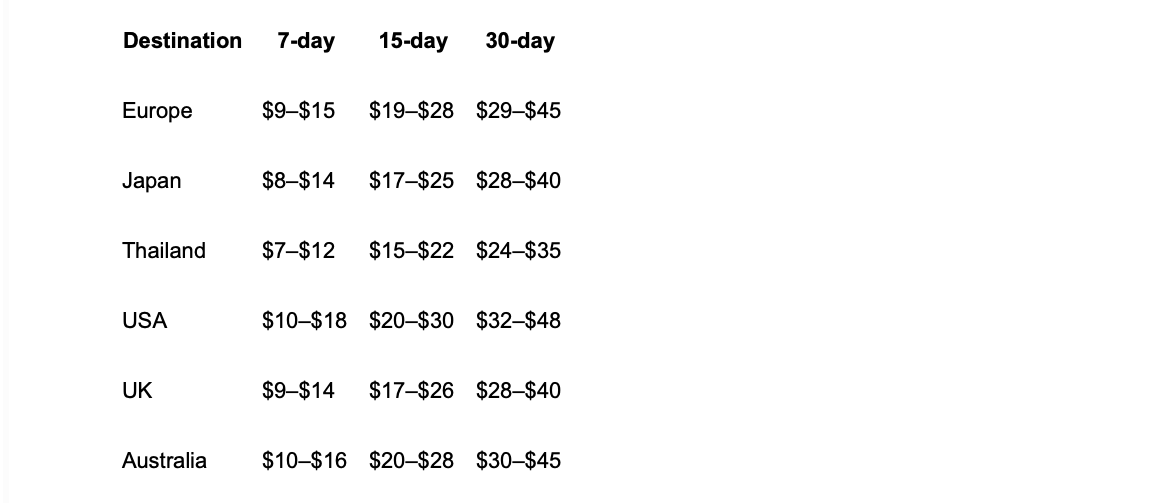
Most plans include 3–10 GB of data, which is enough for maps, browsing, and moderate streaming.
Side-by-Side: Real Travel Scenarios

Across all scenarios, savings consistently range from 80% to 92%.
When an eSIM Isn’t the Best Option
Very short trips (<24h)
Strong Wi-Fi availability
Unsupported devices
Remote or offshore locations
How to Choose a Travel eSIM
Focus on what actually matters:
Country coverage
Plan duration
Hotspot support
Easy activation
Responsive support
One provider we tested, SimYak, handled multi-country switching across several European destinations without requiring any manual setup. Installation via QR code was completed in under 90 seconds before boarding, and activation was immediate upon landing.
While pricing was comparable to other providers, reliability during setup made a noticeable difference — especially compared to previous trips where activation delays caused connectivity issues at the airport.
What About Unlimited Plans?
Most throttle after 1–3 GB/day
Speeds drop significantly after limits
True unlimited plans cost more
For most travelers, 5–10 GB plans are a better value.
How to Install an eSIM
Buy before traveling
Scan QR code
Activate line
Switch data on arrival
Setup takes under 2 minutes.
FAQ
Is eSIM cheaper than international roaming in 2026?
Yes. In most cases, travel eSIMs cost 70–95% less than traditional roaming fees, especially for trips longer than a few days.
Can I keep my main number?
Yes. Dual-SIM devices allow both lines to be used simultaneously.
Do all phones support eSIM?
Most modern smartphones do, but older devices may not.
Is eSIM speed slower than roaming?
Usually, the same or faster, since it connects directly to local networks.
Final Verdict
In 2026, roaming is no longer the default — it’s the expensive option.
For the cost of a single daily roaming fee, you can often cover your entire trip with a travel eSIM. The setup takes minutes, the savings are significant, and the convenience is immediate.
For most travelers, the choice is simple:
Use an eSIM, stay connected, and avoid unnecessary costs.