
How Remote Administrative Assistants Are Transforming the Modern Workplace
The Digital Revolution in Administrative Support
The traditional office landscape is rapidly evolving. Gone are the days when administrative support meant having someone stationed at a desk outside your office door. Today's workplace has undergone a remarkable transformation, with remote work redefining how businesses operate across the globe.
This shift hasn't just affected leadership roles or technical positions – it has revolutionized administrative support functions as well. Virtual assistant services have experienced explosive growth, with the market expected to expand at a CAGR of 24.4% through 2028.
For business leaders struggling with overwhelming workloads and limited resources, this evolution presents incredible new opportunities. Let's explore how remote administrative professionals are changing the game.
The Evolution of Administrative Assistance
The journey from traditional secretaries to today's virtual professionals reflects broader technological and cultural shifts in how we work. While the fundamentals of administrative support remain—organization, communication, and task management—the execution has been completely reimagined. Many organizations first discovered the value of a remote administrative assistant during the pandemic when necessity forced experimentation with distributed work models. What began as a temporary adaptation has now become a strategic advantage for forward-thinking companies.
This evolution means businesses no longer need to limit their talent search to local candidates. Instead, they can access global expertise, specialized skills, and round-the-clock support without geographical constraints.
Strategic Cost Advantages
One compelling reason businesses embrace virtual assistant services is the substantial cost savings they provide. Traditional employees come with overhead expenses beyond salary—office space, equipment, benefits, and more. In contrast, remote administrative professionals typically operate as independent contractors or through specialized agencies.
Businesses can save up to 78% on operating costs by employing remote workers. These savings extend beyond the obvious elimination of physical workspace needs to include reduced turnover costs, lower training expenses, and more efficient use of leadership time.
Global Talent Without Boundaries
The ability to hire without geographical limitations opens up unprecedented access to specialized expertise. Need someone with particular industry knowledge or technical skills? The talent pool expands exponentially when you're not restricted to your local area.
This global approach also enables businesses to implement follow-the-sun models where administrative tasks continue while the primary team sleeps. Imagine waking up to find your inbox already organized, meeting notes transcribed, and routine tasks handled before your day begins.
Productivity Amplification
Perhaps the most significant benefit of working with a marketing virtual assistant service or general administrative support is the dramatic productivity boost for core team members. When executives and managers delegate routine tasks, they can focus on high-value activities that drive business growth.
Many leaders report gaining back 15-20 hours weekly after incorporating remote administrative support—time they can reinvest in strategic planning, client relationships, or innovation initiatives.
AI and Technology Integration
The administrative support landscape continues to evolve with the integration of artificial intelligence alongside human talent. An AI virtual assistant can handle repetitive tasks like calendar scheduling, basic email responses, and data entry with increasing sophistication.
However, this technology works best when paired with human judgment and relationship skills. The most effective administrative support models combine AI automation for routine tasks with human assistants who manage complex situations requiring emotional intelligence and critical thinking.
When to Use AI vs Human Support
Organizations should consider specific tasks when determining whether to deploy AI solutions or human virtual assistants:
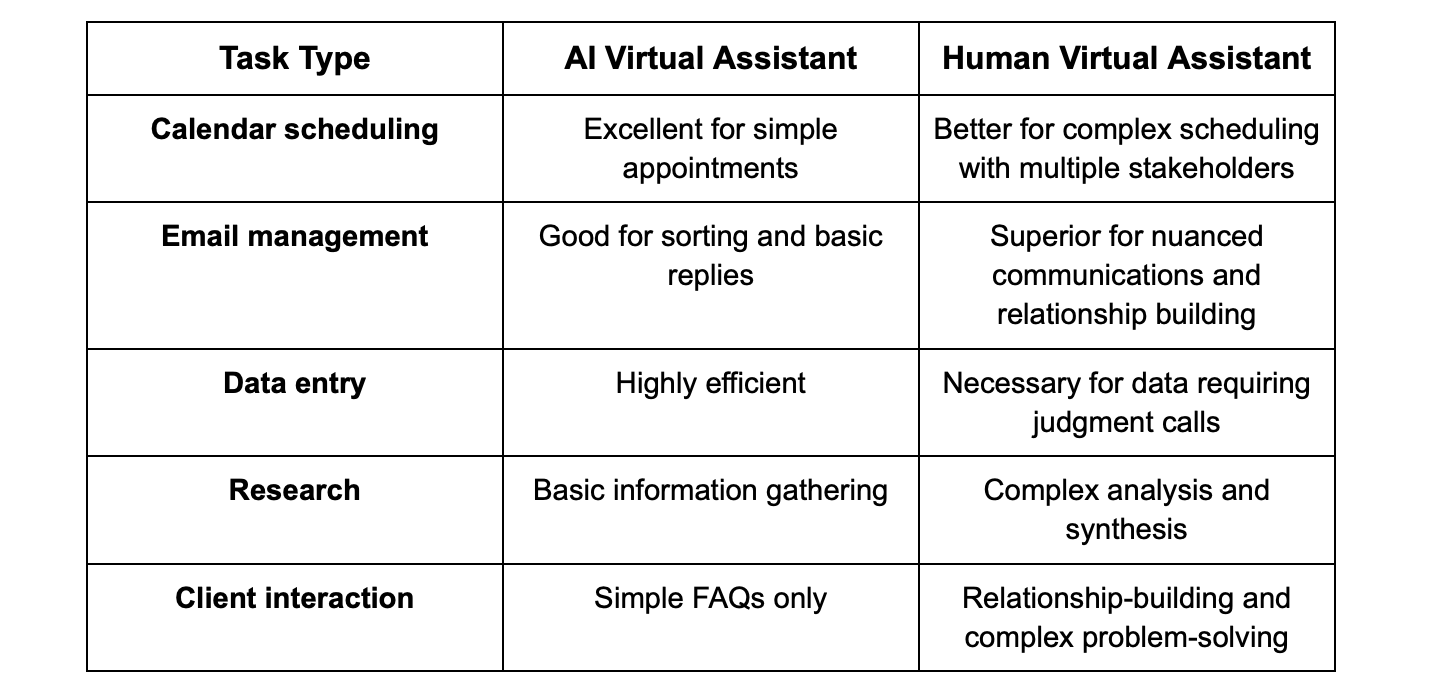
This hybrid approach allows businesses to maximize efficiency while maintaining the human touch essential for building relationships and handling nuanced situations.
Essential Functions Remote Administrative Assistants Excel In
Remote administrative professionals have adapted traditional office functions to the virtual environment, often improving effectiveness in the process.
Digital Communication Management
A digital marketing virtual assistant excels at managing the constant flow of communication across multiple platforms. From email management to customer service interactions, these professionals ensure that nothing falls through the cracks.
They implement systems to categorize incoming messages, prioritize urgent matters, and maintain response time standards that keep clients and team members connected despite physical distance.
Advanced Calendar and Schedule Orchestration
Remote administrative assistants have mastered the complexity of managing schedules across time zones and balancing competing priorities. They implement sophisticated digital solutions that make scheduling more efficient than traditional methods.
With proper systems in place, these professionals ensure executives attend the right meetings, prepare adequately, and follow up appropriately—maximizing the value of every interaction.
Documentation and Information Management
The shift to digital operations means information management has become more critical than ever. Remote administrative support professionals implement cloud-based document systems that improve accessibility while maintaining security.
This transition from physical to digital filing systems often leads to improved information retrieval times and better collaboration among distributed team members.
Finding the Right Remote Administrative Assistant
Success with remote administrative support starts with finding the right match for your specific needs. Begin by conducting a comprehensive administrative task audit to identify what functions need support and which specific skills will provide the most value. \
When evaluating outsourced virtual assistant services, consider not just technical capabilities but also communication style, cultural fit, and time zone compatibility. The most successful remote administrative relationships prioritize clear communication and well-defined processes, which ultimately lead to better efficiency and higher ROI for your business.
Future Trends in Remote Administration
The future of administrative support will continue to evolve as new technologies emerge and work models adapt. Emerging trends include the integration of virtual reality for more immersive collaboration, enhanced AI capabilities that handle increasingly complex tasks, and specialized administrative services targeting specific industries with unique needs.
Businesses that proactively adapt to these trends will maintain competitive advantages in efficiency, cost management, and access to talent.
Embracing the Administrative Revolution
As we've explored throughout this article, remote administrative assistants have transformed from a convenience to a strategic necessity for many organizations. The combination of cost savings, access to global talent, and productivity enhancements creates compelling advantages for businesses of all sizes.
Whether you're considering your first remote hire or looking to optimize existing administrative support, the digital revolution in this space offers unprecedented opportunities to work smarter, not harder.
FAQs
How do I ensure data security with a remote administrative assistant?
Implement secure password management, use encrypted communication channels, and create clear data-handling policies. Many services also offer confidentiality agreements designed specifically for remote work relationships.
What's the typical cost for professional virtual assistant services?
Rates vary based on specialization, experience, and location, but typically range from $15-50 per hour—significantly less than full-time employee costs when considering all overhead expenses.
How can I measure the ROI of hiring a remote administrative assistant?
Track time saved by key team members, calculate the financial value of that time and monitor improvements in response times, project completion rates, and client satisfaction to quantify the return on your investment.