
7 Mindfulness Techniques Every Teen Boy Should Know to Manage Stress
Let's face it—being a teenage boy today is tough. Between juggling school pressures, social media drama, sports competitions, and the rollercoaster of emotions that come with growing up, stress has become an unwelcome companion for many teens.
The statistics are sobering: approximately 31.9% of adolescents report experiencing symptoms of anxiety, with many not receiving adequate support (National Institute of Mental Health, 2023).
But here's the good news: Mindfulness offers a powerful toolkit that can help teen boys navigate these challenges while strengthening their developing brains.
The Science Behind Teen Boys and Stress
The teenage male brain is literally under construction. With hormones surging and neural pathways still forming, teen boys process stress differently than adults or even their female peers. That flood of testosterone? It changes how stress gets processed, often making emotions feel more intense but harder to name.
Traditional "tough it out" or "man up" approaches don't do our boys any favors. Research has consistently shown that suppressing emotions only makes them stronger and more disruptive later. Instead, mindfulness practices work with the teen male brain's natural development, creating healthier neural pathways for emotional regulation.
Now that we understand why mindfulness matters specifically for teen boys, let's explore the science behind how their developing brains process stress and emotions.
1. Social Media Mindfulness
The average teen spends about 7 hours daily in front of screens—most of this scrolling through content. Rancho Palos Verdes, with its stunning coastal views and outdoor recreation opportunities, reminds us of what we're missing when constantly glued to screens.
For teens seeking support with technology dependence and related mental health challenges, Residential Treatment for Boys in Rancho Palos Verdes, CA provides specialized programs to address these issues within a therapeutic environment.
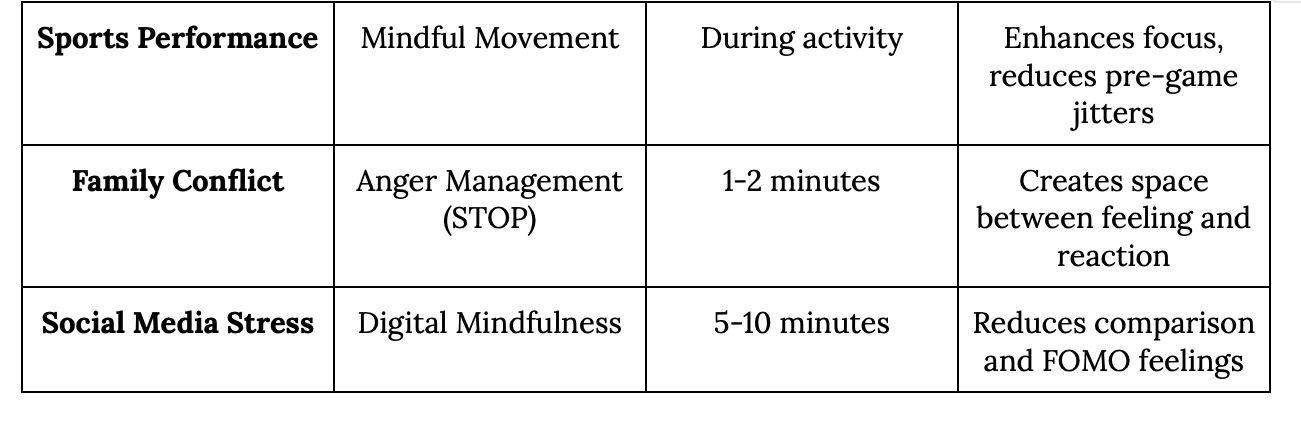
Try setting a timer for 10 minutes of social media use, then putting your phone away and noting how you feel. Are you comparing yourself to others? Feeling FOMO? Just recognizing these reactions helps break their power over you.
Now that we've addressed digital stressors, let's tackle one of the most challenging emotional experiences for teen boys—managing intense feelings of anger and frustration through mindful awareness.
2. Body Scan Meditation for Physical Stress Release
Most teen boys carry stress in their bodies without even realizing it—tight shoulders before a game, clenched jaw during exams, or that weird stomach feeling before a social event. The body scan is like hitting the reset button on all this physical tension.
Here's how to do it: Lie down in a comfortable position. Starting at your toes, slowly move your attention upward through your body, noticing any areas of tension without trying to change them. Just becoming aware often leads to natural release.
This practice is perfect before big games or tests. One high school quarterback shared that body scans before games not only calmed his pre-game jitters but improved his actual performance because he wasn't wasting energy on unnecessary tension.
Having learned how to reconnect with physical sensations through body scanning, let's transform something most teen boys already enjoy, gaming, into a powerful mindfulness practice.
3. Mindful Gaming — Turning Digital Time into Mindfulness Practice
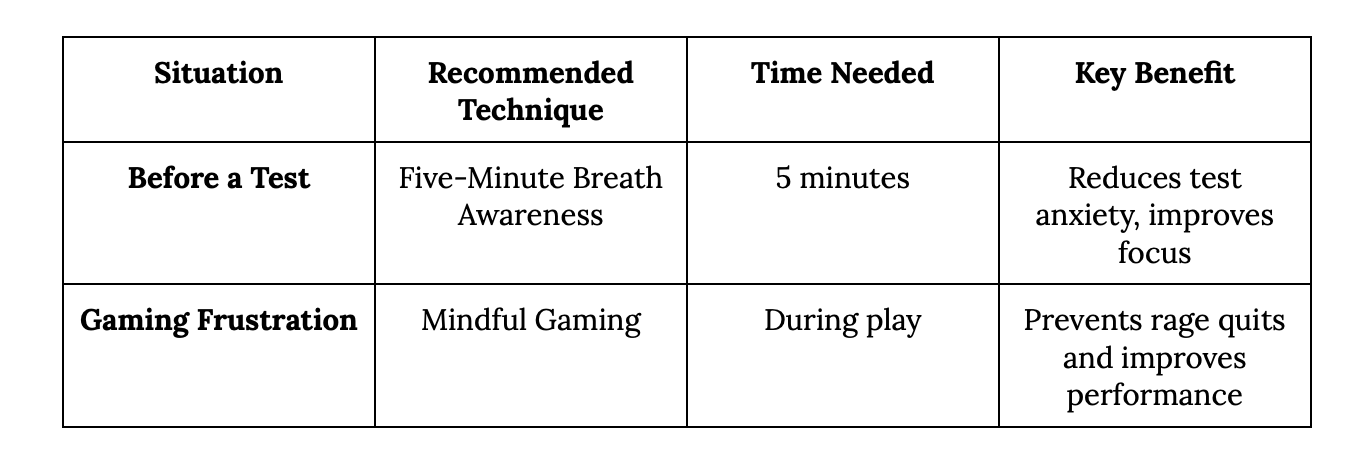
Instead of fighting against screen time, let's transform it. Gaming already requires focus, quick reactions, and strategic thinking—all skills that overlap with mindfulness. These small shifts turn gaming from a potential stress trigger into actual mindfulness training.
While mindful gaming helps during leisure time, the academic pressure teen boys face requires a technique they can use discreetly in the classroom—this is where simple breath awareness becomes an invaluable tool.
4. Five-Minute Breath Awareness for Academic Pressure
When test anxiety strikes or homework feels overwhelming, the breath becomes your anchor. The beauty of breath awareness is its invisibility—nobody in class needs to know you're practicing it.
Try the 4-7-8 technique: Inhale quietly through your nose for 4 counts, hold your breath for 7 counts, and exhale completely through your mouth for 8 counts. This can be done before walking into a classroom, during a difficult test, or anytime stress spikes.
Beyond seated breathing exercises, active teen boys can also harness the power of movement itself as a mindfulness practice, which is especially beneficial for those involved in sports and physical activities.
5. Mindful Movement for Athletic Performance
For teen boys already involved in sports, mindful movement is a game-changer. This isn't adding another practice to your schedule—it's transforming activities you already do.
Try this during your next run: Instead of zoning out or listening to music, tune in to the rhythm of your feet hitting the ground, your breathing pattern, and how your muscles feel with each step. Notice sensations without judging them as "good" or "bad."
A program implemented by the University of Denver demonstrated that student-athletes who practiced mindfulness techniques reported a 50% increase in focus and a 35% reduction in anxiety levels before competitions (Journal of Clinical Sport Psychology, 2023).
Physical mindfulness techniques set a strong foundation, but in today's digital world, teen boys face significant stress triggers online. Let's explore how to bring mindful awareness to social media consumption.
6. Anger and Frustration Management
When anger flares, try the STOP technique: Stop what you're doing, Take a breath, Observe what's happening in your body and mind, and Proceed with awareness.
This creates that crucial space between feeling triggered and acting on it—what psychologists call the "pause button" for emotions. This skill can prevent regrettable outbursts during arguments with parents, coaches, or friends.
With tools to manage emotional reactions in place, let's shift our focus to another daily activity that impacts teen boys' well-being—their relationship with food and how mindful eating supports both athletic performance and positive body image.
Comparing Mindfulness Techniques for Different Situations
7. Implementing Mindfulness in Daily Teen Life
Starting is simpler than you might think. Begin with just one technique that addresses your biggest stress point. Five minutes daily is all you need at first—consistency matters more than duration.
A recent survey found that practicing mindfulness can lead to a 40% reduction in stress levels among adolescents (American Psychological Association, 2023). The key is making it relevant to your actual life, not treating it as another chore.
Try linking mindfulness to something you already do regularly—maybe a body scan right after brushing your teeth at night or breath awareness while waiting for the bus.
Conclusion
Stress might be unavoidable in teen life, but suffering from it isn't. These mindfulness techniques offer practical ways to navigate the unique challenges that teen boys face today. The science is clear—mindfulness works particularly well with the developing male brain, creating stronger neural pathways for emotional regulation, focus, and resilience.
Start small with just one technique that resonates with you. Notice how it feels without judging yourself for "doing it wrong." Remember—mindfulness isn't about achieving perfect calm; it's about noticing what's happening right now without getting overwhelmed by it.
Your brain is developing incredible capabilities during these years. These mindfulness techniques help ensure stress doesn't derail that development but instead becomes an opportunity to build mental strength that will serve you throughout life.
People Also Ask
1. What are the 12 ways to manage stress?
Effective stress relievers include physical activity, healthy eating, avoiding unhealthy habits, meditation, laughter, social connection, asserting yourself, yoga, adequate sleep, journaling, deep breathing, and spending time in nature. Even 5-10 minutes of these activities can significantly reduce stress hormones.
2. What is the mindfulness technique for stress relief?
Sitting meditation is powerful for stress relief. Sit comfortably with your back straight and feet flat on the floor. Breathing through your nose, focus on your breath moving in and out. When thoughts interrupt, acknowledge them without judgment, then gently return attention to your breathing.
3. What are the 7 ways to manage stress?
Manage stress by taking care of physical health, practicing self-relaxation techniques, taking breaks when overwhelmed, seeking social support, maintaining normal routines, staying connected socially, and finding ways to help others. These approaches create balanced stress management.