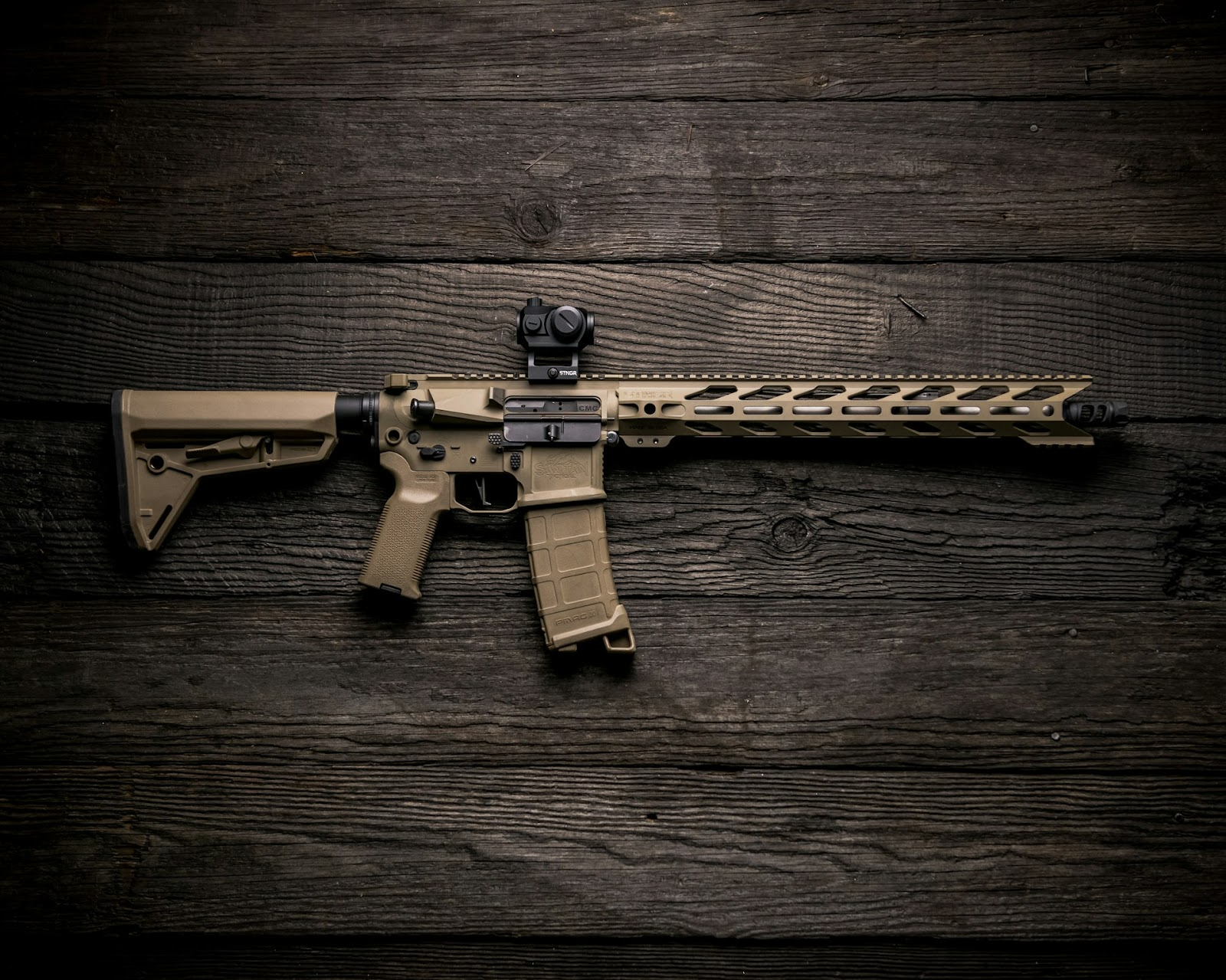
Why Every AR-15 Owner Needs Quality Iron Sights as Backup to Optics
Optics fail at the worst possible moments. Quality backup iron sights keep your AR-15 functional when electronics quit. This guide explains common optic failures, types of backup sights available, co-witness integration with your primary optic, and what makes quality iron sights worth the investment for reliable redundancy
Depending solely on electronic optics puts your AR-15 at risk when batteries die or electronics fail. Ozark Armament understands that AR-15 iron sights provide the mechanical backup every rifle needs for true reliability.
Red dots and magnified optics improve accuracy, but they all share one vulnerability. Electronics and batteries eventually fail. Iron sights use a simple mechanical design with no batteries or electronics to malfunction.
This guide covers why optics fail, how backup sights provide instant redundancy, the types of iron sights available, and what quality factors matter when choosing backup sights for your rifle.
When Optics Fail and Why AR-15 Iron Sights Save Your Setup
Electronic optics delivers performance advantages until something goes wrong. Understanding common failure modes shows why mechanical backup sights matter for rifle reliability.
Battery death is the most common optic failure. Red dot sights drain batteries faster than expected, especially with high brightness settings. Some batteries last months, while others die in weeks. You might not notice a dead battery until you need your rifle.
Other optic failures happen without warning:
Electronic components fail from impacts, moisture, or manufacturing defects
Lens damage from drops or impacts makes aiming impossible
Zero loss from loose mounts or screws shifts the point of impact
Moisture intrusion fogs lenses and damages electronics
Extreme temperatures cause electronic malfunctions
Even premium optics fail eventually. A scope that costs hundreds of dollars uses the same basic electronics that can quit without warning. Professional shooters and military personnel always run backup iron sights because they understand that electronics eventually fail.
Mechanical iron sights eliminate these failure points. No batteries mean nothing to die. No electronics means nothing to malfunction. A quality set of iron sights uses simple springs and metal components that work in any condition. They hold zero reliably and function in extreme temperatures that stop electronics.
The transition from failed optic to iron sights takes seconds with proper backup sight setup. Flip up your sights or cant your rifle to offset sights and you're back on target. This redundancy transforms a disabled rifle into a functional weapon instantly.
Types of Backup Iron Sights for Your AR-15
AR-15 iron sights come in several configurations. Each type offers different advantages for backup sight applications depending on your primary optic and shooting needs.
Flip-up sights are the most popular backup option. They fold down when not needed, staying out of your sight picture. Spring-loaded mechanisms let you deploy them instantly with finger pressure. When your optic fails, flip them up, and you have a complete sight picture.
Fixed iron sights stay deployed at all times. They're simpler than flip-up designs with fewer moving parts to break. The tradeoff is that they remain visible in your optic sight window. Some shooters prefer this because backup sights are always ready without deployment steps.
Offset sights mount at 45 degrees on your rail. This lets you use iron sights without removing or looking over your magnified optic. Tilt your rifle 45 degrees and offset the sights to align with your eye. This works well for shooters running scopes who need close-range backup capability.
Here's how each type integrates with optics:
Flip-up sights co-witness through red dot optics for a unified sight picture
Fixed sights work best with lower 1/3 co-witness mounts on red dots
Offset sights bypass co-witness completely for independent aiming
Carry handle sights provide a classic A2 configuration with a rear aperture
Front and rear sets must match in height and mounting style
Co-witness height determines how your iron sights align with your optic. An absolute co-witness puts your front sight post directly aligned with your red dot. The dot sits on top of your front post. Lower 1/3 co-witness raises your red dot higher, with iron sights visible in the lower third of your sight window.
Lower 1/3 co-witness is popular because it provides a cleaner sight picture. Your red dot floats above iron sight posts instead of sitting directly on them. When you need backup sights, they're visible and aligned in the lower portion of your optic window.
Mount height matters for proper co-witness. Your optic mount must match your backup sight height. Test your setup by looking through your red dot with backup sights deployed. The front post should align properly with your rear aperture through the optic window at your chosen co-witness height.
What Makes Quality Iron Sights Worth the Investment
Not all backup sights deliver the same reliability. Quality construction ensures your iron sights work when your optic fails.
Aluminum construction provides the right balance of strength and weight. Quality sights use 6061 aluminum that handles impacts without bending. The aluminum gets machined precisely so sight adjustments work smoothly and hold settings. Anodized finish protects against corrosion and wear.
Quality indicators that matter for backup sights:
Machining precision ensures windage and elevation adjustments are accurate
Strong spring tension keeps flip-up sights deployed under recoil
Positive detent mechanisms lock sights in deployed and stowed positions
Steel components in high-stress areas prevent wear and breakage
A proper sight radius between the front and rear improves aiming accuracy
Cheap backup sights use soft aluminum that bends under impact. Weak springs let sights flop down during shooting. Poor machining means adjustments don't hold zero. These failures defeat the entire purpose of backup sights.
Quality sights hold zero through hundreds of rounds. The adjustment mechanisms stay tight without walking from recoil. Spring tension keeps flip-up sights deployed reliably. These features ensure your backup sights actually work when needed.
Front sight posts need proper height for your rear aperture. The standard A2 configuration uses specific measurements that create a usable sight picture. Quality manufacturers maintain these specifications so their sights work correctly out of the box.
Rear apertures typically include dual aperture designs. The larger aperture works for close range and low light. The smaller aperture provides precision for longer shots. Quality machining ensures both apertures are properly sized and positioned.
How Ozark Armament Builds Reliable Backup Iron Sights for AR-15 Owners
We manufacture backup iron sights because we understand that optics fail when you need them most. Ozark Armament builds flip-up sights, offset sights, and carry handles from durable aluminum with the machining precision required for reliable backup capability.
Our sights use strong spring tension and positive detents that keep them deployed under recoil. Quality construction means they hold zero and function reliably as a backup to your primary optic. We test our designs extensively because backup sights must work the first time you deploy them.
Every shooter running optics needs quality AR-15 iron sights as redundancy. We back our backup sights with our NO B.S. Lifetime Warranty because mechanical reliability is exactly what backup sights should deliver. Explore our complete line of iron sights to add the redundancy your AR-15 setup needs.