
Understanding Running Streak Psychology: The Power of Daily Commitment
Running Streak Psychology: The Behind Daily Streaks and Virtual Badges
Have you ever laced up your running shoes on a cold, rainy morning—not because you felt like it, but because your app reminded you, “You’re on a 27-day streak!”?
That’s not just discipline. That’s psychology at work.
In the world of running, especially in the age of fitness apps and wearables, daily streaks and virtual badges have become powerful motivators. A "run streak" refers to running on consecutive days without missing a day, and those who participate in this practice are known as "run streakers." From beginner joggers to seasoned marathoners, runners are increasingly driven by the subtle nudge of keeping a streak alive or unlocking a new digital badge, much like the reward mechanics seen in sixty 6 casino, where ongoing participation is encouraged through virtual progress and incentives.
Run streaking is more than just a challenge—it's a habit-forming technique that leverages behavior change psychology, helping runners build automaticity, motivation, and a sense of identity. But why do these small symbols have such a significant impact on behavior?
This article dives into the psychology of running streaks, the science behind virtual rewards, and how they can help—or hinder—your progress as a runner.
What Is a Running Streak and Why Does It Matter?
A running streak typically refers to running every single day for a set period, usually with a minimum run requirement, like at least one mile or a continuous mile per day. According to the United States Running Streak Association, the standard minimum run to keep a streak alive is running at least one mile within each calendar day. Most streak runners set an initial goal, such as completing their first streak of consecutive daily runs, and reaching that milestone becomes a significant point of motivation. While some runners aim for long streaks lasting months or even years, others join short-term challenges, such as 30-day run streaks promoted by brands or apps. Many streak runners commit to running specific miles a day to maintain their streak.
Streakers started this practice in the 1950s and 1960s, and the tradition of streak running has grown into a dedicated community. The moment someone starts running daily often marks the point at which they begin streaking, transforming a simple habit into a defining part of their life.
At first glance, it may seem like a quirky habit. But underneath, running streaks tap into deeper psychological mechanisms, particularly our desire for consistency and achievement.
In behavior psychology, humans are wired to seek consistency between actions and identity. If you see yourself as a “runner,” skipping a day conflicts with that identity. So you run—not just for fitness, but to stay congruent with who you believe you are.
The Dopamine Loop: How Streaks and Badges Hook the Brain
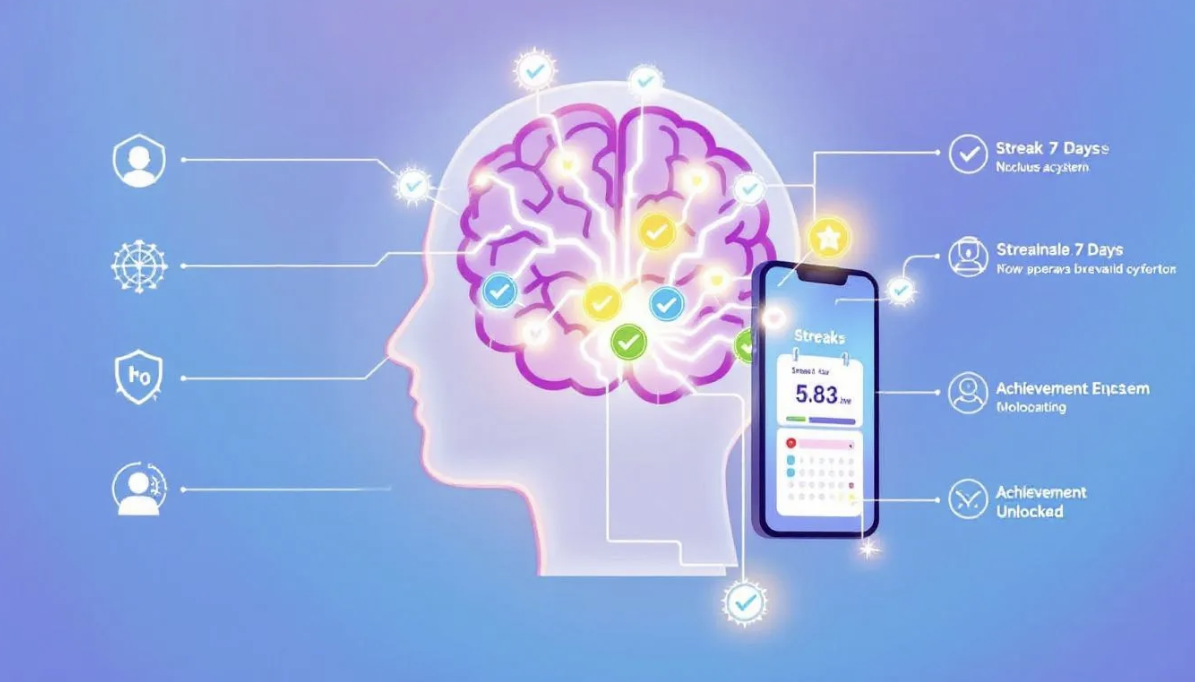
What makes running streaks and badges so addictive?
The answer lies in the brain’s reward system, specifically how it responds to progress and feedback. Every time you complete one of your daily runs or earn a new badge, your brain releases dopamine—a neurotransmitter associated with pleasure, motivation, and learning.
Run streaking is considered a behaviour change technique that leverages goal setting and self-monitoring to reinforce habit formation. By consistently engaging in daily runs, individuals build automaticity and reinforce their running identity, which supports long-term behaviour change.
Apps and wearables are designed to create a dopamine loop. You run, get a digital reward (a badge, a notification, a milestone), feel good, and want to repeat the behavior. This is the same loop used in many gamified systems—from fitness apps to mobile games.
Additionally, streak counters and badges offer clear, measurable progress—which is highly motivating. Unlike long-term goals like “run a marathon,” a streak focuses on immediate, repeatable wins, reinforcing the habit loop. From an applied sport psychology perspective, these strategies tap into the mental processes that drive motivation, resilience, and discipline in maintaining regular physical activity, with running streaks serving as a powerful example.
Commitment, Identity & Loss Aversion: Why You Don’t Want to Break the Chain

Ever heard of the phrase “don’t break the chain”?
Coined by comedian Jerry Seinfeld to describe his writing habit, it’s the same principle behind running streaks. Once you’ve completed a few consecutive days, you’re motivated to keep the streak going—not necessarily because of the individual reward, but because you fear losing what you’ve built. Over time, runners develop a strong streak attachment, forming an emotional and psychological bond with their streak that goes beyond simple habit.
This is known as loss aversion—a concept in behavioral economics suggesting that people feel the pain of losing more acutely than the joy of gaining. In the case of running, the loss of a streak feels disproportionately frustrating, even if the actual “loss” is just a number. When a streak is broken or the streak ends, runners often experience a significant emotional response, sometimes feeling disappointment or a sense of loss that can impact motivation.
But there’s another layer too: identity reinforcement. The more days you run in a row, the more you view yourself as a consistent, disciplined athlete. For many, streak running becomes woven into their lives and daily routines, shaping their sense of self and influencing life choices. Each day you run, you cast a vote for that identity. Skipping a day feels like betrayal—not just of the streak, but of yourself and the life you’ve built around this commitment.
The Role of Virtual Badges in Reinforcing Motivation
If streaks are the chain, virtual badges are the trophies that line the path.
From “First 5K Completed” to “100 Miles in a Month,” fitness apps are loaded with badge systems. These badges may be digital, but they have very real psychological effects:
Extrinsic motivation: In the early stages, badges offer external validation and encouragement. They give beginners a reason to come back tomorrow.
Intrinsic transition: Over time, these rewards foster a deeper internal motivation. You no longer run for the badge—you run because it’s who you are.
Social recognition: Many apps allow badge sharing with other runners, fostering a sense of community, peer reinforcement, and friendly competition.
Progress visualization: Badges serve as milestones, breaking down big goals into smaller, achievable steps.
The result? Runners feel a sense of progress, mastery, and achievement, which are core components of long-term habit formation. Publications like Runner's World often highlight streak runners and their accomplishments, further inspiring the community.
When It Goes Too Far: The Risks of Obsessive Streaking
While streaks and badges can be highly motivating, they come with a warning label.
Many runners become so attached to their streak that they ignore injury, fatigue, or their body’s signals. They run through pain just to “not break the streak”—a clear case of toxic consistency. For some, the advice to stop running for proper recovery is especially difficult to follow, even when facing significant pain or risk.
This is where running streak psychology crosses into dangerous territory. The same brain mechanisms that encourage consistency can also foster obsessive behavior, guilt, or burnout.
Common risks include:
Overuse injuries (shin splints, IT band syndrome, stress fracture, plantar fasciitis)
Serious health events (heart attack)
Mental fatigue and decreased motivation
Skipping essential rest days and recovery protocols
Compulsive behavior and disordered exercise patterns
To maintain health and prevent injury, runners often incorporate strategies such as active rest, running at an easy pace, balancing hard workouts with recovery, scheduling a long run with proper rest, and choosing to cross-train. These approaches help reduce the risk of overuse injuries and support long-term consistency.
Unlike daily streaks, participating in a race or multiple races requires different preparation and recovery, and may involve adjusting training intensity and rest.
Obstacles like bad weather and a busy schedule can make it challenging to maintain a running streak, but many runners adapt by planning ahead, being flexible, and adjusting their routines to stay consistent.
How to Use Streak Psychology in a Healthy Way
So, how can you harness the power of running streaks and virtual badges without falling into obsession?
Here are some expert-backed tips:
Start small: Begin with a 7- or 14-day streak and a low minimum (e.g., 5–10 minutes of movement).
Define “streak-friendly” days: Allow walking, stretching, or cross-training to count on rest days. Even a walk can help maintain your routine and support your physical fitness.
Use streaks as a tool, not a rule: Don’t let the streak control you—evaluate your energy, schedule, and health each day. If you decide to run today, plan to run tomorrow, but always listen to your body.
Celebrate progress, not just perfection: A broken streak doesn’t mean failure. Focus on your overall consistency and improvement, whether you’re starting a new streak or maintaining a long streak.
Choose apps that support wellness: Use platforms that emphasize smart training, not just numbers. Apps like Strava, NRC, or Garmin Connect now include adaptive goals and rest-day recommendations.
Prepare your running clothes in advance: Laying out your running clothes can make it easier to run every day and integrate running into your daily life.
Commit to run every day, run every day, or run daily if it fits your goals, but always prioritize your well-being and recovery.
Remember, to keep a streak, you need to run at least one mile on each calendar day.
Habit formation can take several weeks—a week or more of consistent effort is often needed. Physical activity guidelines recommend at least 150 minutes of moderate exercise per week, so recreational runners should aim for regular movement to support their lives and health.
Remember: discipline is a tool, not a trap.
Understanding the psychology behind running streaks and virtual badges can help you turn short-term goals into long-term habits.
By tapping into proven behavioral mechanisms—dopamine feedback, consistency bias, loss aversion, and gamification—you can stay motivated and consistent in your running journey.
But like any tool, streaks and badges are only helpful when used wisely. Rather than chasing perfect numbers, focus on building a sustainable running lifestyle where progress is measured not just by miles or medals—but by how good you feel showing up, day after day.
So the next time your app reminds you to keep the streak alive, ask yourself: Am I doing this for the badge—or for the better version of me I’m building one step at a time?