Healthy Trees in Urban Gardens: A Practical Guide to Inspection, Pruning and Risk
Urban trees need active observation
Mature trees can add shade, privacy, character, and habitat to a garden, but an urban setting also places them close to buildings, paths, roads, fences, and people. That means changes in condition deserve attention. A tree does not need to look perfect, but owners should notice new cracks, dead branches, damaged roots, fungal growth, sudden lean, or changes after storms and building work.
The safest habit is simple observation rather than DIY diagnosis. When a concern involves height, structural stability, or large limbs, professional assessment is the appropriate next step.
Look at the whole tree, not just the canopy
Problems can begin at the base or root area as well as in the branches. Soil compaction, trenching, paving, vehicle movement, or construction can damage roots that are essential for stability and water uptake.
Check whether the ground around the tree has changed recently. A healthy-looking canopy does not always reveal what is happening below the surface.
Prune for a reason
Pruning should solve a defined problem: removing deadwood, improving clearance, managing a defect, reducing conflict with a structure, or supporting the long-term form of a tree. Cutting without a clear objective can create unnecessary wounds or weak future growth.
A qualified arborist can recommend the type and extent of work that suits the species, condition, location, and season.
Know when work at height is not a DIY task
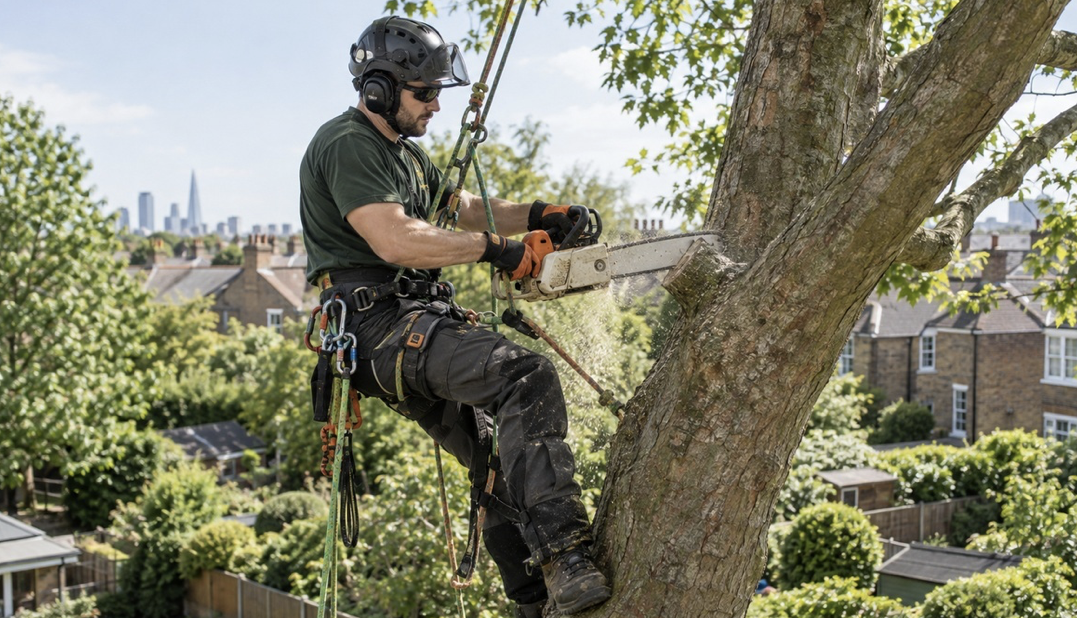
Large branches are heavy, unpredictable, and often under tension. Chainsaws, climbing systems, rigging, and work near roads or structures require training and planning. Attempting major tree work without the right equipment can create serious risk.
Homeowners searching for a tree surgeon London should look for clear evidence of competence, insurance, and a professional approach to site safety. Kettlewell Tree Care provides tree-care services in London, but customers should still discuss the specific tree, access, and proposed method before work begins.
Consider neighbours and surrounding property
Urban trees often cross boundaries or influence more than one property. Branches may overhang neighbouring gardens, roots may grow near walls, and tree work can affect privacy or light. Good communication helps prevent avoidable disputes.
Where ownership or legal rights are unclear, obtain appropriate advice before arranging major work. Do not assume that overhanging growth gives unlimited rights to cut in any way.
Check protection and permission before major work
Some trees may be protected or located within conservation areas. Requirements vary by location, so the legal status should be checked before significant pruning or removal.
A professional tree-care company can often identify when a planning check may be needed, but the property owner should make sure the correct permission is in place where required.
Plan for what happens after pruning or removal
Tree work changes the space around it. Before the job begins, discuss how branches and timber will be handled, whether the stump will remain, whether grinding is required, and how access will be protected.
If a tree is removed, consider replacement planting where appropriate. A new tree selected for the available space can provide long-term value without recreating the same conflict.
Use periodic checks for mature trees
Trees change slowly, which makes gradual decline easy to miss. Periodic professional inspection can be useful for mature trees near buildings, public areas, or high-use parts of a garden. The frequency should reflect condition and risk rather than follow an arbitrary schedule.
After strong storms or nearby construction, an additional check may be sensible if visible changes appear.
Protect trees during renovation and landscaping
Building projects can harm trees even when the trunk is never touched. Excavation can sever roots, heavy machinery can compact soil, and stored materials can alter drainage around the root zone. Tree protection should therefore be considered during project planning, not after construction starts.
Where valuable mature trees are close to proposed work, an arboricultural assessment can help identify protection measures and realistic constraints before contractors arrive.
Water and mulch with the site in mind
Young or recently planted trees often need more active care than established specimens. Watering should reflect weather, soil, and species rather than follow a fixed calendar. Mulch can help conserve moisture and reduce competition, but it should not be piled against the trunk.
For mature trees, sudden changes in drainage or soil level can be more significant than routine garden maintenance, so major landscaping changes deserve careful consideration.
Choose new trees for their mature size
Replacement planting is most successful when the future size of the tree matches the available space. A species that fits comfortably at maturity is less likely to create repeated conflicts with roofs, paths, overhead services, or neighbours.
Consider canopy spread, roots, light, soil conditions, and maintenance needs rather than choosing only for appearance at the time of planting.
Understand the difference between a tree defect and a tree risk
A visible defect does not automatically mean a tree is dangerous. Cavities, deadwood, leaning form, and old pruning wounds can have very different significance depending on the species, extent, location, and targets below. Risk depends on both the likelihood of failure and what could be harmed if failure occurs.
This is why photographs and visual impressions have limits. When the consequence could be serious, an on-site assessment by a competent arborist provides a stronger basis for deciding whether monitoring, pruning, or removal is appropriate.
Keep access practical for future maintenance
Garden design can make later tree work easier or much harder. Permanent sheds, narrow gates, raised beds, delicate surfaces, and tightly packed planting can restrict access for climbing equipment, chippers, or stump grinders.
When planning major landscaping around mature trees, consider how future inspections and maintenance will be carried out. Preserving sensible access can reduce disruption and cost when work is needed years later.
Final thoughts
Good urban tree care is a balance between keeping valuable trees and managing genuine risk. The aim is not to remove every old or large tree. It is to notice meaningful change, use proportionate pruning, protect roots, and obtain professional help when work becomes technical or hazardous.
With sensible observation and timely care, mature trees can remain an asset to homes and neighbourhoods for many years.