
A Guide to Professional Floor Cleaning Equipment
Your facility’s floor isn’t just a surface; it’s a billboard for your operational standards. Imagine a high-stakes client walking into a warehouse where the concrete gleams, or a safety inspector entering a retail space where the air is free of fine silica dust. Now, contrast that with the reality of a manual mop spreading grey water across a loading dock. In the competitive landscape of 2026, "clean enough" is a liability.
To transform your facility into a high-performance environment, you need to move beyond the bucket. Investing in a commercial floor-cleaning machine is the single most effective way to slash labour costs, eliminate slip-and-fall risks, and protect your capital investment in flooring.
What Defines Professional Floor Cleaning Equipment?
Professional-grade machines don’t just clean, they standardise outcomes.
They combine:
Controlled scrubbing pressure
Efficient water and chemical usage
Immediate recovery systems
Operator-friendly design
Industrial durability
A true commercial floor-cleaning machine removes dirt, lifts contaminants, and leaves floors dry in a single pass.
That’s the difference between maintenance and performance.
The Three Core Categories You Need to Know
1. Walk-Behind Scrubbers
Best for:
Medium-sized spaces
Retail stores
Offices and healthcare environments
Areas with tight layouts
They offer:
Precision control
Compact design
Lower upfront cost
If your facility requires detailed cleaning in confined spaces, this is your entry point into automation.
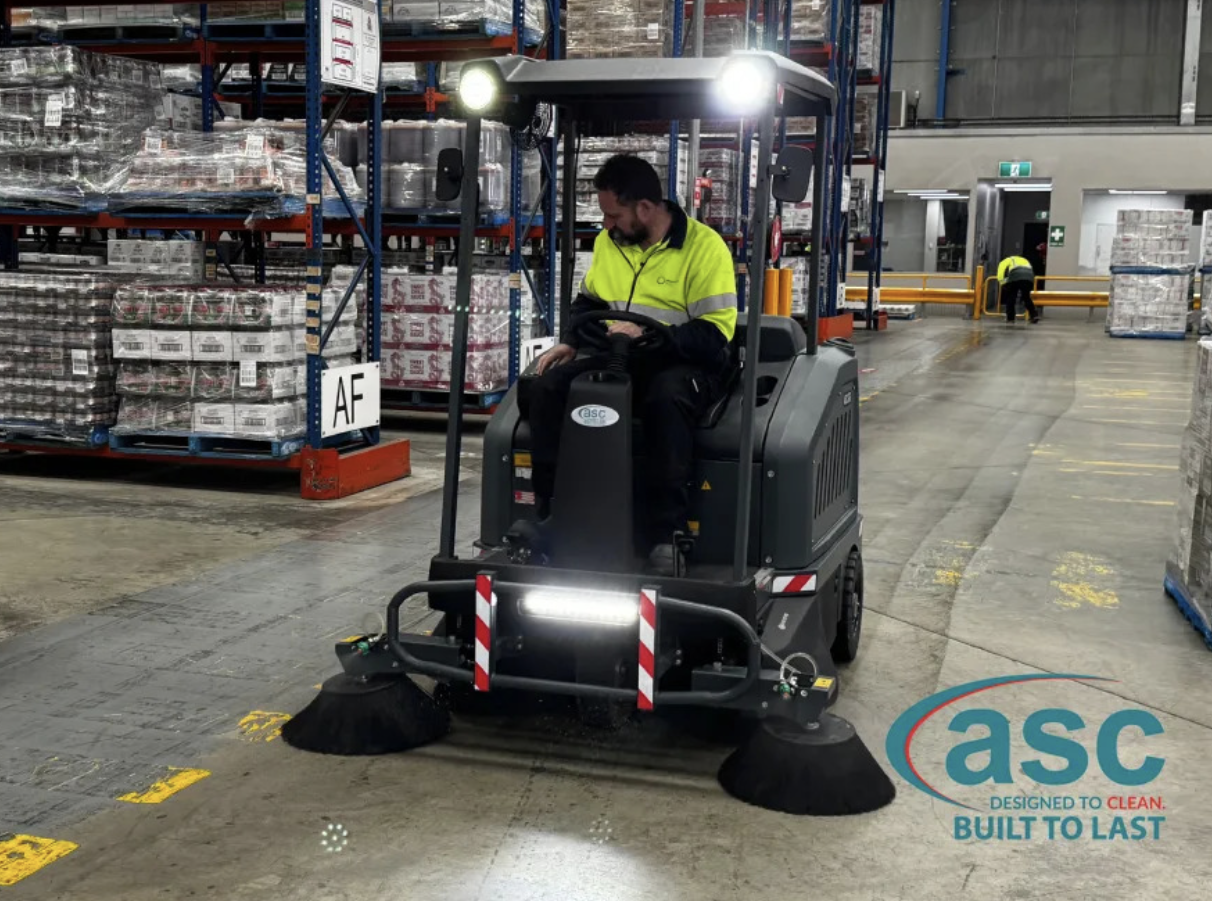
2. Ride-On Scrubbers
Best for:
Warehouses
Airports
Shopping centres
Large industrial floors
They deliver:
High-speed coverage
Larger tank capacity
Reduced operator fatigue
If cleaning large areas feels like a race against time, this is where efficiency scales.
3. Sweepers (Dry Debris Management)
Best for:
Dust-heavy environments
Logistics hubs
Manufacturing plants
They handle:
Dust, sand, debris
Continuous dry contamination
Sweepers complement scrubbers by preparing floors before wet cleaning.
How to Choose the Right Equipment
Here’s a simplified decision guide:
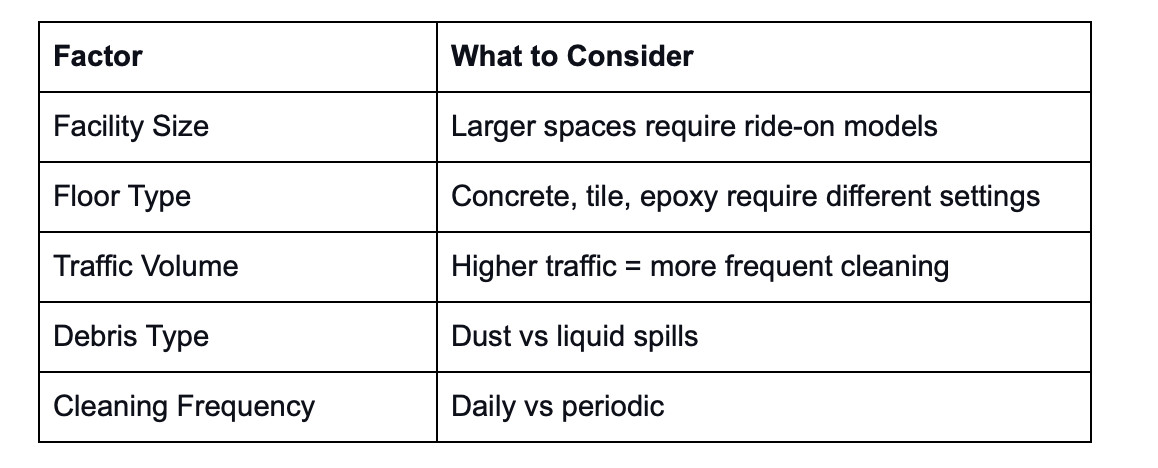
Match the machine to your workload, not just your budget.
Features that Define Professional Grade
When auditing equipment from leading industry providers, look for these non-negotiable features:
Parabolic Squeegees: These crescent-shaped tools follow the machine’s turn perfectly, ensuring 100% water recovery so you don't leave "ghost trails" of water on corners.
Lithium-Ion Compatibility: Modern fleets are moving away from lead-acid batteries. Lithium-ion allows for "opportunity charging" plugging in during a 30-minute lunch break without damaging the battery.
No-Tool Brush Changes: Efficiency is lost when an operator needs a toolkit to swap a brush. The best machines allow for "click-on/click-off" maintenance.
What You Actually Gain From a Commercial Floor Cleaning Machine
Most facilities don’t struggle with cleaning effort; they struggle with cleaning efficiency. The right commercial floor-cleaning machine doesn’t just improve cleanliness; it addresses the hidden inefficiencies that slow operations.
1. Measurable Time Recovery
Instead of asking “How clean are the floors?”, start asking “How long does it take to clean them?”
A properly matched machine reduces cleaning time per cycle, allowing teams to:
Finish within tighter cleaning windows
Avoid overtime or extended shifts
Clean more frequently without increasing labour.
Time saved here directly converts into operational flexibility.
2. Controlled Cleaning, Not Guesswork
Manual cleaning depends on the operator. Machines depend on settings.
With a commercial floor cleaning machine, you control:
Water flow (no over-wetting or waste)
Brush pressure (consistent across the entire floor)
Coverage pattern (no missed or double-cleaned areas)
This eliminates variability between shifts and ensures repeatable results.
3. Immediate Usability of Cleaned Areas
In commercial environments, cleaning isn’t isolated; it competes with operations. Unlike mopping, which leaves floors unusable for extended periods, machines:
Scrub and recover in one pass
Leave floors dry enough for immediate use
Reduce the need for blocking off sections
This keeps retail, warehouse, or production areas moving without interruption.
4. Reduction in Invisible Costs
Manual cleaning hides costs in small inefficiencies:
Excess water and chemical usage
Re-cleaning due to poor results
Wear on the flooring from inconsistent methods
A machine standardises inputs and outputs, which means:
Predictable consumption
Less material waste
Reduced long-term floor maintenance
5. Operator Efficiency Without Burnout
Fatigue affects performance. Slower cleaning, inconsistent pressure, missed spots; it all adds up. Machines shift the workload from physical effort to controlled operation:
Less strain on staff
More consistent pace
Higher output per operator
You don’t just clean faster; you maintain performance throughout the shift.
Where Quality Equipment Makes the Difference
Professional-grade cleaning equipment providers focus on:
Industrial-strength machines built for daily use
Scalable solutions for small to large facilities
Reliable after-sales support and parts availability
Equipment designed for real operational conditions
This approach ensures machines don’t just work on day one; they perform consistently over time.
Final thoughts: Choosing the Right Equipment Makes all the Difference
A clean facility is not just about appearance; it reflects efficiency, safety, and professionalism.
Investing in the right commercial floor cleaning machine transforms how spaces are maintained. It reduces effort, improves results, and creates a safer environment for everyone.
With access to advanced equipment, tailored solutions, and ongoing support from experienced suppliers, businesses can move beyond basic cleaning and achieve professional-grade results every day.