Can You Be Charged Based Only on a Witness Statement in Georgia?
Witness statements can play an important role in Georgia criminal investigations. When someone reports that they saw a crime, experienced an alleged offense, or can identify the person responsible, law enforcement may use that information when deciding how to proceed. This raises an important question for defendants: can you actually be charged based only on what one witness says?
In some circumstances, a witness statement can contribute significantly to probable cause and may support criminal charges even when physical evidence is limited or unavailable. However, being charged is very different from being convicted. At trial, prosecutors carry the much higher burden of proving the defendant's guilt beyond a reasonable doubt.
Witness credibility, inconsistencies, motives, identification problems, and other evidence can therefore become critical issues in a criminal case.
A Witness Statement Can Be Important During an Investigation
Police investigations frequently begin with information provided by witnesses, alleged victims, neighbors, employees, drivers, or other individuals who claim to know something about an incident.
A witness might tell police that they
Saw the alleged offense occur
Recognized the person involved
Heard threats or statements
Observed events immediately before or after the incident
Possess information about the people involved
Law enforcement can use this information while investigating whether a crime occurred and identifying possible suspects.
A witness statement does not automatically prove that every allegation is true. Police may attempt to corroborate the account using surveillance footage, photographs, physical evidence, digital communications, additional witnesses, or other investigative methods.
However, the absence of those additional forms of evidence does not necessarily prevent an investigation or charge from moving forward.
Being Charged Is Different From Being Convicted
One of the most important distinctions for Georgia defendants is the difference between the standard used during the early stages of a criminal case and the standard required for a conviction.
A criminal charge is an allegation. It does not establish guilt.
The prosecution must eventually prove each required element of the charged offense beyond a reasonable doubt if the case proceeds to trial. That standard is substantially more demanding than the probable-cause standard involved in many earlier stages of a criminal case.
This means a case may move forward based heavily on witness testimony but still encounter significant problems later.
For example, additional investigation might reveal that
The witness could not clearly see the incident.
The witness gave inconsistent descriptions.
Video evidence contradicts the account.
Another witness provides a different version.
The witness has a reason to be biased.
Physical evidence does not support the allegation.
Defense counsel can investigate these issues before trial and challenge the reliability of testimony when appropriate.
Witness Credibility Can Become a Central Issue
When a criminal case relies heavily on a single person's account, credibility can become especially important.
Witnesses are human, and memory is not perfect. A person may genuinely believe their recollection is accurate while still being mistaken about important details.
Factors that can affect the reliability of a witness include
Distance from the incident
Lighting conditions
Length of time the event was observed
Stress or fear
Distractions
Intoxication
Passage of time
Prior relationship with the defendant
Personal bias
A Savannah criminal defense lawyer may compare the witness's original statement with later interviews, police reports, deposition testimony where applicable, and testimony given in court. Significant changes between these accounts may become relevant when challenging credibility.
The defense may also examine whether investigators asked leading questions or whether outside information could have influenced the witness's recollection.
Serious Charges Can Still Depend Heavily on Testimony
The importance of witness testimony is not limited to minor offenses. Serious felony cases can also involve disputes about what witnesses or alleged victims claim occurred.
Consider allegations involving aggravated assault in GA. Depending on the circumstances, the prosecution's case could rely substantially on testimony concerning threats, weapons, physical actions, or what happened during a confrontation. If there is limited video or forensic evidence, the credibility and consistency of the people who observed the incident may become particularly significant.
Defense attorneys may investigate whether the witness had a clear opportunity to observe what happened and whether other evidence supports the account.
The defense might also identify alternative explanations. What one person describes as an intentional attack, for example, could involve disputed facts concerning self-defense, mistaken identification, or the sequence of events.
Each case must therefore be evaluated according to its own evidence rather than assuming a witness statement is automatically accurate or inaccurate.
How Defense Attorneys Challenge Witness Statements
Challenging witness testimony involves much more than simply claiming that a witness is lying. Effective defense preparation generally focuses on objective reasons the account may be unreliable, incomplete, or inconsistent.
Defense counsel may examine
Earlier statements given to police
911 recordings
Body-camera footage
Surveillance video
Text messages
Social media communications
Photographs
Medical evidence
Statements from other witnesses
Suppose a witness claims an incident happened at a particular time, but electronic records show the defendant was somewhere else. That information could significantly affect the prosecution's theory.
Similarly, surveillance footage might show that the witness's view was obstructed or that the events occurred differently from the original description.
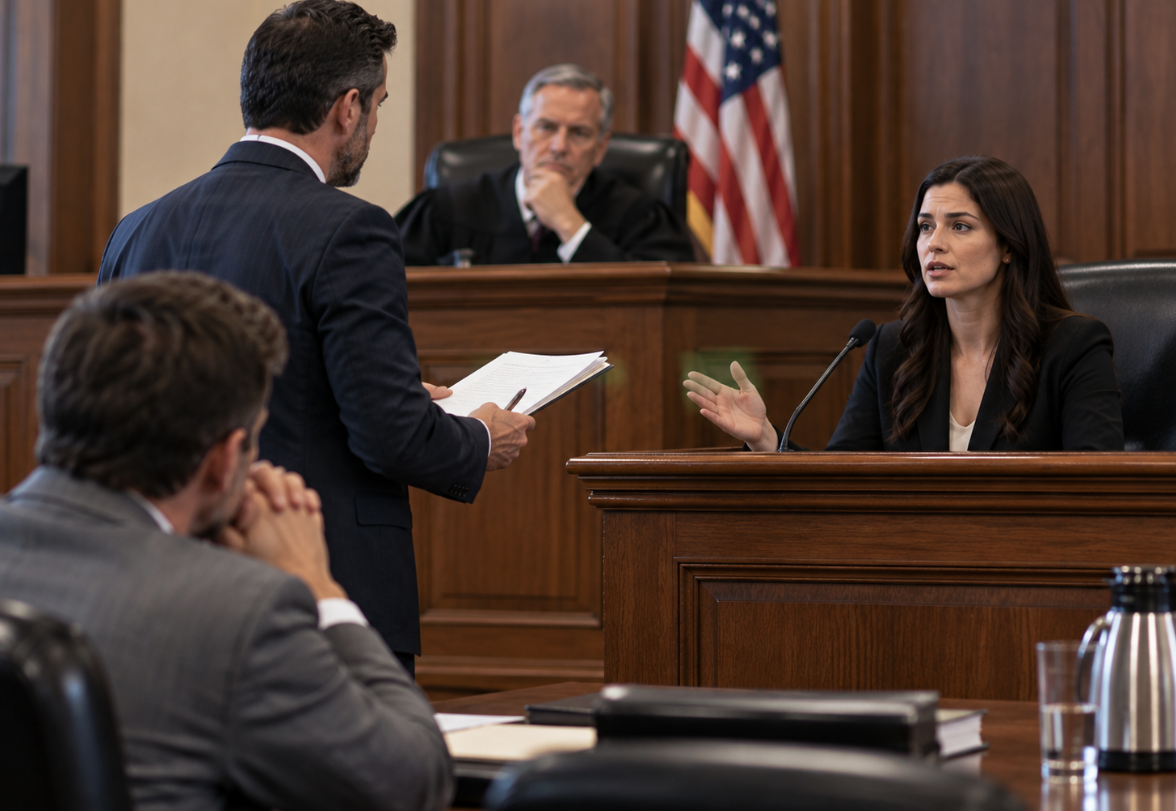
Cross-examination is another important tool. During trial, defense counsel may question prosecution witnesses about inconsistencies, memory problems, bias, perception, and other matters affecting reliability.
The purpose is to help the jury evaluate how much weight the testimony deserves.
What Happens When Witnesses Give Conflicting Accounts?
Criminal cases do not always involve a single clear version of events. Multiple witnesses may observe the same incident yet remember it differently.
One person might say the defendant started a confrontation, while another says someone else was the initial aggressor. Witnesses may disagree about clothing, timing, weapons, statements, distances, or even who was present.
These contradictions do not automatically result in dismissal. Prosecutors may still pursue the case if they believe the overall evidence supports the charge.
However, substantial inconsistencies can become important to the defense.
Investigators and attorneys may consider which account is supported by objective evidence. Surveillance footage, photographs, physical injuries, phone records, forensic evidence, and other information can sometimes help determine which description is more consistent with what occurred.
A jury ultimately evaluates witness credibility when disputed testimony is presented at trial. Jurors can consider the witness's demeanor, opportunity to observe the incident, consistency, possible motives, and compatibility with other evidence.
What Should You Do If a Witness Has Falsely Accused You?
Being falsely accused can create a strong desire to confront the person making the allegation. That can be a serious mistake.
A defendant generally should not attempt to pressure, threaten, persuade, or otherwise interfere with a prosecution witness. Such actions can create additional legal problems and may be interpreted negatively by investigators or prosecutors.
Instead, potentially helpful evidence should be preserved.
This could include
Text message conversations
Emails
Call records
Photographs
Videos
Receipts
Location information
Names of other witnesses
Relevant social media communications
Defendants should also be cautious about discussing their case publicly. Posting accusations against a witness on social media or sharing details about the criminal case can complicate the defense.
A better approach is to allow defense counsel to investigate the accusation through appropriate legal channels.
An attorney can obtain available discovery, review the witness's statements, identify contradictions, interview appropriate witnesses, preserve relevant evidence, and determine whether legal motions should be filed.
When the prosecution's case depends substantially on one witness, careful investigation can be particularly important because the reliability of that person's account may ultimately affect whether the government can satisfy its burden of proof.
Conclusion
A witness statement can be powerful evidence in a Georgia criminal investigation and, depending on the circumstances, may contribute to the legal basis for bringing charges even when physical evidence is limited. However, an accusation or criminal charge is not the same as proof of guilt.
If the case proceeds to trial, prosecutors must prove every required element of the offense beyond a reasonable doubt. Witness testimony can be challenged like other forms of evidence, and jurors are responsible for determining whether the testimony is credible and how much weight it deserves.
Factors such as inconsistent statements, poor visibility, mistaken identification, personal bias, conflicting witnesses, and contradictory physical or digital evidence may all affect the reliability of an accusation.
For someone facing charges based primarily on a witness statement, early investigation can be especially valuable. Preserving videos, messages, location information, witness details, and other relevant evidence may help establish what actually happened.
Rather than confronting an accuser or attempting to resolve the matter personally, defendants should protect their rights and allow the allegations to be investigated through the proper legal process. A carefully prepared defense can examine the witness's account alongside all available evidence and hold the prosecution to its burden of proving the charge beyond a reasonable doubt.
Powered By: Wizard Digital