Comparing New Construction Homes in Austin Without Getting Lost in the Model Homes
Key Takeaways
The advertised base price is only one part of a new construction purchase.
Lot premiums, upgrades, taxes, insurance, HOA dues, and financing can change the real cost substantially.
A builder's service after closing matters as much as the model home presentation.
The same floor plan can feel entirely different depending on its lot, light, privacy, and surroundings.
Independent inspections can add another layer of review before and after closing.
Comparing nearby resale homes helps clarify whether new construction is the best fit.
Table of Contents
Why Comparison Matters in Austin
Look Past the Advertised Price
Review Builder Quality and Reputation
Compare Floor Plans and Lot Positions
Read Builder Incentives Carefully
Plan for Inspections and Walkthroughs
Study the Community and Location
Compare New Construction With Resale Homes
Common Questions From Austin Buyers
Final Thoughts
Austin buyers can tour several new construction homes in a single weekend and still leave with an incomplete comparison. Similar base prices can hide meaningful differences in lot premiums, design selections, property taxes, HOA fees, commute patterns, and the everyday experience of living in the neighborhood.
For buyers weighing luxury properties, infill homes, and growing master-planned communities, Austin, TX real estate experts Darsh Advisory Group provide local real estate guidance centered on Austin's new construction and luxury market. Darsh Advisory Group works with buyers, sellers, developers, and investors, with experience across areas including Barton Hills, Zilker, Westlake, and Tarrytown. That perspective can be especially useful when attractive homes have very different costs, builder terms, and resale considerations.
Why Comparison Matters in Austin
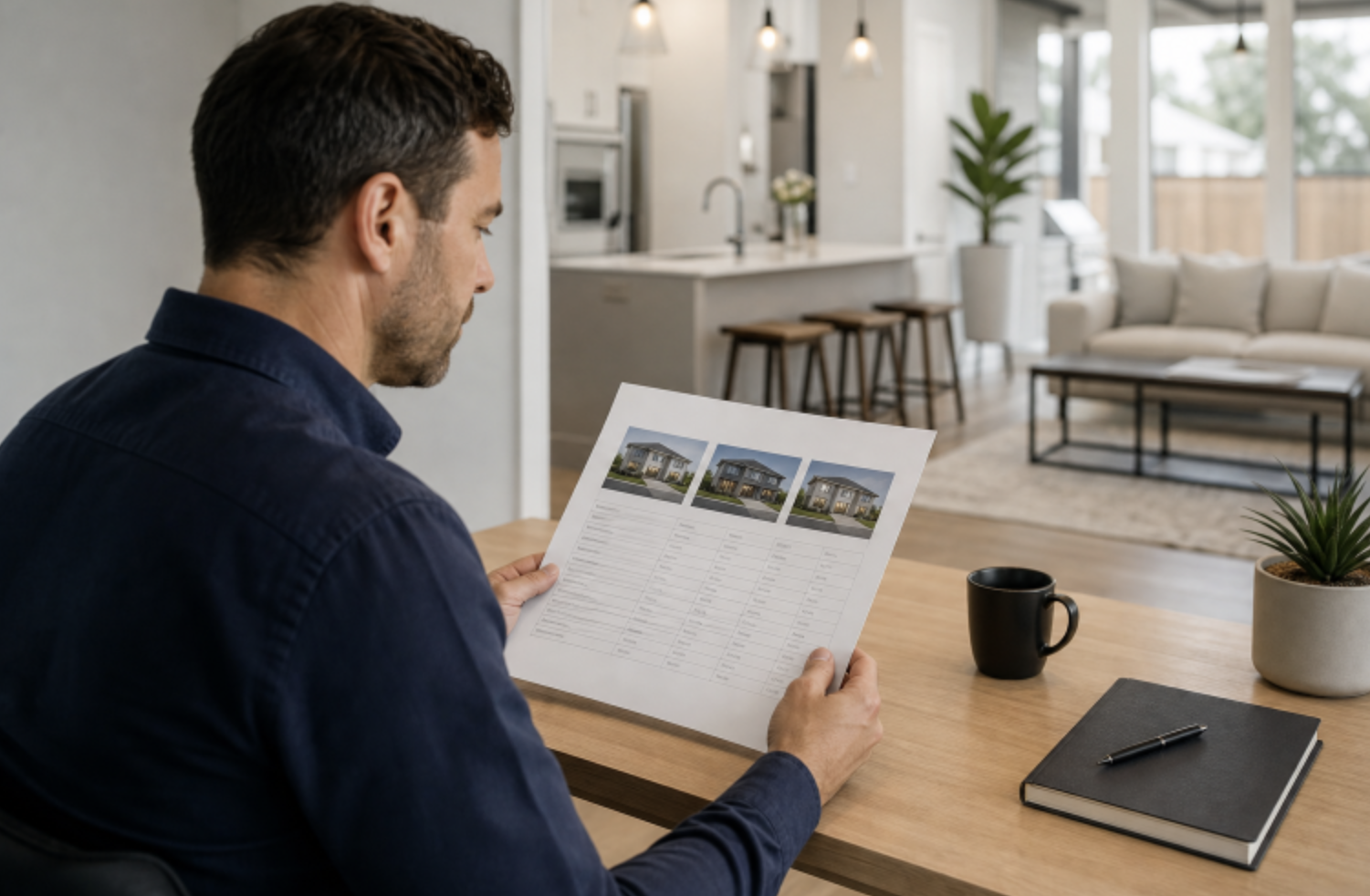
The best choice is not automatically the home with the lowest starting price or the most polished model. A lower-priced home may require more upgrades, sit on a less desirable lot, or create higher monthly carrying costs. Start with a written comparison worksheet and use the same categories for every home. Recent Central Texas housing data also provides useful context for buyers who want to compare new homes with the broader local market.
Look Past the Advertised Price
Ask each builder for a detailed estimate that separates included features from optional selections. This makes it easier to distinguish a genuinely competitive home from one whose final price will rise during the design process.
Costs to Add to a Buyer Worksheet
Base price, structural options, and lot premium
Flooring, cabinets, counters, lighting, appliances, and window coverings
Fencing, landscaping, irrigation, and outdoor living additions
Estimated closing costs, lender fees, and cash needed at closing
HOA dues, property taxes, homeowner's insurance, utilities, and maintenance
For example, a home with a lower base price can become the more expensive option after a premium lot, upgraded flooring, added lighting, and a finished backyard are included. Compare final expected purchase prices, not starting prices alone.
Review Builder Quality and Reputation
A model home is designed to show a builder at its best. It cannot reveal how clearly the builder communicates during construction or how repair requests are handled after closing. Visit completed communities, speak with current owners when possible, and review warranty documents before signing.
Builder Review Checklist
Look at completed homes, not only current models.
Ask about warranty coverage, service procedures, and response expectations.
Review public feedback for recurring themes rather than isolated complaints.
Confirm the construction timeline and ask how delays are communicated.
Ask which features, materials, and subcontracted work are standard.
Compare Floor Plans and Lot Positions
Two homes with the same plan can offer very different daily experiences. One may face a quiet internal street or back to open space, while another may sit near a community entrance, future construction area, or busy road. Tour the actual lot when possible, not just the staged plan.
Details Worth Comparing
Natural light, window placement, ceiling height, and room proportions
Bedroom, office, laundry, storage, and garage placement
Backyard depth, orientation, drainage, privacy, and neighboring windows
Distance from amenities, traffic, shared walls, and future development sites
Read Builder Incentives Carefully
Builder incentives may include closing-cost credits, temporary interest-rate buydowns, appliance packages, upgrades, or price reductions. They can be valuable, but buyers should compare the full financing picture before choosing a preferred lender solely for a credit.
Request written loan estimates from more than one lender. Compare the interest rate, annual percentage rate, lender fees, monthly payment, total cash required, and the length of any rate benefit. Also, ask whether incentives can be applied to upgrades, and what happens if the closing date changes.
Plan for Inspections and Walkthroughs
New does not mean flawless. An independent inspector can identify visible concerns and give buyers a clearer punch-list discussion with the builder. Ask about access and timing early, since builder policies vary.
Pre-drywall inspection: Reviews accessible framing, wiring, plumbing, and mechanical work.
Final inspection: Reviews finishes, doors, windows, appliances, drainage, and visible defects near completion.
Warranty inspection: Helps document issues that emerge after the home has been lived in.
Study the Community and Location
Evaluate the surrounding area as carefully as the house. Drive likely commute routes during realistic peak periods, visit on weekdays and weekends, and consider noise, cell service, grocery access, medical care, parks, and internet options. Review Austin housing and planning resources when broader growth and development patterns may affect your decision.
Compare New Construction With Resale Homes
New construction often offers newer systems, modern layouts, and selected finishes. Resale homes may offer mature landscaping, established surroundings, and a clearer picture of neighborhood traffic and maintenance history. Compare both types using the same budget and location criteria. A buyer who values efficiency and customization may lean toward new construction, while someone prioritizing mature trees, established streets, or a shorter move-in timeline may prefer resale.
Common Questions From Austin Buyers
Is new construction cheaper than resale?
It depends on the final purchase price, upgrades, financing, taxes, insurance, maintenance, and location. Compare full ownership costs instead of relying on an advertised starting price.
Can buyers negotiate on a new construction home?
Possibilities may include price, closing costs, upgrades, appliances, lot premiums, or financing terms. Options vary by builder, construction stage, community demand, and available inventory.
What should buyers bring to a model-home visit?
Bring a must-have list, a cost worksheet, questions about included features and HOA rules, a tape measure for furniture planning, and a phone for notes. Visit more than once before making a final decision.
Final Thoughts
Comparing new construction homes in Austin requires more than falling in love with a model home. Review the full price, builder history, floor plan, lot, incentives, inspection process, neighborhood conditions, and future resale appeal. A consistent comparison system helps turn a complex choice into a more confident purchase decision.