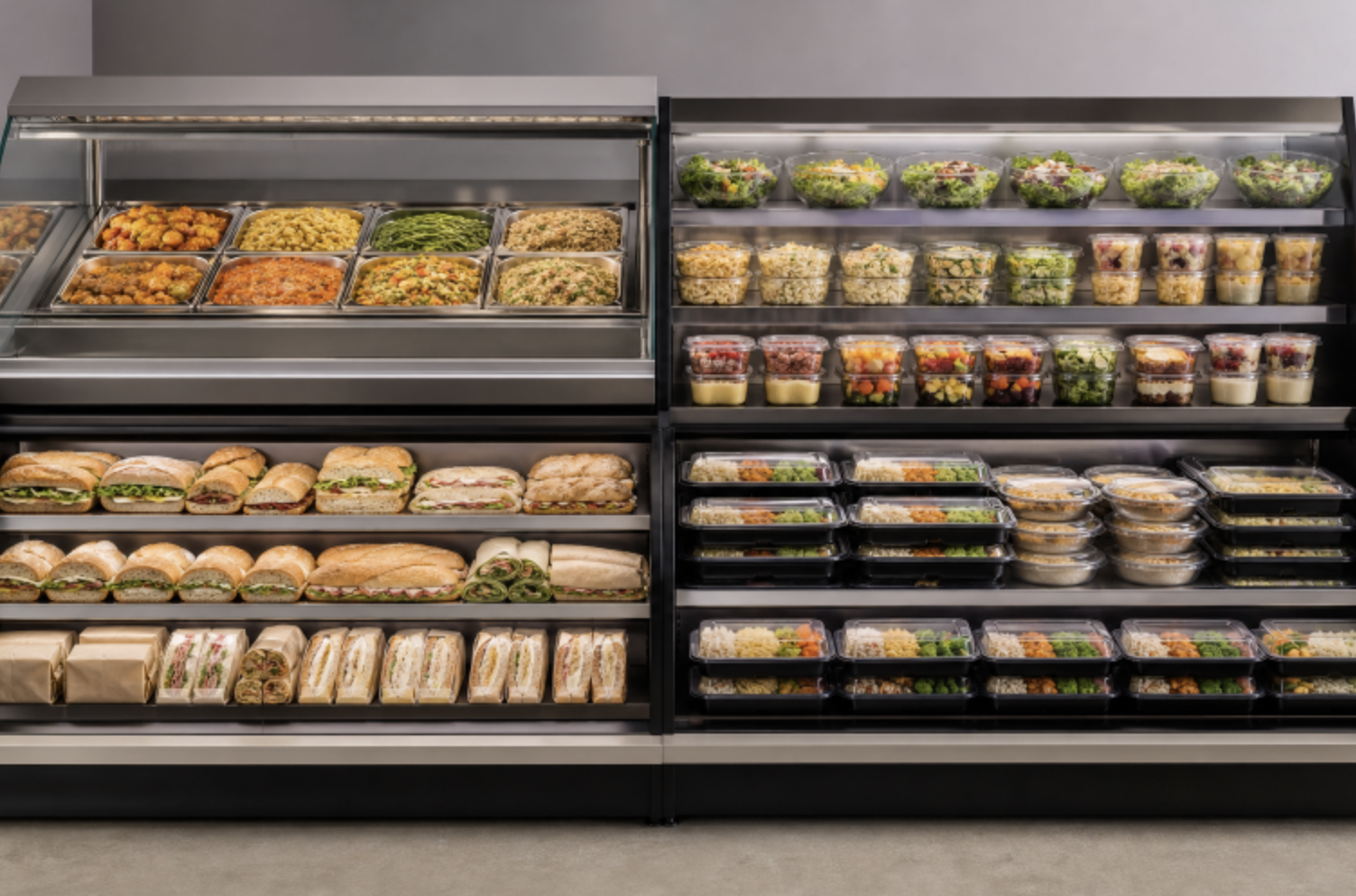
How To Plan Hot, Cold, And Grab-And-Go Food Displays For Better Retail Service In 2026
Key Takeaways
Food displays should make the customer's next step obvious within seconds.
Hot, chilled, frozen, and shelf-stable products need separate handling and replenishment plans.
Clear product flow reduces congestion, service delays, and unnecessary employee movement.
Flexible displays make it easier to adjust assortment and presentation throughout the day.
Sales, waste, service time, and customer feedback reveal which layouts are working.
Table Of Contents
Why Display Planning Matters
Start With Customer Missions
Divide The Space By Temperature
Build A Clear Product Flow
Choose The Right Service Style
Protect Food Quality And Safety
Make Displays Easier To Run
Use Merchandising To Guide Choice
Measure What Works
Common Planning Mistakes
A Practical Planning Checklist
Prepared-food areas can turn an ordinary retail stop into a convenient meal solution, but only when shoppers can understand the offer, make a selection, and check out without friction. A well-planned food service display supports fast decisions while helping teams protect food quality, replenish products efficiently, and keep the area clean.
The most effective displays are designed as connected systems. Customer traffic, service style, temperature requirements, packaging, labeling, staff access, and payment all influence how dependable a hot, cold, or grab-and-go program feels during both quiet periods and peak rushes.
1. Why Display Planning Matters In 2026
Shoppers now expect a single trip to include breakfast, lunch, dinner, snacks, and take-home items. Effective presentation makes fresh food easier and more appealing to buy. FMI research shows that thoughtful display reduces friction and enhances the shopper experience. The goal isn't to overcrowd surfaces but to create a clear, inviting path that helps customers recognize categories, compare options, and buy quickly. Simple displays allow staff to focus less on questions and more on maintaining quality.
2. Start With Customer Missions
Plan the food area around why people visit it. A commuter buying one breakfast item needs a different experience than a parent selecting dinner for several people.
Customer Missions To Consider
Fast single-item purchase: Put popular packaged items near the approach path and checkout.
Complete meal purchase: Group entrées, sides, drinks, and desserts so shoppers can build a meal without backtracking.
Family or group purchase: Offer larger packages and leave room for carts, baskets, and longer decision times.
Planned grocery trip: Position prepared food where it complements, rather than blocks, the broader shopping path.
3. Divide The Space By Temperature
Hot and cold foods should not be treated as one category. Their equipment, holding procedures, display life, packaging, and staff routines are different. Define each zone before selecting fixtures or setting the assortment.
Hot foods: Need heated holding, frequent quality checks, protected serving tools, and a direct replenishment route.
Chilled foods: Work well for packaged salads, sandwiches, drinks, desserts, and meal kits that customers can select quickly.
Frozen items: Need dedicated freezer space, visible product identification, and careful monitoring of frost and package condition.
Shelf-stable add-ons: Sauces, utensils, snacks, and napkins should be kept nearby but should not create clutter in the main selection zone.
4. Build A Clear Product Flow
Map the path from approach to selection, payment, and exit. Use category signs where customers first see the department, place high-demand items within easy reach, and allow people to pause without blocking traffic. Keep napkins, lids, sauces, and utensils close to the products that require them. A poorly placed sauce station can slow the entire area. If customers must cross in front of a refrigerated case to collect condiments, they can block people from choosing meals. Moving add-ons to the end of the selection path keeps the main display open and makes the sequence more intuitive.
5. Choose The Right Service Style
Self-Service
Self-service works best for clearly labeled, packaged products and simple selections. It can improve speed during rushes, but requires tidy organization, easy-to-read prices, accessible tools, and routine cleanup.
Full-Service
Full-service counters are useful for customized orders, portion control, or foods that need closer handling. Create a visible queue, show the menu before customers reach the counter, and provide a separate pickup area when possible.
Combination Service
A hybrid model can offer packaged salads and drinks for self-service while reserving hot entrées or made-to-order items for staff. Clear signs should tell customers where to stand, what can be picked up directly, and where to pay.
6. Protect Food Quality And Safety
Attractive presentation never replaces safe food handling. Written procedures should cover temperature checks, date labels, product rotation, cleaning, utensil replacement, allergen awareness, and corrective actions. General consumer guidance recommends holding hot food at 140°F or above and cold food at 40°F or below, while retail operators should also follow applicable state and local food codes. See FoodSafety.gov's food safety guidance for practical temperature and handling reminders.
7. Make Displays Easier To Run
Employee workflow should shape the display from the start. Review the distance between storage, preparation, holding equipment, service points, and checkout. Staff need room for carts, trays, cleaning supplies, and safe movement during busy periods.
For example, moving the fastest-selling meal bowls closer to the replenishment route can reduce the number of trips through customer traffic. That small adjustment helps employees refill the display more quickly while keeping popular products in stock.
8. Use Merchandising To Guide Choice
Use color, height, lighting, package sizes, and simple labels to make choices easy. Place meal components close together, keep premium or specialty items at natural eye level, and use smaller display quantities during slow periods to preserve a fresh appearance. Leave breathing room between groupings so shoppers can compare products without visual overload.
9. Measure What Works
Do not rely on total sales alone. Track sales by hour, units sold by category, waste, markdowns, average service time, restocking frequency, complete-meal purchases, and recurring customer complaints. Test one layout or assortment change at a time, then compare results before making another change.
10. Common Planning Mistakes
Using one display plan for every store, regardless of traffic or customer needs.
Adding too many choices before demand has been measured.
Hiding signs behind fixtures or placing them too late in the customer path.
Ignoring cleaning and replenishment access.
Mixing hot, cold, and shelf-stable products without clear separation.
Routing checkout traffic through the busiest selection area.
11. A Practical Planning Checklist
Define the main customer missions for the location.
List each food category and its holding requirements.
Map customer and employee paths separately.
Select self-service, full-service, or hybrid service by category.
Confirm labeling, cleaning, temperature, and rotation procedures.
Review visibility, accessibility, queue space, and replenishment access.
Set a small group of performance measures and test the layout during peak periods.
Conclusion
Effective food display planning begins with the customer and succeeds through daily operations. When layout, food safety, service style, merchandising, and measurement work together, retailers can create hot, cold, and grab-and-go areas that are easier to shop, safer to operate, and more consistent throughout the day.