How Leaders Benefit from an Online DISC Assessment
Effective leadership requires more than technical expertise and industry knowledge. Today's leaders must understand how to communicate, motivate, and collaborate with people who have different personalities, work styles, and expectations. As organizations become more diverse and team-oriented, understanding human behavior has become a critical leadership skill. This is where an Online DISC Assessment can provide valuable insights. By helping leaders identify behavioral tendencies in themselves and others, this assessment serves as a powerful tool for improving leadership effectiveness and building stronger workplace relationships.
The DISC model has been widely used for decades in leadership development, team building, and employee engagement programs. Through a simple yet insightful assessment process, leaders gain a deeper understanding of communication styles, decision-making preferences, and workplace behaviors. These insights can significantly improve how leaders interact with their teams and drive organizational success.
What Is an Online DISC Assessment?
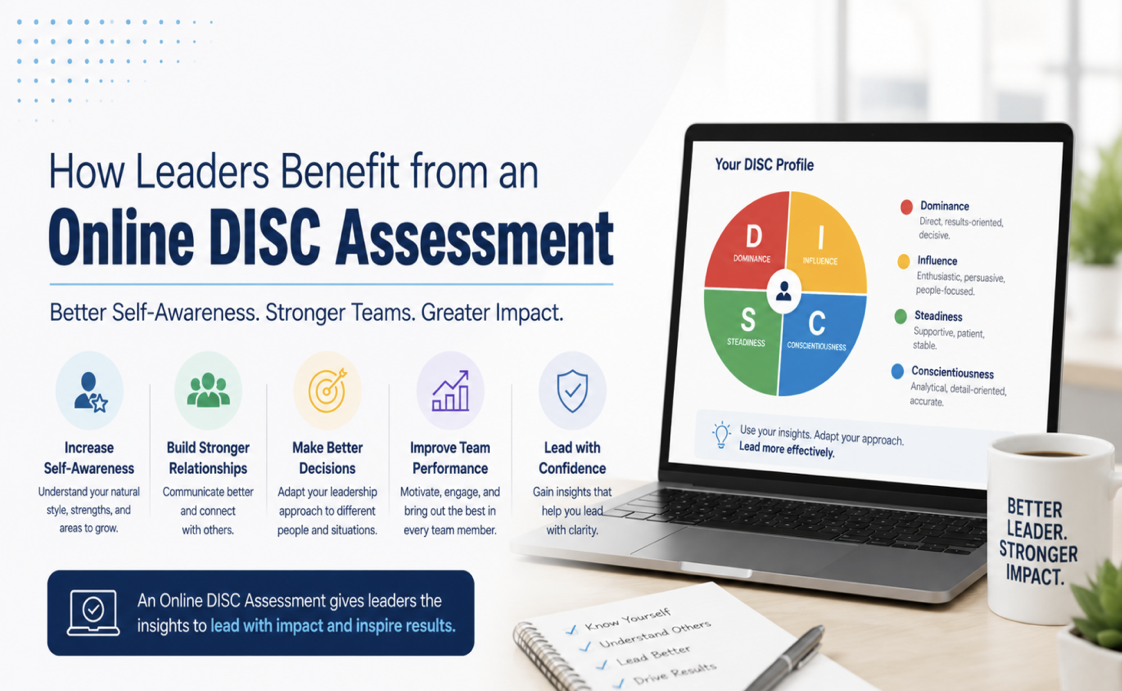
An Online DISC Assessment is a behavioral evaluation tool that measures personality traits based on four primary behavioral dimensions:
Dominance (D)
Influence (I)
Steadiness (S)
Conscientiousness (C)
Participants complete an online questionnaire designed to identify their natural behavioral tendencies. The results generate a personalized profile that explains how they communicate, solve problems, approach challenges, and interact with others.
Unlike intelligence tests or skills assessments, DISC focuses on behavior and personality. The goal is not to determine whether someone is right or wrong but to help individuals understand their natural tendencies and how those tendencies affect workplace interactions.
For leaders, this knowledge can become a valuable asset in managing teams and fostering collaboration.
Developing Greater Self-Awareness
One of the most significant benefits of an Online DISC Assessment is increased self-awareness.
Many leaders are highly focused on organizational goals and business outcomes, but may not fully understand how their behavior impacts their teams. DISC helps leaders recognize their strengths, communication patterns, and potential blind spots.
For example:
A leader with a high Dominance style may excel at making quick decisions but may need to improve active listening skills.
A leader with a strong Influence style may inspire others effectively but benefit from more structured planning.
A Steadiness-oriented leader may excel at supporting employees but struggle with difficult conversations.
A Conscientiousness-focused leader may prioritize accuracy but sometimes delay decisions due to excessive analysis.
By understanding these tendencies, leaders can make intentional adjustments that enhance their effectiveness.
Improving Communication Skills
Communication is one of the most important responsibilities of any leader.
Different employees process information in different ways. Some prefer direct instructions, while others value detailed explanations or collaborative discussions. Miscommunication often occurs when leaders assume everyone communicates the same way they do.
An Online DISC Assessment helps leaders identify communication preferences across different personality styles.
For instance:
Dominance personalities appreciate concise and results-oriented communication.
Influential personalities respond well to enthusiasm and personal interaction.
Steady personalities value empathy and consistency.
Conscientiousness personalities prefer detailed information and logical explanations.
When leaders adapt their communication approach to meet individual needs, employees are more likely to understand expectations, remain engaged, and perform effectively.
Strengthening Team Relationships
Successful teams are built on trust and mutual understanding.
Leaders who understand DISC profiles can better appreciate the diverse strengths and perspectives within their teams. Rather than viewing behavioral differences as challenges, they learn to recognize them as valuable assets.
For example:
Dominance team members often drive results and innovation.
Influence personalities energize the team and build relationships.
Steadiness individuals provide reliability and support.
Conscientiousness employees ensure quality and attention to detail.
By recognizing these contributions, leaders can create an environment where employees feel valued and understood.
This stronger sense of connection often leads to improved morale, collaboration, and team performance.
Enhancing Decision-Making
Leadership frequently involves making important decisions under pressure.
DISC insights help leaders understand how their personality influences decision-making processes. Some leaders naturally make quick decisions, while others prefer gathering extensive information before acting.
An Online DISC Assessment enables leaders to recognize potential biases and blind spots in their decision-making style.
For example, a highly dominant leader may benefit from seeking additional input before making major decisions. Conversely, a highly conscientious leader may need to avoid overanalyzing situations that require timely action.
By understanding these tendencies, leaders can make more balanced and effective decisions.
Improving Conflict Resolution
Conflict is inevitable in any workplace. Different personalities, priorities, and communication styles can sometimes lead to disagreements.
The ability to manage conflict effectively is a key leadership skill, and DISC provides valuable support in this area.
An Online DISC Assessment helps leaders understand how different personality styles typically respond to conflict:
Dominance personalities may confront issues directly.
Influence personalities may seek social harmony.
Steadiness personalities may avoid confrontation.
Conscientiousness personalities may focus on facts and details.
With this understanding, leaders can tailor their conflict resolution strategies to suit the individuals involved. This approach often results in faster resolutions and healthier workplace relationships.
Increasing Employee Engagement
Employees are more engaged when they feel understood, supported, and valued.
Leaders who use DISC insights can better understand what motivates each team member. Rather than applying a one-size-fits-all management style, they can customize their approach to meet individual needs.
For example:
Some employees may value recognition and social interaction.
Others may prioritize stability and job security.
Certain individuals may seek autonomy and challenges.
Some may prefer clear expectations and structured processes.
When leaders align their management strategies with employee preferences, engagement levels often increase significantly.
Higher engagement contributes to better productivity, stronger retention rates, and improved overall performance.
Supporting Leadership Development
Leadership development is an ongoing process.
Even experienced leaders benefit from learning more about themselves and refining their interpersonal skills. An Online DISC Assessment provides a foundation for continuous improvement by highlighting both strengths and growth opportunities.
Organizations frequently incorporate DISC assessments into leadership training programs because the results offer practical insights that can be applied immediately.
Leaders can use their DISC profiles to:
Improve emotional intelligence
Strengthen communication skills
Build stronger teams
Increase adaptability
Enhance coaching and mentoring abilities
Over time, these improvements contribute to greater leadership effectiveness and organizational success.
Creating a More Adaptable Leadership Style
Today's workplace is constantly evolving. Leaders must be able to adapt to changing business conditions, diverse workforces, and shifting employee expectations.
DISC helps leaders develop flexibility by encouraging them to understand and adjust to different personality styles.
Rather than relying solely on their natural communication and leadership preferences, DISC-trained leaders learn how to adapt their approach based on the needs of specific situations and individuals.
This adaptability is particularly valuable in remote work environments, cross-functional teams, and global organizations where diverse communication styles are common.
Driving Organizational Success
Ultimately, leadership effectiveness has a direct impact on organizational performance.
Leaders who understand behavioral styles are better equipped to:
Build cohesive teams
Improve communication
Resolve conflicts efficiently
Increase employee engagement
Foster a positive workplace culture
These benefits contribute to stronger productivity, innovation, and long-term business growth.
An Online DISC Assessment provides leaders with practical insights that help transform everyday workplace interactions into opportunities for stronger collaboration and improved results.
Conclusion
Leadership success depends on understanding people as much as understanding business. An Online DISC Assessment offers leaders a powerful framework for developing self-awareness, improving communication, strengthening team relationships, and enhancing decision-making skills.
By gaining insight into behavioral styles and learning how to adapt their leadership approach, leaders can create more engaged teams, foster healthier workplace cultures, and drive better organizational outcomes. In an increasingly people-focused business environment, the ability to understand and connect with others is one of the most valuable leadership skills—and an Online DISC Assessment is an excellent tool for developing it.