
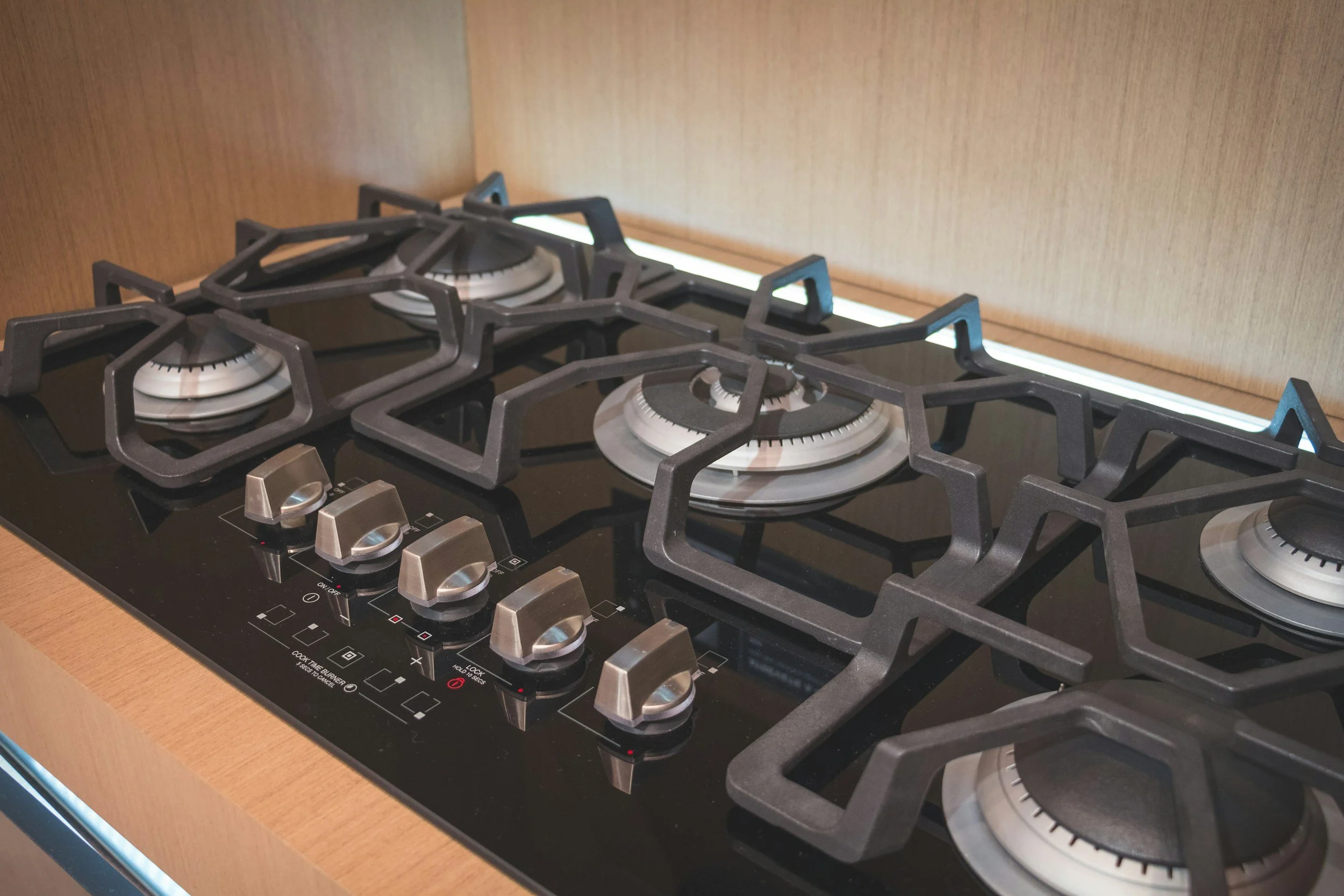
How To Choose The Right Gas Stove For Your Cooking Style
Nobody tells you this part when you walk into the showroom. The gas stove you pick in twenty minutes will cook your food for the next eight to ten years. Every chapati. Every tadka. Every dal. All of it happening on this one appliance you chose because the salesman said something about “premium finish.”
It’s true that most people buying for the first time focus on the number of burners and aesthetics. But within two months, the pot is wobbling, the flame is too high despite being set to the lowest setting, and the knob is always out of reach whenever your hands are holding the hot ladle. The compatibility of the gas stove and cooking method plays a more important role than any brochure can ever suggest.
Your Cooking Decides What You Need
Indian cooking does not exist in just one form. It exists in the form of five different elements working simultaneously.
A family which uses tadka twice a day, kadai sabzi three to four days per week, and dum biryani every Sunday requires a different gas stove from a family that boils milk in the morning and prepares Maggi in the evening. The former requires proper temperature control over a larger range of temperatures. The latter hardly requires a second hob at all.
Be honest with yourself here. How many things cook on your stove in a normal week? Do you do dum rice? Rotis on direct flame? Deep frying regularly? Each of these pushes the right choice somewhere different.
The biggest regret first-time buyers report is not wattage or brand. It is realising the stove does not fit how they actually cook.
Picking The Right Number Of Burners
Two, three, or four. Those are your options.
Two burners work for bachelors and young couples. Cheaper. Easier to clean. Takes up less counter. The trade-off hits when you host, or when morning tea needs to happen alongside breakfast cooking.
Three is the quiet sweet spot. Most Indian families of three or four end up here after they realise two is not enough. Dal on one burner. Sabzi on another. Tea or rice on the third. No musical chairs with the pots.
Four burners on a gas stove exists for joint families, people who entertain, or kitchens that handle elaborate weekend cooking. The catch is counter space. If your hob area is tight, that fourth burner just becomes a tawa storage spot.
Burner Size Matters More Than Count
Here is the thing showrooms skip entirely. Burner diameter varies across the same gas stove, and matching the burner to your actual utensil changes everything:
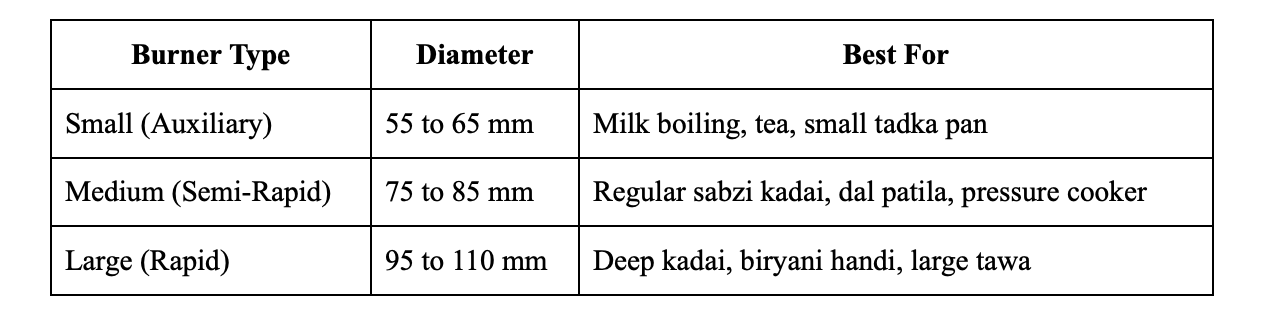
A kadai sitting on a burner too small heats weirdly. The edges stay cool. The middle gets hot. Food cooks unevenly and you turn up the flame to compensate, which just wastes gas and burns whatever is in the centre.
The practical move is to check your most-used utensils before you buy. Dum biryani handi? You need at least one rapid burner. Regular tawa for rotis? Make sure one burner takes the tawa diameter cleanly. Mismatched burners are why so many kitchens feel like they are fighting the stove.
Should You Choose Auto-Ignition Or Manual
Twist the knob and the burner lights. That is auto-ignition in one sentence.
A manual gas stove costs less upfront. But over a decade of three-times-a-day use, reaching for a lighter or matchbox gets genuinely tiring. Gas lighter batteries die. Matchboxes go damp in Mumbai or Kolkata monsoon humidity. The small extra you pay for auto-ignition pays back inside two years just in convenience.
One thing worth knowing. Auto-ignition runs off a battery hidden in the stove base. That battery dies after two or three years. When it does, you go back to lighting manually until you replace it. Not dramatic. But nobody warns you so it surprises people.
Safety Features Worth Insisting On
Flame failure device. Say it out loud so you remember it in the shop. FFD.
This cuts the gas off automatically if the flame goes out. Wind through an open window. Dal boiling over and snuffing the flame. Someone turning the knob by mistake. Without an FFD, raw gas just keeps flowing into your kitchen until somebody notices. Which could be thirty seconds or thirty minutes.
Heat shields around the knobs matter more than they sound. Indian tadkas run long. Metal knobs sitting right next to a burner for twenty minutes get properly hot. Good insulation keeps the knob touchable even during long simmers.
Your gas stove top material deserves honest thought too. Stainless steel handles daily oil splashes and spice stains without complaining for years. Toughened glass looks sharper, cleans easier, but can crack when cold water hits a hot surface mid-cleaning. Glass works if you are careful. Steel is more forgiving of actual human behaviour.
Choosing Between A Built-In Hob And A Freestanding Stove
Built-in hobs look cleaner. They integrate into modular kitchens properly. But they commit you to that exact spot in that exact kitchen forever.
A freestanding gas stove sits on the counter. You can move it. You can take it with you if you shift house.
For first-time buyers, or anyone who might move within a few years, freestanding is honestly the smarter call. Hob installation is not reversible without kitchen work.
Conclusion
The best gas stove for you is the one that suits your way of cooking rather than the one with the maximum number of features packed inside its box. Appropriate number of burners to suit your household size. Appropriate diameter of burners to suit your most used utensils. Self-ignition facility to suit your daily requirements. Flame failure device as an absolute necessity to ensure your safety. Right material to suit the degree of care that you take while cleaning the stove.