
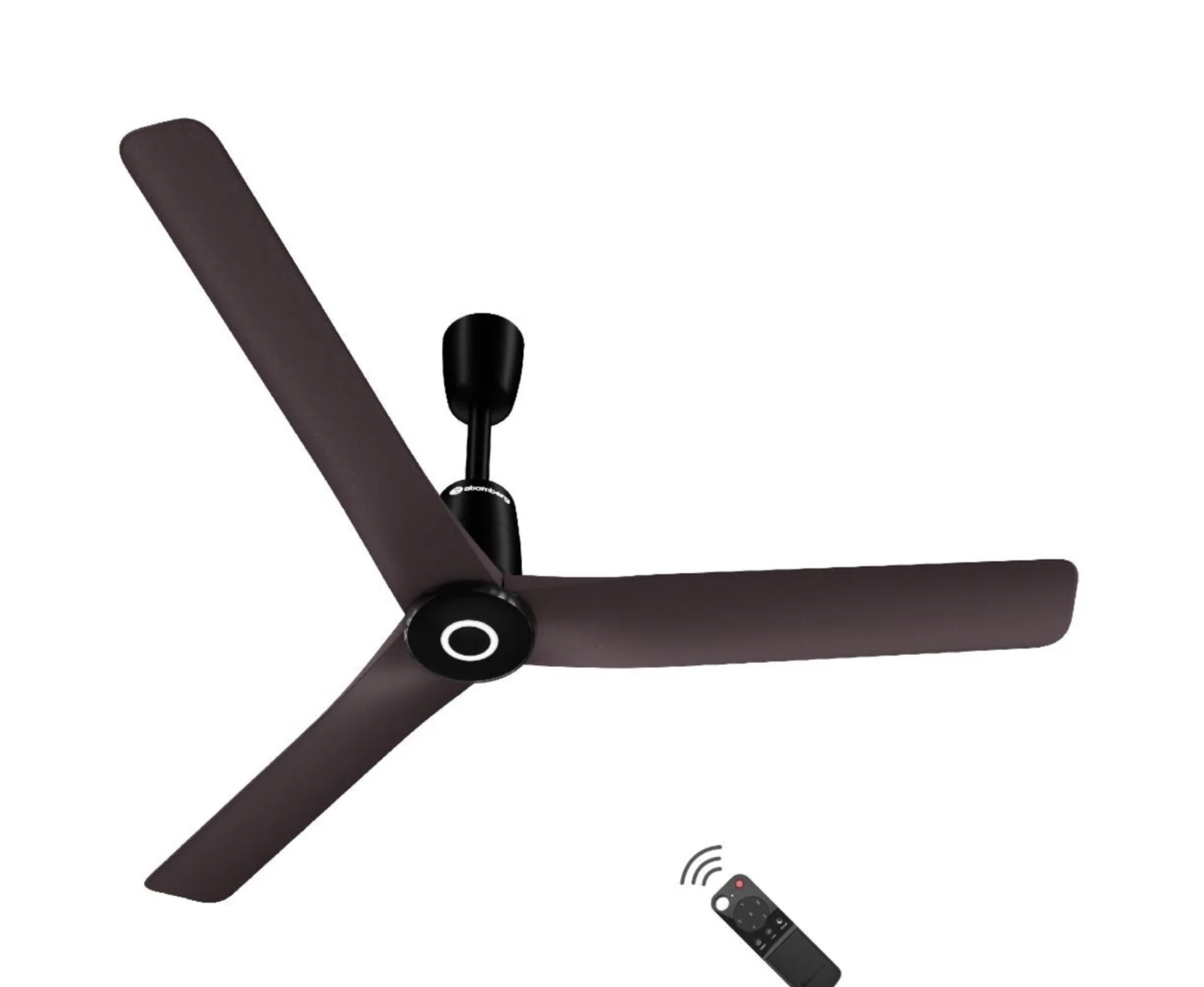
Remote Control Ceiling Fan for Winter Nights: How Low-Speed Modes and Sleep Timers Keep Rooms Fresh Without the Chill
Here’s something nobody tells you about Indian winters. The problem at night isn’t cold air. It’s stale air. You close all the windows because the temperature drops, you pull out the heavy blanket, and by 2 AM the room feels stuffy and suffocating. You wake up groggy, not because you didn’t sleep enough but because the air in the room hasn’t moved in six hours.
A remote control ceiling fan fixes this in the simplest way possible. Not on full speed. Not even on medium. Just the lowest setting, barely noticeable, circulating air so gently that you don’t feel a breeze, but you also don’t wake up in a room that smells like it hasn’t been opened in a week.
Why Closed Bedrooms Feel Stuffy on Winter Nights
The instinct makes sense. It’s cold; the fan makes it colder, so you turn it off. Logical. But the issue is that still air in a closed room creates problems that most people don’t connect back to the fan being off. And this is exactly why ceiling fans get an unfair reputation as summer-only appliances.
Your body releases heat and moisture while you sleep. Without any air movement, that moisture hangs around you, making the bedding feel damp by morning. The CO₂ levels in a closed bedroom climb through the night, which is why you sometimes wake up with a mild headache or a dry throat even when you slept a full eight hours.
You don’t need a gust of wind to solve this. You need the smallest possible air movement, just enough to keep things circulating. That’s exactly what the lowest speed setting on a remote control ceiling fan is designed for. Not cooling. Circulation.
Why a Remote Control Ceiling Fan Works Better at Low Speed
Most older ceiling fans have a problem with low speeds. You turn the regulator down, and the fan either runs at a speed that’s still too fast for winter comfort, or it starts humming and wobbling because the motor wasn’t built to run that slow. So people give up and switch it off entirely.
Newer remote control ceiling fan models with BLDC motors handle this differently. They can run at genuinely low RPMs without the noise, without the wobble, and without consuming much power at all. Speed 1 on a decent BLDC fan moves air at roughly 50 to 60 cubic metres per minute. You can barely feel it on your skin. But the room stays fresher through the night.
This is the part where the remote control actually matters, by the way. You’re already in bed, under the blanket, half asleep. Getting up to adjust a wall regulator is the reason most people just leave the fan off. With the remote sitting on your bedside table, you bump it down to the lowest setting without even fully waking up. Small convenience, big difference in how you sleep.
How a Sleep Timer Stops You Waking Up Cold at 3 AM
Here’s a pattern a lot of people recognise. You fall asleep around 11 PM, and the temperature is comfortable. By 3 AM, the temperature has dropped another three or four degrees. Now even speed 1 feels like too much, and you wake up cold, fumble for the remote or the switch, turn the fan off, and try to fall back asleep.
A sleep timer removes that interruption entirely. You set the fan to switch off after four or five hours, and it does. No waking up, no fumbling, no broken sleep cycle. Some remote control ceiling fan models let you set specific timer durations (two hours, four hours, six hours), while others let you programme a gradual speed reduction over the night. Either way, the fan does the thinking for you while you sleep.
This isn’t a luxury feature. It’s a practical one. Broken sleep has a compounding effect. One bad night is nothing. But a full winter of waking up at 3 AM because the room is either too stuffy or too cold adds up. You feel it in your mornings, your energy, your focus. A timer set once solves a problem you’d otherwise deal with every single night for three months.
How a Slow Fan Helps With Allergies and Heater Efficiency
There’s a health angle here that doesn’t get discussed enough. Closed rooms with no air circulation are ideal environments for dust mites and mould spores. If anyone in the house has allergies, asthma, or even just a tendency to get congested in winter, stagnant bedroom air makes it worse.
Running a remote control ceiling fan on the lowest speed won’t replace an air purifier. But it prevents the air from sitting completely still, which reduces the concentration of allergens around your breathing zone while you sleep. It’s not a cure. It’s one less thing working against you.
And if you’ve got a room with a heater running, a slow fan actually helps distribute the warm air more evenly. Hot air rises and pools near the ceiling. Without a fan, the top half of the room is warm, and the bottom half (where you’re actually sleeping) stays cold. A gentle fan speed pushes that warm air back down. You get more even warmth from the same heater output, which means the heater runs less, which means lower electricity bills. Simple physics.
Conclusion
The remote control ceiling fan isn’t a summer-only appliance. In winter, the low-speed modes keep your bedroom air fresh without making the room cold, the sleep timer handles the temperature drop at 3 AM so you don’t have to, and the remote means you never leave your blanket to make adjustments. It’s a small shift in how you use something you already own. But if you’ve spent winters waking up in stuffy, stale rooms and never connected it to the fan being off, this is worth trying tonight.