The Role of Roof Decking in Structural Integrity and Weather Resistance
When most homeowners think about roofing, they envision shingles, tiles, or metal panels—visible components that shape a home’s aesthetic and provide primary protection. But beneath those surface layers lies an often-overlooked feature that plays a critical role in the overall performance of a roofing system: roof decking.
Roof decking, also called sheathing, is the foundation that supports everything above it. It affects not only the roof’s structural strength but also its ability to withstand moisture, insulate the home, and endure changing weather conditions. Without a strong and properly installed decking system, even the most high-end roofing materials are vulnerable to premature failure
What Is Roof Decking?
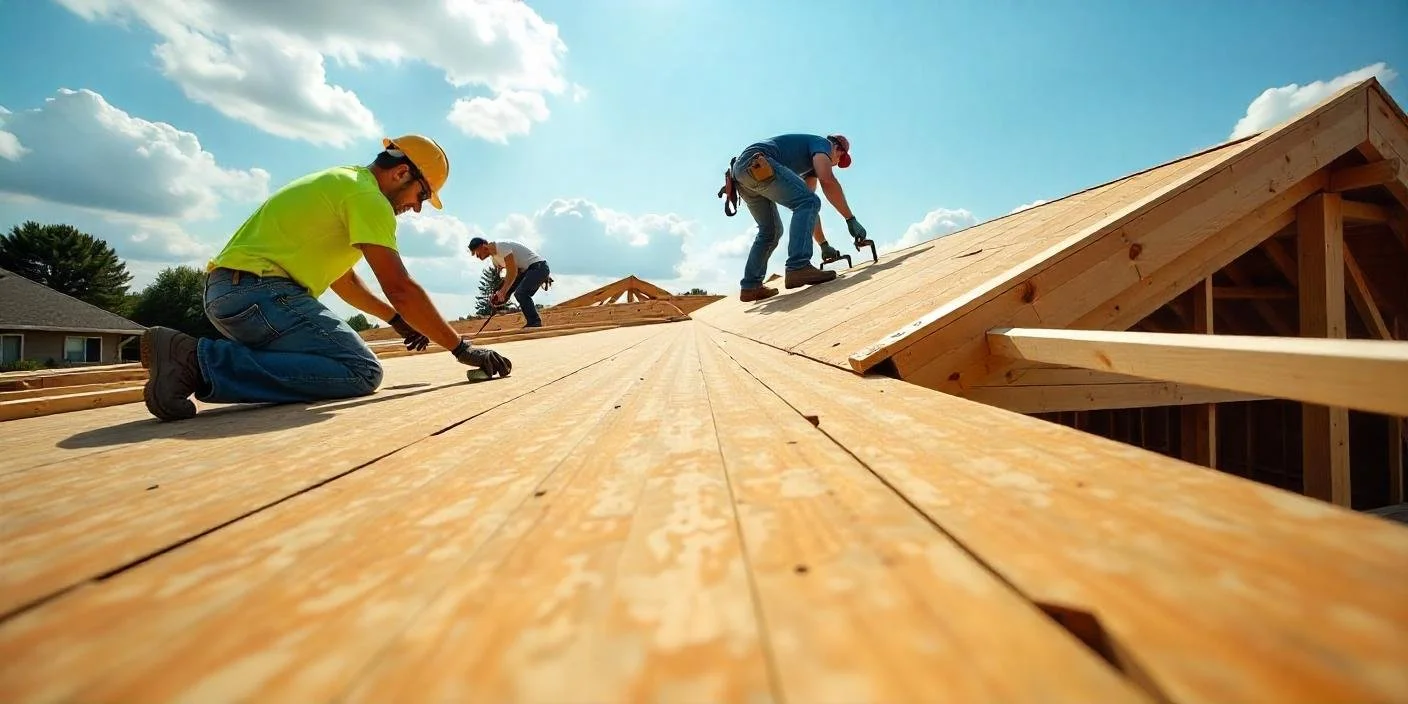
Roof decking is the layer of material that is attached directly to the roof trusses or rafters. It provides a solid surface upon which roofing underlayment and exterior roofing materials are installed. Decking is usually made from one of the following:
Plywood: Commonly used, especially in newer homes; offers strength and flexibility.
Oriented Strand Board (OSB): A cost-effective alternative to plywood, widely used in residential construction.
Tongue-and-Groove Planks: More typical in older homes or specialized builds.
Concrete or Metal Panels: Seen in commercial or flat-roof applications.
The decking must be stable, moisture-resistant, and capable of bearing the load of snow, wind, and roofing materials. It serves as the critical intermediary between a home’s structure and its weatherproofing systems.
How Roof Decking Supports Structural Integrity
A roof isn’t just a cover—it’s a key structural component of the entire building envelope. Roof decking provides lateral bracing for rafters and trusses, ensuring that the roof maintains its shape and alignment over time. When properly installed, decking ties the entire roof structure together, improving resistance to wind uplift and horizontal loads.
Structural functions of roof decking include:
Distributing weight evenly across rafters or trusses
Supporting fasteners and adhesives for underlayment and shingles
Enhancing the building’s resistance to shear forces (important during storms or earthquakes)
Allowing roofers to walk and work safely during installation and repairs
If decking is compromised—whether by rot, pests, or water damage—the entire roofing system may sag, shift, or collapse. That’s why inspections during replacement or repair often focus on the integrity of the deck first.
The Connection Between Decking and Weather Resistance
Decking is integral to how a roof handles water, wind, and thermal movement. If the deck is not properly sealed, level, or ventilated, it can allow water intrusion that leads to insulation damage, mold growth, and wood rot.
Here’s how roof decking contributes to weather resilience:
1. Moisture Management
Roof decks provide a base for waterproofing membranes and underlayment that act as the first barrier against rain and snow. Inadequate decking can result in:
Pooling water from uneven surfaces
Nail pops and punctures through membranes
Reduced adhesion of underlayment materials
2. Wind Resistance
During windstorms, roofing material can lift or tear if decking does not offer secure anchoring. A solid deck allows nails and fasteners to hold firmly, reducing the risk of wind damage.
3. Thermal Expansion and Contraction
Decking must adapt to changes in temperature without warping. Materials like OSB and plywood are engineered to expand and contract with minimal distortion, preserving the integrity of the surface and reducing stress on exterior roofing layers.
Signs of Failing or Compromised Decking
Homeowners may not see the roof decking, but signs of its failure often present as secondary symptoms:
Sagging or uneven rooflines
Visible dips or soft spots underfoot (when safely walking on the roof)
Leaks in the attic or ceiling stains
Mold or mildew odors in upper rooms
Increased energy bills due to poor insulation performance
If a roofing contractor identifies any of these signs, it’s crucial to evaluate the condition of the decking before attempting repairs or replacements.
Decking and Modern Roofing Systems
As roofing technology evolves, so does the importance of high-quality decking. Today’s systems often incorporate synthetic underlayments, energy-efficient materials, and solar technology. The roof deck must be compatible with these additions, providing a stable base that maintains its shape under added weight or exposure.
Decking also plays a role in achieving proper ventilation. Modern building codes often require ventilation channels between decking and insulation to prevent condensation buildup and support airflow. Improper or blocked ventilation can lead to premature roofing failure—even if the deck itself is structurally sound.
Installation and Inspection Best Practices
When installing or replacing a roof, proper attention to the decking process can prevent major issues down the line. Surge Exteriors emphasizes these best practices:
1. Full Deck Inspection Before Installation
Before applying new shingles or membranes, the existing decking should be thoroughly inspected for:
Soft spots or delaminated areas
Water staining or signs of past leaks
Signs of pest activity
Nail holes that have widened or corroded
2. Replacing vs. Reusing Decking
In some cases, intact decking can be reused, especially in recent constructions. However, if more than 10% of the deck is damaged or weakened, replacement is usually more cost-effective and ensures longevity.
3. Nailing and Fastening Protocols
Using the right fasteners (such as ring-shank nails) and proper spacing ensures that decking won’t lift or shift over time. Improper nailing is a leading cause of shingle failure during storms.
4. Moisture Barriers and Drip Edges
To improve long-term protection, ice and water shields are often installed over the deck, especially in vulnerable areas like eaves and valleys. Drip edges help direct water off the fascia and prevent saturation of the decking.
Decking and Energy Efficiency
A well-installed roof deck supports energy efficiency by ensuring uniform insulation coverage and reducing air leaks. Inconsistencies in decking can create thermal bridges—areas where heat or cold bypass insulation—leading to higher heating and cooling costs.
Homeowners seeking to improve their energy footprint can combine roof replacement with insulation upgrades. Radiant barriers, which reflect heat away from the living space, can be installed beneath the decking or as part of a new integrated system.
Final Thoughts
While it may remain out of sight, roof decking should never be out of mind. It is the structural and functional backbone of a roofing system—one that determines how well the visible layers perform and how long they last. From resisting the forces of wind and moisture to supporting advanced energy-saving solutions, decking deserves serious consideration during any roofing project.
Surge Exteriors understands that roofing is not just about what’s on top—it’s about what’s underneath. By prioritizing decking quality, thoughtful installation, and informed material selection, homeowners can ensure a longer-lasting, more weather-resistant roof that performs reliably through the seasons.
For those planning a roofing upgrade or replacement, evaluating the decking isn’t just a step in the process—it’s a foundational strategy for lasting protection and peace of mind.
More Home Improvement Articles